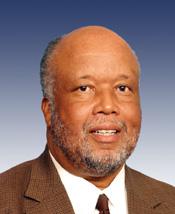
Bennie G. Thompson
DDemocratMS-2 · Representative
60
/ 100
Average
Attendance96
Avg: 96
Independence2
Avg: 4
Bipartisan Tone3
Avg: 15
Ethics Record100
Avg: 99
Transparency100
Avg: 53
Accountability Score — composite of attendance, independence, bipartisan tone, ethics record & transparency.
Methodology13
Bills Sponsored
0
Enacted into Law
1
Passed a Chamber
12
In Committee
All Sponsored Bills
HR4467Passed House
Vicksburg National Military Park Boundary Modification Act
Vicksburg National Military Park Boundary Modification Act This bill directs the Department of the Interior to convey approximately 7 acres of specified land (in two parcels) within the Vicksburg National Military Park to Mississippi for an interpretive center. The conveyed land must facilitate public access to the park, may not be used in a manner that adversely impacts the park's resources or visitor experience, and remains subject to any use restriction that Interior determines is appropriate. Interior must convey the land by quitclaim deed and without consideration, such as payment. Upon the conveyance of the land, Interior must modify the park's boundary to exclude the land.
HR9163In Committee
Critical Access Hospital RIP Act of 2026
Critical access hospitals—small rural hospitals that receive special Medicare funding—could lose their special status if nearby roads are improved or transportation infrastructure is upgraded, even though the hospital itself hasn't changed. This bill would prevent that from happening by ensuring that road and infrastructure improvements in the area don't automatically disqualify these hospitals from keeping their critical access designation. This protects rural healthcare facilities and the communities that depend on them from losing federal funding due to circumstances beyond their control.
HR7382In Committee
Nonprofit Security Grant Program Transparency Act
This bill would require the Department of Homeland Security to publicly disclose information about how it awards security grants to nonprofits, including which organizations receive funding and how much money goes to different types of groups. The goal is to make the grant process more transparent so nonprofits, lawmakers, and the public can see how federal security funding is being distributed across the country.
HRES1035In Committee
Condemning Federal workforce reductions that undermine preparedness, response, and recovery, and expressing concern regarding proposed future staffing cuts to the Federal Emergency Management Agency.
Congress is expressing disapproval of recent cuts to federal emergency management staff and warning against further reductions at the Federal Emergency Management Agency (FEMA), arguing that smaller workforces could weaken the government's ability to prepare for, respond to, and recover from disasters. The resolution reflects concern that staffing cuts could leave communities more vulnerable during emergencies like hurricanes, floods, and other crises that require rapid federal coordination and support.
HR7124In Committee
Realigning Mobile Phone Biometrics for American Privacy Protection Act
The legislation would establish new rules for how mobile phone biometric data (like fingerprints or facial recognition) can be collected and used by immigration authorities at the border. It aims to set privacy protections and limits on when and how this biological information can be gathered from travelers and immigrants. The bill would affect border security operations, travelers crossing U.S. borders, and immigration enforcement agencies.
HR6548In Committee
DHS Suicide Prevention and Resiliency for Law Enforcement Act
The Department of Homeland Security would establish new programs and training to help prevent suicides among its law enforcement officers and improve their mental health and resilience. The legislation would require DHS to provide counseling services, peer support networks, and mental health resources specifically designed for officers dealing with job-related stress and trauma. These efforts aim to address the high suicide rates among federal law enforcement personnel by making mental health support more accessible and reducing the stigma around seeking help.
HR4971In Committee
Terrorist Watchlist Data Accuracy and Transparency Act
This bill would require the government to improve how it maintains and checks the accuracy of its terrorist watchlist, ensuring that people are correctly identified before being flagged as security threats. It would also increase transparency by requiring officials to report on how the watchlist is being used and managed, giving Congress and the public better insight into the system. The changes would affect law enforcement, national security agencies, and anyone who might be mistakenly added to or removed from the watchlist.
HR4579In Committee
FEMA Cybersecurity Improvement Act
The proposal would require the Federal Emergency Management Agency to strengthen its computer security systems and protections against cyberattacks. This would affect FEMA's ability to respond to disasters and emergencies by ensuring that critical systems for coordinating disaster relief, managing resources, and communicating with state and local agencies remain secure and operational during crises. The measure aims to prevent hackers from disrupting emergency response efforts when communities need help most.
HR2901In Committee
Department of Homeland Security Officer for Civil Rights and Civil Liberties Act
HR2698In Committee
Bolstering Security Against Ghost Guns Act
The legislation would require manufacturers and sellers of firearm parts and kits—particularly those that can be assembled into untraceable guns without serial numbers—to register with federal authorities and keep records of their sales. Law enforcement agencies and the public would benefit from increased tracking of these components, which are sometimes called "ghost guns" because they lack identification numbers that help police trace weapons used in crimes. The bill aims to close a gap in current gun regulations by bringing unregistered firearm manufacturing under federal oversight similar to rules already applied to traditional gun manufacturers.
HR2086In Committee
Rights for the TSA Workforce Act
This bill would give Transportation Security Administration (TSA) workers certain labor rights and protections that other federal employees have, such as the ability to collectively bargain and appeal disciplinary decisions. TSA screeners and other agency staff would gain stronger job security and a clearer process for addressing workplace grievances. The changes aim to improve working conditions and employee morale at the agency responsible for airport security screening.
HRES113In Committee
Directing the Secretary of Homeland Security to transmit to the House of Representatives certain documents relating to Department of Homeland Security policies and activities related to the security of Department information and data and the recruitment and retention of its workforce.
This resolution directs the Department of Homeland Security (DHS) to transmit to the House of Representatives documentation relating to the security of DHS information and the recruitment and retention of the DHS workforce, particularly relating to Department of Government Efficiency and Office of Personnel Management access to DHS data.
HRES114In Committee
Directing the Secretary of Homeland Security to transmit to the House of Representatives certain documents relating to Department of Homeland Security policies and activities related to domestic preparedness and collective response to terrorism and the Department's cybersecurity activities.