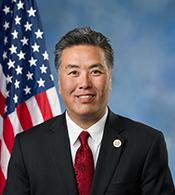
Mark Takano
DDemocratCA-39 · Representative
63
/ 100
Average
Attendance99
Avg: 96
Independence2
Avg: 4
Bipartisan Tone20
Avg: 15
Ethics Record100
Avg: 99
Transparency94
Avg: 53
Accountability Score — composite of attendance, independence, bipartisan tone, ethics record & transparency.
Methodology22
Bills Sponsored
0
Enacted into Law
0
Passed a Chamber
22
In Committee
All Sponsored Bills
HRES1247In Committee
Providing for consideration of the bill (H.R. 2102) to amend title 10, United States Code, to provide for concurrent receipt of veterans' disability compensation and retired pay for disability retirees with combat-related disabilities, and for other purposes.
This resolution provides for the consideration of the bill (H.R. 2102) to amend title 10, United States Code, to provide for concurrent receipt of veterans' disability compensation and retired pay for disability retirees with combat-related disabilities, and for other purposes.
HR10323In Committee
Thirty-Two Hour Workweek Act
HR9881In Committee
Higher Education Accreditation Accountability Act
Colleges and universities would be able to switch to a different accrediting agency more easily under this proposal, which would change the current rules that make such switches difficult and time-consuming. This could give schools more flexibility in choosing which organization oversees their academic quality and financial practices, potentially affecting students' ability to transfer credits and access federal financial aid. The change would impact higher education institutions, students, and accrediting agencies that evaluate schools.
HR9446In Committee
VA Health Care Capacity Assessment Act
The Department of Veterans Affairs would be required to assess and report on whether its medical facilities have enough capacity to meet veterans' health care needs, including identifying any gaps in services or staffing. The VA would need to evaluate current resources at its hospitals and clinics and determine what additional investments might be needed to serve the veteran population effectively. This would help Congress and VA leadership understand where the department may need to expand services or hire more staff to better serve veterans seeking medical care.
HR9486In Committee
Health DATA Act of 2026
The proposal would require health insurance companies and employers offering group health plans to publicly share more detailed information about their coverage, costs, and how they make decisions about which treatments to cover. The goal is to make it harder for insurers to discriminate against certain groups of people and to give workers and patients better access to information so they can compare plans and understand what they're paying for. This would primarily affect employers who sponsor health insurance, insurance companies, and the millions of workers and their families who receive coverage through group health plans.
HR9110In Committee
Promoting Authenticity with Influencer Disclaimers Act
Political committees would be required to include clear disclaimers on their advertisements and communications telling voters who is paying for the ads, making it easier for people to see which groups are funding political messages. This applies to various types of campaign communications like TV ads, online content, and mailers that are paid for by political organizations. The requirement aims to increase transparency so voters can better understand the sources of political messaging they encounter.
HR4114In Committee
EVEST Act
The EVEST Act would establish or modify benefits and support programs for military veterans and service members. Based on its focus on armed forces and national security, the bill likely aims to improve access to education, healthcare, housing, or other services for people who have served in the military or their families.
HR8868In Committee
Restoring Overtime Pay Act of 2026
The proposal would set a minimum salary level that companies must pay workers in executive, administrative, and professional roles to avoid paying them overtime when they work more than 40 hours per week, and would automatically increase this salary threshold each year to keep up with inflation. This affects salaried employees and employers across all industries, as it determines which workers are entitled to overtime pay protections. The change aims to ensure that workers classified as exempt from overtime rules are actually being paid enough to justify that classification.
HR5723In Committee
Fraud Reduction And Uncovering Deception (FRAUD) in VA Disability Exams Act
The bill would strengthen oversight of medical exams used to evaluate veterans' disability claims, aiming to catch fraudulent or improper evaluations that might result in incorrect benefit payments. It would likely require better tracking and verification of exam results, give the Department of Veterans Affairs stronger tools to investigate suspicious claims, and potentially impose penalties on medical examiners who conduct fraudulent evaluations. Veterans applying for disability benefits and the VA would be the main groups affected by these changes.
HRES1162In Committee
Supporting the goals and ideals of Glisten's (formerly GLSEN's) 2026 Day of Silence in bringing attention to anti-LGBTQI+ bullying, harassment, discrimination, and other forms of victimization faced by individuals in schools, and calling communities across the country to action to demand equal educational opportunity, basic civil rights protections, and freedom from erasure for all students, particularly LGBTQI+ young people, in K-12 schools.
This resolution expresses support for the Day of Silence, an annual event that raises awareness about bullying and discrimination faced by LGBTQI+ students in schools, and calls on communities to take action to protect these students' rights to equal education and safety. The measure urges schools and communities to address anti-LGBTQI+ harassment and discrimination while ensuring all students, particularly LGBTQI+ youth, have freedom from erasure and basic civil rights protections in K-12 education.
HR7853In Committee
PrEP Access and Coverage Act of 2026
This bill would require health insurance plans and government programs to cover PrEP (pre-exposure prophylaxis), a medication that prevents HIV infection, without charging patients copays or other out-of-pocket costs. The legislation aims to make this preventive drug more accessible to people at risk of HIV, including those covered by private insurance, Medicare, Medicaid, and veterans' benefits. By removing financial barriers, the bill seeks to increase the use of PrEP as a public health tool to reduce new HIV infections.
HR1957In Committee
End Veteran Homelessness Act of 2025
End Veteran Homelessness Act of 2025 This bill requires the Department of Veterans Affairs (VA) to furnish case management to certain veterans who are eligible for the HUD-Veterans Affairs Supportive Housing (HUD-VASH) program administered by the Department of Housing and Urban Development (HUD) and the VA. Specifically, the VA must furnish case management to veterans who are eligible for HUD-VASH that the VA determines require case management. The VA must prioritize vulnerable homeless veterans in assigning case managers and providing services. The VA must take certain actions if a veteran refuses case management. HUD or a public housing authority may not revoke assistance solely on the basis that a veteran has refused case management. Additionally, a veteran may not be evicted or penalized by the owner of a property solely on the basis that they have refused case management or cannot be provided case management for health and safety reasons. The Government Accountability Office must report to Congress on veterans who are served by the HUD-VASH program, case managers and case management services provided under the program, and metrics about housing stability for veterans participating in federal housing assistance programs. The bill also provides statutory authority to expand eligibility for the HUD-VASH program to any veteran who is homeless, at risk of homelessness, or receiving assistance under another housing assistance program if the VA determines a voucher under HUD-VASH is more appropriate. (Currently, assistance is statutorily limited to certain veterans who have chronic mental illness or substance use disorders.)
HR7238In Committee
Commission on Equity and Reconciliation in the Uniformed Services Act
The bill would create a commission to study and recommend ways to address historical inequities and injustices experienced by members of the military and veterans, potentially including issues related to discrimination, unequal treatment, or past wrongs within the armed forces. The commission would investigate these problems and propose solutions to make the military and veterans' services more fair and equitable going forward. This would affect current and former military members, veterans, and the Department of Defense.
HR7048In Committee
Unsubscribe Act of 2025
This bill would require companies to make it as easy for customers to cancel subscriptions as it is to sign up for them, typically by offering a simple online unsubscribe option. The law would apply to streaming services, gym memberships, software subscriptions, and similar recurring billing services, protecting consumers from being locked into unwanted charges. Businesses would face penalties for making cancellation deliberately difficult or time-consuming.
HR5535In Committee
Veteran Service Recognition Act of 2025
HR4001In Committee
Prohibition on Funding to CECOT Act
HR3261In Committee
VA Employee Fairness Act of 2025
This bill would establish new workplace fairness protections and rules for employees who work at the Department of Veterans Affairs, likely addressing issues like hiring practices, job security, or how employee disputes are handled. The changes would affect thousands of VA workers across hospitals, benefits offices, and other veteran services nationwide. The bill is currently being reviewed by a congressional subcommittee to determine whether it should move forward.
HR15In Committee
Equality Act
Equality Act This bill prohibits discrimination based on sex, sexual orientation, or gender identity with respect to businesses, employment, housing, federally funded programs, and other settings. Specifically, the bill expands Title II and Title VI of the Civil Rights Act of 1964 to prohibit public accommodations and federally funded programs, respectively, from discriminating based on sex, sexual orientation, or gender identity. It also includes stores, transit services, recreational facilities, and establishments that provide health care, accounting, or legal services as public accommodations under Title II. The bill also expands Title IV (desegregation of public schools) and Title VII (employment discrimination) to specifically include sexual orientation and gender identity. (The Supreme Court held in Bostock v. Clayton County that Title VII's prohibition of employment discrimination based on sex also prohibits employment discrimination based on sexual orientation or gender identity.) The bill similarly expands the Fair Housing Act (discrimination in public and private housing) to include sexual orientation and gender identity. It also prohibits discrimination based on sexual orientation or gender identity by creditors and with respect to jury selection. The bill defines sex for purposes of the aforementioned provisions to include sex stereotypes, pregnancy, childbirth, sexual orientation, gender identity, and sex characteristics.
HR2899In Committee
PROTECT Students Act of 2025
The bill aims to protect students, though the specific protections are not detailed in the available information. Based on its referral to both the Education and Judiciary committees, it likely addresses student safety, rights, or welfare issues that cross multiple policy areas. Without seeing the full bill text, the exact provisions affecting students, schools, or educators cannot be determined.
HRES321In Committee
Supporting the goals and ideals of the Rise Up for LGBTQI+ Youth in Schools Initiative, a call to action to communities across the country to demand equal educational opportunity, basic civil rights protections, and freedom from erasure for all students, particularly LGBTQI+ young people, in K-12 schools.
This resolution expresses support for efforts to ensure LGBTQI+ students in K-12 schools have equal educational opportunities, civil rights protections, and are not excluded from school curricula and activities. It calls on communities nationwide to take action to address discrimination and erasure of LGBTQI+ youth in schools. The measure has been referred to the House Committee on Education and Workforce for consideration.
HR1439In Committee
Korematsu-Takai Civil Liberties Protection Act of 2025
Korematsu-Takai Civil Liberties Protection Act of 2025 This bill prohibits the detention or imprisonment of an individual based solely on an actual or perceived protected characteristic of the individual. The term protected characteristic includes each of the following: race, ethnicity, national origin, religion, sex, gender identity, sexual orientation, disability, and any additional characteristic that the Department of Justice determines to be a protected characteristic.
HRES77In Committee
Supporting the designation of January 30, 2025, as "Fred Korematsu Day of Civil Liberties and the Constitution".
This resolution supports the designation of Fred Korematsu Day of Civil Liberties and the Constitution. It also encourages all people to reflect on the importance of political leadership and vigilance and on the values of justice and civil rights during times of uncertainty and emergency.