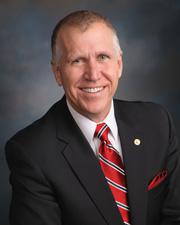
Thom Tillis
RRepublicanNC · Senator
57
/ 100
Average
Attendance88
Avg: 97
Independence25
Avg: 23
Bipartisan Tone25
Avg: 14
Ethics Record100
Avg: 100
Transparency33
Avg: 47
Accountability Score — composite of attendance, independence, bipartisan tone, ethics record & transparency.
Methodology42
Bills Sponsored
1
Enacted into Law
2
Passed a Chamber
33
In Committee
Bills That Became Law
All Sponsored Bills
S2498Passed Senate
National Park System Long-Term Lease Investment Act
This bill would allow private companies and investors to enter into long-term lease agreements with the National Park Service to develop and operate facilities within national parks, such as hotels, restaurants, and recreational amenities. The arrangement aims to generate revenue for park maintenance and improvements while reducing the burden on federal taxpayers, though it could affect how much public access and control citizens have over these protected lands. Park visitors and conservation groups would be the primary stakeholders affected by how these private leases are structured and managed.
SRES946Introduced
A resolution designating September 30, 2026, as "National Veterans Suicide Prevention Day".
S5529In Committee
DEFEND IP Act
S5469In Committee
HEART Foundation Act
S5214In Committee
Protect and Serve Act of 2026
The legislation would increase criminal penalties for people who commit violent crimes specifically targeting police officers and other law enforcement personnel. It aims to provide stronger legal consequences for attacks on officers compared to similar crimes against other people, affecting how federal courts handle cases involving assaults or murders of law enforcement members.
S4813In Committee
A bill to authorize leases of up to 99 years for land held in trust for federally recognized Indian Tribes.
This bill authorizes any federally recognized Indian tribe to lease their land held in trust for a term of up to 99 years.
S4499In Committee
ALERT Act of 2026
The federal government would be required to improve a disease tracking system called the National Healthcare Safety Network to monitor infections and health threats in real time across nursing homes nationwide. This would help health officials quickly identify and respond to disease outbreaks in these facilities, protecting vulnerable elderly and disabled residents who live there. The system would collect and share information faster than current methods, allowing for quicker action when health problems emerge.
SRES705Introduced
A resolution commending the "Donut Dollies" for their patriotic service and steadfast support of United States servicemembers in combat and honoring their extraordinary contributions to the morale and well-being of United States servicemembers during wartime.
This resolution honors the "Donut Dollies," a group of women volunteers who served alongside American troops during wartime to boost morale and provide support to soldiers in combat zones. The resolution recognizes their patriotic contributions to the well-being of servicemembers and their dedication to helping troops during difficult times. The Senate unanimously approved this measure to formally acknowledge their extraordinary service to the country.
S1441Reported
SAVES Act of 2025
Service Dogs Assisting Veterans Act of 2025 or the SAVES Act of 2025 This bill requires the Department of Veterans Affairs (VA) to establish a five-year pilot program to award grants on a competitive basis to nonprofit entities to provide service dogs to veterans who have certain disabilities, conditions, or diagnoses (e.g., a visual impairment). Under the program, the VA may provide up to $2 million to a nonprofit entity in a fiscal year. The VA must provide a veterinary insurance policy to veterans who receive a service dog through a grant under the program.
S3705Enacted
Semiquincentennial Congressional Time Capsule Act
Semiquincentennial Congressional Time Capsule Act This act requires the Architect of the Capitol to create a congressional time capsule in honor of the 250 th anniversary of the Declaration of Independence to be buried in the Capitol Visitor Center on or before July 4, 2026. The time capsule shall contain a joint letter from congressional leadership (the Speaker and Minority Leader of the House of Representatives and the Majority and Minority Leaders of the Senate) and such other contents as they shall determine. The act directs the Architect of the Capitol to also install a plaque about the time capsule, subject to the approval of the Committee on House Administration of the House and the Committee on Rules and Administration of the Senate. The time capsule shall be sealed until July 4, 2276. On that date, the Speaker of the House and the Senate Majority Leader shall present the time capsule to the 244th Congress.
SRES611Introduced
A resolution authorizing the use of the atrium in the Philip A. Hart Senate Office Building for a Bipawtisan Doggi Gras Pawrade on February 25, 2026, from 4:00pm to 6:00pm.
The Senate has approved a resolution allowing a dog parade called "Bipawtisan Doggi Gras Pawrade" to take place in the atrium of the Philip A. Hart Senate Office Building on February 25, 2026, from 4:00 PM to 6:00 PM. This is a one-time event that gives organizers permission to use the Senate building's space for what appears to be a fun, bipartisan celebration involving dogs. The resolution passed unanimously without any changes.
S3782In Committee
Justice for Victims of Sanctuary Cities and Fallen Law Enforcement Act of 2026
This bill would likely create legal consequences for cities and states that limit cooperation with federal immigration enforcement, and establish new protections or compensation programs related to crimes involving undocumented immigrants and deaths of law enforcement officers. It appears designed to hold local governments accountable for immigration policies that the bill's sponsors view as obstructing federal enforcement, while addressing victims of crimes committed by people in the country illegally and families of officers killed in the line of duty.
S3719In Committee
National Law Enforcement Officers Remembrance, Support, and Community Outreach Act.
National Law Enforcement Officers Remembrance, Support and Community Outreach Act. [ sic ] This bill temporarily directs the Department of the Interior to award a grant to the National Law Enforcement Officers Memorial Fund for the expenses associated with operating and enhancing the community outreach, public education, and officer safety and wellness programs of the National Law Enforcement Museum.
S3439In Committee
Connecting Caregivers to Medicare Act of 2025
This bill would help family members and unpaid caregivers who support Medicare patients by connecting them with resources, training, and support services to better care for their loved ones. The legislation aims to reduce caregiver burnout and improve the quality of care for elderly and disabled Medicare beneficiaries by making it easier for caregivers to access information and assistance programs. The bill would affect millions of family caregivers, seniors on Medicare, and healthcare providers involved in coordinating care.
S1280In Committee
Down East Remembrance Act
This bill likely proposes to establish or designate a new national park, monument, or protected area in Maine's Down East region to preserve its natural resources and historical significance. The measure would affect how the land is managed and used, potentially restricting certain activities like logging or mining while allowing public recreation and conservation efforts. Local communities, outdoor enthusiasts, and environmental groups would be most directly impacted by any changes to land use in the region.
S107In Committee
Lumbee Fairness Act
Lumbee Fairness Act This bill extends federal recognition to the Lumbee Tribe of North Carolina and makes its members eligible for the services and benefits provided to members of federally recognized tribes. Members of the tribe residing in Robeson, Cumberland, Hoke, and Scotland Counties in North Carolina are deemed to be within the delivery area for such services. The Department of the Interior and the Department of Health and Human Services must develop, in consultation with the tribe, a determination of needs to provide the services for which members of the tribe are eligible. Interior may take land into trust for the benefit of the tribe. Finally, North Carolina must exercise jurisdiction over all criminal offenses committed, and all civil actions that arise, on North Carolina lands owned by, or held in trust for, the Lumbee Tribe or any dependent Indian community of the tribe unless jurisdiction is transferred to the United States pursuant to an agreement between the tribe and the state.
S1876Reported
Stratton Ridge Air Force Memorial Act
Stratton Ridge Air Force Memorial Act This bill authorizes the Forest Service to relocate a memorial in North Carolina honoring the nine Air Force crew members who lost their lives in an airplane crash in the Cherokee and Nantahala National Forests during a training mission on August 31, 1982, if the owner of the private land where the memorial is currently located consents. The Forest Service may relocate the memorial to an appropriate site at the Stratton Ridge rest area located at mile marker 2 on the Cherohala Skyway in Graham County, North Carolina, in the Nantahala National Forest. The site must be approved by (1) the North Carolina Department of Transportation, and (2) the Federal Highway Administration if the site is located adjacent to a federal-aid highway.
S1376Reported
Benton MacKaye National Scenic Trail Feasibility Study Act of 2025
Benton MacKaye National Scenic Trail Feasibility Study Act of 2025 This bill requires the Forest Service to study the feasibility of designating the Benton MacKaye Trail as a national scenic trail. The trail traverses approximately 287 miles in Georgia, Tennessee, and North Carolina.
SRES385In Committee
A resolution recognizing suicide as a serious public health problem and expressing support for the designation of September as "National Suicide Prevention Month".
S2761In Committee
RESULTS Act
The RESULTS Act would require the federal government to measure and publicly report on the effectiveness of health programs to show whether taxpayer money is actually improving people's health outcomes. This would help Congress and the public understand which health initiatives are working well and which ones need improvement, making it easier to identify where resources should be focused. The bill affects federal health agencies, healthcare providers, and ultimately patients and taxpayers who fund these programs.
S1038Passed Senate
TRACE Act
Tracking and Reporting Absent Community-Members Everywhere Act or the TRACE Act This bill requires the National Institute of Justice to include in the National Missing and Unidentified Persons System (NamUs) an additional data field for information about whether the last known location of a missing person was on federal land or in the territorial waters of the United States. NamUs is a national information clearinghouse and resource center for cases involving missing persons and unidentified or unclaimed remains.
S901In Committee
LIONs Act of 2025
S2414In Committee
Housing Supply Expansion Act of 2025
This bill aims to increase the amount of affordable housing available across the country by likely removing regulatory barriers, providing funding incentives, or streamlining the approval process for new residential construction projects. The changes would affect developers, local governments, and people struggling to find affordable places to live, particularly in high-cost urban and suburban areas.
S2290In Committee
Collision Avoidance Systems Act of 2025
Collision Avoidance Systems Act of 2025 This bill allows for the use of a pulsating light system for vehicle braking. Specifically, Federal Motor Vehicle Safety Standard Number 108 (Standard 108) must be deemed to allow for the use of a pulsating light system on covered vehicles (i.e., passenger cars, multipurpose passenger vehicles, trucks, buses, trailers, and motorcycles). The Department of Transportation must issue regulations to update Standard 108 to (1) include performance-based standards for pulsating light systems, and (2) allow for the use of the systems on motor vehicles. As background, Standard 108 regulates all automotive lighting, signaling, and reflective devices. Under the bill, a pulsating light system includes a system for a high-mounted stop lamp in which the lamp pulses rapidly no more than four times and for no more than 1.2 seconds when the brake of the vehicle is applied and then converts to a continuous light (as a normal stop lamp) until the brake is released.
S2115In Committee
Safe and Open Streets Act
S1963In Committee
Emergency Disaster Relief Fund Act of 2025
Emergency Disaster Relief Fund Act of 2025 This bill provides FY2025 supplemental appropriations to the Federal Emergency Management Agency (FEMA) for the Disaster Relief Fund (DRF). (The DRF is the primary funding source for federal programs for disaster response, recovery, and mitigation.) The amounts provided by the bill are designated as emergency spending pursuant to the Statutory Pay-As-You-Go Act of 2010 (PAYGO) and other congressional budget enforcement procedures. (This generally excludes the budget effects from being counted for the purposes of congressional budget enforcement procedures.)
S1821In Committee
Tackling Predatory Litigation Funding Act
This bill would regulate litigation funding companies that provide money to people or businesses involved in lawsuits, likely by imposing taxes or restrictions on how these companies operate and profit from legal cases. The goal appears to be preventing these funders from taking excessive cuts of lawsuit settlements or encouraging frivolous lawsuits for profit. The changes would affect both the litigation funding industry and people seeking financial help to pursue legal claims.
S1724In Committee
Town of North Topsail Beach Coastal Barrier Resources System Map Amendment Act of 2025
S1546In Committee
Patent Eligibility Restoration Act of 2025
Patent Eligibility Restoration Act of 2025 This bill amends the law relating to patent subject matter eligibility to establish that only specified subject matter (e.g., a natural process wholly independent of human activity) is ineligible for patenting. (Currently, subject matter eligibility is determined by examining whether the claimed invention is directed to certain ineligible categories, and if so, whether there is an inventive concept. Subject matter eligibility is one of several requirements that an invention must satisfy in order to receive patent protection.) Under this bill, an invention shall be considered to involve patent-ineligible subject matter only if it falls within specified categories, such as (1) a mathematical formula that is not part of a useful process, machine, manufacture, or composition; (2) a mental process that is performed solely in the human mind; or (3) an unmodified human gene as the gene exists in the human body.
S1405In Committee
PROOF Act
Proving Reserves Of Others’ Funds Act or the PROOF Act This bill requires digital exchanges to protect customer funds and provide proof of reserves. Specifically, digital exchanges must minimize (1) customer risk of asset loss, and (2) delays experienced by a customer when accessing assets. With some exceptions, a customer’s assets must be separated from any other assets and may not be used to margin, secure, or guarantee a trade or account of a person other than the customer. Further, digital exchanges and digital custodians must report on their proof of reserves through an attestation from an independent auditing firm or a disinterested third party. The Office of Domestic Finance in the Department of the Treasury must make these attestations publicly available. The bill also provides for the creation of an industry standard for the attestations. Violations are subject to civil penalties.
S1335In Committee
Secure Family Futures Act of 2025
The proposal would make changes to tax rules affecting families and their financial planning, though the specific details of what those changes are have not yet been publicly disclosed since the bill is still in early stages of review. Once the Senate Finance Committee examines it, lawmakers will determine whether the tax modifications help families save money, protect retirement accounts, or adjust how certain income is taxed. Workers, families with children, and people planning for retirement would likely be among those affected by whatever tax changes ultimately move forward.
S1308In Committee
VETS Opportunity Act of 2025
Veterans Education and Technical Skills Opportunity Act of 2025 or the VETS Opportunity Act of 2025 This bill modifies which independent study programs are covered under veterans’ educational assistance benefits. The bill requires independent study programs that lead to a certificate that reflects graduation from a course of study to include regular and substantive interaction between students and instructors. The bill allows such independent study programs to be offered by any institutions of higher education, including for-profit institutions, that are approved to participate in the Department of Education’s financial assistance programs.
S1296In Committee
DETERRENT Act
Defending Education Transparency and Ending Rogue Regimes Engaging in Nefarious Transactions Act or the DETERRENT Act This bill expands oversight and disclosure requirements related to foreign sources and institutions of higher education (IHEs). Specifically, the bill requires an IHE to annually disclose to the Department of Education (ED) any year in which the IHE receives a gift from a foreign country of concern (e.g., China or Russia) or foreign entity of concern of any dollar amount; receives a gift or contract from a foreign source (other than a foreign country of concern or foreign entity of concern) that is valued at $50,000 or more, considered alone or in combination with all other gifts or contracts within a calendar year (current disclosure threshold is $250,000 or more), or which has an undetermined monetary value; enters into a contract with a foreign country of concern or foreign entity of concern after receiving a waiver for such contract; or is substantially controlled by a foreign source. Additionally, the bill prohibits IHEs from entering into contracts with a foreign country of concern or with a foreign entity of concern without obtaining a waiver, and requires certain IHEs to disclose gifts or contracts between covered individuals (e.g., researchers) and foreign sources. The bill requires ED to investigate possible violations of this bill and outlines the various penalties for each violation. Penalties may include losing eligibility for federal student financial aid.
S1281In Committee
RIDE Act
Restoring Industry Development in Entertainment Act or the RIDE Act This bill makes certain workers with a traveling carnival or circus eligible for P visas (nonimmigrant visas for athletes, artists, and entertainers). Such visas shall be available for workers who perform functions that are integral and essential to the carnival or circus, such as transporting and assembling relevant structures and equipment. Such visas shall only be available for a position if (1) there are not sufficient U.S. workers available, and (2) employing a non-U.S. national ( alien under federal law) will not adversely affect the wages and working conditions of similarly employed U.S. workers.
S1252In Committee
Renewable Natural Gas Incentive Act of 2025
S1031In Committee
ROCR Value Based Program Act
Radiation Oncology Case Rate Value Based Program Act of 2025 or the ROCR Value Based Program Act This bill establishes a specialized payment program under Medicare for providers and suppliers of radiation oncology services. Specifically, the Centers for Medicare & Medicaid Services (CMS) must establish a program under which radiation therapy providers (i.e., hospital outpatient departments) and suppliers (i.e., physician group practices and freestanding radiation therapy centers) receive payments for each episode of care provided to individuals with specified types of cancer. An episode of care means the period beginning on the day radiation therapy planning is furnished to the individual and ending (1) for individuals with bone or brain metastases, 30 days later; and (2) for individuals with other cancer types, 90 days later. Participation in the program is mandatory for providers and suppliers that participate in Medicare, unless the provider or supplier is part of a state-based Center for Medicare & Medicaid Innovation model or qualifies for a significant hardship exemption. The CMS must set payment rates for the program based on national payment rates with specified adjustments (e.g., geographic adjustments). Providers and suppliers who provide certain transportation services for individuals under their care may receive an additional payment. Providers and suppliers must be accredited in accordance with certain standards, subject to payment reductions. The Government Accountability Office must report on (1) implementation of the program, and (2) underserved areas that are in need of more or newer radiation therapy resources.
S907In Committee
Ensuring Justice for Camp Lejeune Victims Act of 2025
This bill would provide legal remedies and compensation for people who were exposed to contaminated water at Camp Lejeune, a major Marine Corps base in North Carolina, and suffered health problems as a result. The legislation aims to help former service members, their families, and civilian workers who lived or worked at the base get justice through the courts or settlements for illnesses they believe were caused by the water contamination. It affects veterans, military families, and civilians who were at Camp Lejeune during the period when the water supply was polluted.
S832In Committee
EPIC Act of 2025
The EPIC Act of 2025 addresses health policy matters and has been sent to the Senate Finance Committee for review. Without access to the bill's specific provisions, the legislation likely aims to modify how health programs or services are funded, regulated, or delivered, potentially affecting patients, healthcare providers, or insurance companies. The bill is still in early stages of the legislative process.
S475In Committee
Alternatives to PAIN Act
Alternatives to Prevent Addiction In the Nation Act or the Alternatives to PAIN Act This bill reduces cost-sharing and prohibits the imposition of certain utilization requirements under the Medicare prescription drug benefit for certain non-opioid pain management drugs. Specifically, the bill requires such drugs to be covered without a deductible and to be placed on the lowest cost-sharing tier (if any). The bill also prohibits the imposition of prior authorization requirements (i.e., requiring prior approval from a plan) or step therapy requirements (i.e., requiring the use of alternative drugs before a drug is covered under a plan) with respect to such drugs.
S185In Committee
Justice for Victims of Sanctuary Cities Act of 2025
Justice for Victims of Sanctuary Cities Act of 2025 This bill provides a private right of action against state and local jurisdictions with certain policies that limit cooperation with federal immigration enforcement efforts, and contains additional provisions related to such jurisdictions. Currently, such cooperation is generally not required. An individual (or certain relatives of such an individual) who is the victim of any felony for which an alien has been arrested, convicted, or sentenced to a prison term of at least one year may sue a state or local jurisdiction if the jurisdiction failed to comply with (1) certain Department of Homeland Security (DHS) requests related to arresting and detaining aliens, and (2) a DHS request to detain the alien in question or provide a notification about the release of the alien. A jurisdiction that accepts certain federal grants may not assert immunity in such a civil action. A jurisdiction (or employee of a jurisdiction) that complies with certain DHS detainer requests shall be deemed to be acting as an agent of DHS. A complying jurisdiction or employee of the jurisdiction shall not be liable in any lawsuit relating to compliance with such requests. In a lawsuit against an employee of the jurisdiction, the United States shall be substituted in as the defendant, and remedies shall be limited to provisions for bringing tort claims against the federal government.
S166In Committee
Justice for Fallen Law Enforcement Act
S167In Committee
Protect and Serve Act of 2025
Protect and Serve Act of 2025 This bill establishes a new criminal offense for knowingly assaulting a law enforcement officer and causing serious bodily injury (or attempting to do so) in circumstances that affect interstate commerce. It imposes criminal penalties—a prison term, a fine, or both—on a violator.