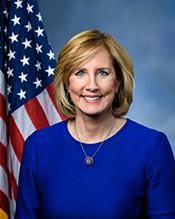
Claudia Tenney
RRepublicanNY-24 · Representative
50
/ 100
Average
Attendance99
Avg: 96
Independence1
Avg: 4
Bipartisan Tone11
Avg: 15
Ethics Record100
Avg: 99
Transparency16
Avg: 53
Accountability Score — composite of attendance, independence, bipartisan tone, ethics record & transparency.
Methodology43
Bills Sponsored
0
Enacted into Law
2
Passed a Chamber
41
In Committee
All Sponsored Bills
HR10832In Committee
To amend the Iran Threat Reduction and Syria Human Rights Act of 2012 to make certain improvements relating to the coordination of efforts to promote internet freedom and access to information in Iran, and for other purposes.
HR9496Passed House
End Tax Penalties on American Hostages Act
End Tax Penalties on American Hostages Act This bill extends certain federal tax deadlines for U.S. nationals who are unlawfully or wrongfully detained abroad or held hostage abroad and their spouses. The bill also allows for an abatement and refund of additional taxes, interest, and penalties assessed to such individuals for failing to meet a federal tax deadline during a period of detention. Specifically, under the bill, the time period during which a U.S. national is unlawfully or wrongfully detained abroad or held hostage abroad is disregarded in determining certain federal tax deadlines, including deadlines for filing a return for and paying federal income, estate, gift, employment, or excise taxes; a tax credit or refund claim; and the determination, assessment, and collection of additional taxes, interest, or penalties. The bill requires the Department of State and the Department of Justice to annually provide the Internal Revenue Service (IRS) with lists to identify U.S. nationals who qualify for an extension. The bill also requires the IRS to (1) abate and refund additional taxes, interest, and penalties assessed for any tax year ending during a period of detention for which an extension of a federal tax deadline is permitted; and (2) establish a program allowing U.S. nationals unlawfully or wrongfully detained abroad or taken hostage abroad (or their spouse or dependent) to claim a refund of additional taxes, interest, and penalties assessed for any tax year ending during a period of detention from 2021 to the bill’s enactment date.
HR10806In Committee
Medicare Home Health Payment Integrity and Protection Act of 2026
HRES1622In Committee
Expressing support for the preservation, protection, and maintenance of statues and monuments honoring Christopher Columbus as an enduring testament to the Nation's history, heritage, and identity.
HR323Passed House
To designate the facility of the United States Postal Service located at 80 Prospect Street in Avon, New York, as the "Officer Anthony Mazurkiewicz Memorial Post Office Building".
This bill designates the facility of the United States Postal Service located at 80 Prospect Street in Avon, New York, as the "Officer Anthony Mazurkiewicz Memorial Post Office Building".
HR1031In Committee
Fort Ontario Holocaust Refugee Shelter National Historical Park Establishment Act
HR10039In Committee
SMART Savings Act of 2026
The proposal would change tax rules to allow people with individual retirement accounts and similar savings plans to make certain types of investments that are currently prohibited, such as investing in businesses owned by family members or companies they control. This would give account holders more flexibility in how they invest their retirement savings, though it could potentially increase risks since these investments might not be as regulated or transparent as traditional options. The change would primarily affect individuals saving for retirement through these types of accounts.
HRES1474In Committee
Supporting the designation of "Serbian American Heritage Month" and celebrating the history, culture, and contributions of Serbian Americans to the United States.
The proposal would officially recognize September as Serbian American Heritage Month, giving the Serbian American community a designated time to celebrate their history, culture, and contributions to the United States. This recognition would be largely symbolic, similar to other heritage months already observed by the federal government, and would encourage Americans to learn about Serbian American achievements and traditions. The measure is currently under review by the House Committee on Oversight and Government Reform.
HR9938In Committee
SCREEN Act
The proposal would create a tax credit that gives movie theater owners financial breaks when they invest money in upgrading or improving their facilities. This incentive is designed to help theaters modernize their buildings and equipment, potentially making them more competitive with streaming services and other entertainment options. Theater owners and investors would benefit from reduced federal taxes on qualifying improvements they make to their properties.
HR9641In Committee
Essential Caregivers Act of 2026
Essential Caregivers Act of 2026 This bill requires certain nursing and long-term care facilities to ensure residents have access to their designated essential caregivers during periods of restricted visitation. Specifically, the bill requires Medicare skilled nursing facilities, long-term care hospitals, and inpatient rehabilitation facilities, as well as Medicaid nursing facilities and intermediate care facilities for individuals with intellectual disabilities, to allow residents to designate two essential caregivers and to allow these caregivers in-person access to residents even when visitation is otherwise restricted. Facilities may limit access of essential caregivers only in accordance with guidance from the Centers for Medicare & Medicaid Services, as specified. Essential caregivers must agree to follow all safety protocols established by the facility, which may be no more restrictive than the protocols for staff.
HR9660In Committee
No Hostile ONLOOKERS Act
The government's intelligence agencies would be banned from paying National Laboratories to conduct research or provide technical support unless those labs meet specific security requirements. This would affect how intelligence agencies work with major research facilities on classified projects and technology development. The measure aims to ensure that sensitive intelligence work only happens at laboratories with adequate security protections in place.
HR9601In Committee
CANADA Act
The bill would require the U.S. Trade Representative to investigate whether Canada and other countries are unfairly blocking or restricting American alcoholic beverages from being imported and sold in their markets. If these countries are found to be breaking trade rules, the U.S. could potentially impose penalties like tariffs on their goods. This affects American alcohol producers and exporters who want to sell their products overseas.
HR9487In Committee
No Goodwill for Harming Women Act
This proposal would prevent professional women's sports teams from using tax deductions to write off the cost of acquiring their franchises if they allow transgender athletes to compete on their rosters. The change would affect how sports team owners calculate their taxes by eliminating a standard business deduction currently available to them. The bill is currently under review by the House Committee on Ways and Means.
HR8909In Committee
To designate the facility of the United States Postal Service located at 15422 NY 104 in Martville, New York, as the "Sergeant Staret J. Ingleston Memorial Post Office Building".
This bill designates the facility of the United States Postal Service located at 15422 NY 104 in Martville, New York, as the "Sergeant Staret J. Ingleston Memorial Post Office Building".
HR8837In Committee
RISE Act
The proposal would give small business owners tax credits to help cover the costs of starting retirement savings plans for their employees, making it more affordable for companies with very few workers to offer pension benefits. It would also allow businesses to transfer or sell these tax credits to other companies if they don't need them, creating a market where credits could be bought and sold. These changes aim to encourage more small employers to set up retirement plans so their workers have access to savings options.
HR8129In Committee
To amend title XVIII of the Social Security Act to establish a full risk ACO program.
This bill would create a new Medicare program allowing groups of doctors and hospitals to take on financial risk by agreeing to care for patients at a set cost, with the potential to earn bonuses if they spend less than expected while maintaining quality care. Currently, most Medicare providers are paid for each service they deliver, but this "full risk" model would encourage them to coordinate care and reduce unnecessary spending since they keep savings or absorb losses. The change would affect Medicare patients, healthcare providers, and potentially insurance companies involved in managing these accountable care organizations.
HR7884In Committee
Healthcare is Human Act of 2026
Based on the title and tax-related subject matter, this bill likely proposes changes to how healthcare is taxed or funded through the tax code. The specific details aren't yet clear from the referral stage, but it probably aims to make healthcare more affordable or accessible by adjusting tax rules—such as modifying deductions, credits, or how health insurance premiums are treated. Once the House Committee on Ways and Means reviews it, the actual provisions will determine whether it affects individual taxpayers, employers who provide health benefits, or both.
HR7410In Committee
To designate the facility of the United States Postal Service located at 15422 NY 104 in Martville, New York, as the "Sergeant Staret J. Engleston Memorial Post Office Building".
This bill designates the facility of the United States Postal Service located at 15422 NY 104 in Martville, New York, as the "Sergeant Staret J. Engleston Memorial Post Office Building".
HR6766In Committee
Essential Caregivers Act of 2025
Essential Caregivers Act of 2025 This bill prohibits certain health care facilities from limiting the access of essential caregivers to residents of those facilities, including during designated emergency periods. Specifically, the bill generally prohibits Medicare skilled nursing facilities, Medicaid nursing facilities, Medicaid intermediate care facilities, and associated inpatient rehabilitation facilities from restricting the access of essential caregivers to residents of the facilities, including during emergency periods in which visitation rights are otherwise restricted. During emergency periods, facilities may restrict access for an initial period of up to seven days and for one additional maximum seven-day period (if the additional period is approved by the state health department). Facilities may restrict access for a total of 7 days (or 14 days with the approval of the state health department) during an emergency period. Essential caregivers must agree to comply with any safety protocols set by the facility, which may be no more stringent for caregivers compared to those for staff. Caregivers who fail to comply with these requirements may be denied access, subject to an appeals process.
HR5495In Committee
SEVER Act
The SEVER Act would likely address how the United States handles relationships or agreements with other countries, though the specific details depend on what "SEVER" stands for. Based on its referral to the Judiciary Committee, it probably involves legal or diplomatic matters that could affect how America conducts international business or diplomacy. Without knowing the full title, the bill's exact impact on citizens, businesses, or government agencies cannot be determined from the title alone.
HR5413In Committee
No Bail Post-Jail Act
This bill would likely change how bail is handled for people who have already served jail time, possibly by restricting or eliminating bail requirements for certain defendants after they've completed sentences or spent time in custody. The measure would affect criminal defendants, courts, and the bail system's operation, though the specific changes depend on the bill's detailed provisions. The goal appears to be reforming bail practices related to individuals with prior incarceration.
HR4823In Committee
Promoting Free and Fair Elections Act of 2025
This bill aims to protect the integrity of U.S. elections through measures that could include voting access rules, election security standards, or campaign finance regulations, though the specific provisions aren't yet detailed. The legislation would affect voters, election officials, political campaigns, and potentially technology companies involved in election systems. Congress is currently reviewing the proposal across multiple committees to determine which parts fall under each committee's area of responsibility.
HR4741In Committee
Constitutional Citizenship Clarification Act of 2025
This legislation would clarify the constitutional rules about who automatically becomes a U.S. citizen at birth, potentially affecting how citizenship is granted to children born in the United States. The bill would impact immigrants, their families, and anyone born in the country, as it addresses which births result in automatic citizenship under the Constitution. The proposal is currently under review by the House Judiciary Committee.
HJRES107In Committee
Proposing an amendment to the Constitution of the United States to prohibit voting in Federal, State, or local elections by individuals who are not citizens of the United States.
This joint resolution proposes a constitutional amendment that prohibits an individual who is not a U.S. citizen from voting in federal, state, or local elections for public office or voting on any ballot initiative or referendum held in the United States.
HR4353In Committee
Timothy J. Barber Act
Timothy J. Barber Act This bill requires the Department of Labor to conduct a study on the effectiveness of spending by the Occupational Safety and Health Administration for technical assistance and compliance assistance related to heat-related illness.
HR4205In Committee
Fairness in Vineyard Data Act
Fairness in Vineyard Data Act This bill requires the National Agricultural Statistics Service (NASS) to conduct a survey, within one year of the bill's enactment, on grape production in each state and publish the data on the NASS website. In each of the following four years, NASS must make publicly available on the website data from the five states with the highest grape production in the preceding year.
HRES527In Committee
Expressing support for the designation of June 2025 as "National Dairy Month" to recognize the critical role dairy plays in maintaining a healthy diet and preserving our Nation's agricultural economy.
This resolution supports the designation of National Dairy Month.
HR2900In Committee
PACE Act
Promoting Affordable Childcare for Everyone Act or the PACE Act This bill increases and makes refundable the tax credit for qualified child and dependent care expenses. The bill also increases the exclusion from gross income for employer-provided child and dependent care benefits. Under current law, a nonrefundable tax credit is allowed for up to 35% (maximum tax credit percentage) of qualified child and dependent care expenses incurred by an individual to work or look for work, up to a maximum amount. The percentage of such expenses allowed as a tax credit may be reduced, but not below 20% (minimum tax credit percentage), based on an individual’s adjusted gross income. The bill generally increases the tax credit for qualified child and dependent care expenses by increasing the maximum tax credit percentage to 50%, increasing the minimum tax credit percentage to 35%, and adjusting the maximum credit amounts annually for inflation. The bill also makes the tax credit for qualified child and dependent care expenses refundable. Finally, the bill increases and adjusts for inflation the amount that may be excluded from gross income for employer-sponsored child and dependent care benefits (e.g., dependent care flexible spending arrangements) to $7,500 (from $5,000).
HR2798In Committee
High-Quality Charter Schools Act
High-Quality Charter Schools Act This bill establishes a federal tax credit for 75% of the qualified contributions of cash or market securities made by an individual to an eligible charter school organization to create or expand the charter schools operated or managed by the organization. (Limitations apply.) The bill limits the tax credit to the greater of $5,000 or 10% of the individual’s adjusted gross income. The tax credit is not refundable, but any amount of the tax credit that exceeds an individual’s tax liability for the tax year may be carried forward for up to five tax years. Further, the bill establishes an annual $5 billion volume cap (which must be increased under certain circumstances) from which $10 million must be distributed to each state for allocation of the tax credit to individuals residing in the state. The remaining amount of the volume cap must be allocated to individuals on a first-come, first-serve basis. The bill requires the Internal Revenue Service (IRS) to develop a system for tracking qualified contributions in real time. Under the bill, an eligible charter school organization generally is required to spend all of the qualified contributions (less reasonable administrative expenses) within a certain amount of time. If the IRS determines that an organization has failed to meet such spending requirements, the tax credit is not allowed for contributions to the organization for one year after the date of the determination.
HR2610In Committee
Protecting Options for Seniors Act of 2025
Protecting Options for Seniors Act of 2025 This bill increases payments for Medicare Advantage plans in areas in which the average hospital wage index increased by more than 20% compared to the previous year. Payment increases are based on the percentage by which the average hospital wage index increased compared to the previous year and weighted by the proportion of attributable payments in the area.
HR2584In Committee
Protect TANF Resources for Families Act
The proposal would restrict how states can use federal welfare funds from the Temporary Assistance for Needy Families program, requiring that money be spent primarily on direct cash assistance to low-income families rather than on other state programs or administrative costs. This would affect both the families receiving welfare benefits and state governments that administer the program, potentially limiting flexibility in how states address poverty-related needs. The bill aims to ensure that federal welfare dollars go directly to helping struggling families pay for basic expenses like food, housing, and utilities.
HR2524In Committee
REPEAL CBO Requirements Act
Replacing Exploitative Partisan Estimates with Alternatives by Liquidating Congressional Budget Office Requirements or the REPEAL CBO Requirements Act This bill allows certain congressional committees to obtain cost estimates for legislation from private reputable accounting firms rather than the Congressional Budget Office (CBO). Under current law, CBO is generally required to produce cost estimates for most bills that are reported by congressional committees. This bill allows chairs of congressional committees (except the appropriations committees) to obtain estimates for reported legislation from a private reputable accounting firm instead of CBO. Under the bill, a private reputable accounting firm means any of the 10 public accounting firms registered with the Public Company Accounting Oversight Board with the largest net revenue during the previous year. If a committee chair obtains an estimate from a private accounting firm pursuant to this bill, (1) the estimate must be used for budget enforcement purposes, and (2) CBO may not prepare an estimate for the applicable measure.
HR2231In Committee
Motorsports Fairness and Permanency Act of 2025
This bill would make permanent certain tax breaks for the motorsports industry, likely including deductions or credits related to racing events, vehicle testing, or facility improvements that are currently set to expire. The changes would primarily benefit motorsports companies, race track operators, and related businesses by reducing their tax burden. The measure was referred to the House tax committee for consideration.
HR2232In Committee
Protecting Access to Ground Ambulance Medical Services Act of 2025
Protecting Access to Ground Ambulance Medical Services Act of 2025 This bill extends the specialized rate increase for Medicare payment of ground ambulance services in rural areas for an additional three years (until January 1, 2028).
HRES176In Committee
Encouraging the EU to DESIGNATE Resolution
This resolution urges the European Union to officially recognize and designate something as a matter of international policy, though the specific target of the designation is not detailed in the title alone. The measure reflects congressional interest in influencing EU decision-making on a foreign affairs matter that lawmakers believe is important to U.S. interests or values. If passed, it would express the House's position but would not directly change any laws or require any U.S. government action.
HR1753In Committee
Community News and Small Business Support Act
Community News and Small Business Support Act This bill establishes a temporary business tax credit for expenses incurred by an eligible small business to advertise in local media. The bill also establishes a temporary refundable tax credit for a percentage of wages paid by an eligible employer to local news journalists. (Limitations apply.) Under the bill, an eligible small business (a business with an average of fewer than 50 employees) may claim a tax credit for (1) 80% of local media advertising expenses, up to a maximum of $5,000, in the first year of the tax credit; and (2) 50% of such expenses, up to a maximum of $2,500, in the subsequent four years. (Other conditions and limitations may apply.) The bill also allows an eligible employer to claim each calendar quarter a refundable tax credit against Medicare payroll taxes for (1) 50% of wages paid to a local news journalist in the first four calendar quarters of the tax credit, and (2) 30% of such wages paid in each calendar quarter in the subsequent four years. However, under the bill, the tax credit for local news journalist wages is limited to $12,500 in wages paid per local news journalist per quarter and the wages of no more than 1,500 local news journalists may be included. Further, the tax credit may not be claimed for wages for which certain other tax credits (e.g., the tax credit for paid family and medical leave) are claimed. (Other conditions and limitations may apply.)
HR1583In Committee
PAR Act
The proposal would change how certain business partnerships and pass-through entities are taxed at the federal level. It affects owners of small businesses, partnerships, and similar business structures by potentially altering their tax obligations and how income flows through to individual tax returns. The measure is currently under review by the House committee responsible for tax policy.
HR1546In Committee
Erie Canal Bicentennial Commemorative Coin Act
Erie Canal Bicentennial Commemorative Coin Act This bill directs the Department of the Treasury to mint and issue coins in recognition of the bicentennial of the Erie Canal. The designs of the coins must be emblematic of the Erie Canal and its impact on the development of the United States and New York. All sales of coins issued under this bill must include a surcharge to be paid to the Erie Canalway Heritage Fund, Inc., to support the historic preservation and community development of the Erie Canalway National Heritage Corridor in New York and for educational and commemorative programs.
HR1395In Committee
Trump’s Birthday and Flag Day Holiday Establishment Act
The proposal would establish two new federal holidays: one on June 14th to celebrate Flag Day and another on June 14th to mark a former president's birthday. Federal employees would receive these days off with pay, and federal offices would close, though the bill's practical effect depends on how it handles the two holidays falling on the same date.
HRES139In Committee
Calling on the United Kingdom, France, and Germany (E3) to initiate the snapback of sanctions on Iran under United Nations Security Council Resolution 2231 (2015).
The resolution urges the E3 (the United Kingdom, France, and Germany) to invoke the snapback of United Nations (UN) sanctions against Iran under UN Security Council Resolution 2231 before the option expires on October 18, 2025. This resolution also (1) recognizes that Iran's possession of a nuclear weapon would threaten U.S. and global security, (2) condemns Iran's repeated violations of certain international commitments related to nuclear weapons, and (3) reaffirms that the United States maintains the right to prevent Iran from acquiring nuclear weapons.
HRES106In Committee
Expressing the sense of the House of Representatives that the United Nations Security Council should immediately impose an arms embargo against the military of Burma.
This resolution states that the United Nations Security Council should immediately impose an arms embargo against the military of Burma (Myanmar) and hold it accountable for its ongoing violations of human rights.
HR902In Committee
RECOGNIZING Judea and Samaria Act
Retiring the Egregious Confusion Over the Genuine Name of Israel’s Zone of Influence by Necessitating Government-use of Judea and Samaria Act or the RECOGNIZING Judea and Samaria Act This bill prohibits the use of federal funds to prepare or promulgate certain materials (including any policy, guidance, regulation, executive order, or other work products) that refers to Judea and Samaria as the West Bank. The prohibition does not apply to U.S. obligations under international treaties or other agreements. The bill also amends certain laws to replace the term the West Bank with Judea and Samaria .
HR199In Committee
Implementing DOGE Act
Implementing Decreases in Overall Government Expenditures Act or the Implementing DOGE Act This bill requires rescissions of certain nonsecurity (i.e., nondefense) discretionary appropriations. Beginning in FY2026, the bill requires annual rescissions on a pro rata basis that are equal to the excess growth percent of the nonsecurity discretionary appropriations made available for the fiscal year. Under the bill, the excess growth percent is the percentage in excess of 1% that the total annual appropriations exceeded the previous fiscal year’s annual appropriations. The rescissions required by the bill are effective on the day after the date on which appropriations are made available through September 30 of the applicable fiscal year for the entire federal government.