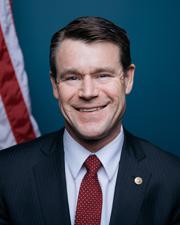
Todd Young
RRepublicanIN · Senator
55
/ 100
Average
Attendance99
Avg: 97
Independence24
Avg: 23
Bipartisan Tone16
Avg: 14
Ethics Record100
Avg: 100
Transparency12
Avg: 47
Accountability Score — composite of attendance, independence, bipartisan tone, ethics record & transparency.
Methodology51
Bills Sponsored
0
Enacted into Law
1
Passed a Chamber
42
In Committee
All Sponsored Bills
S5522In Committee
Protecting Biological Data as Critical Infrastructure Act
S5477In Committee
Federal Receivership Fairness Act
S4023In Committee
America’s Living Library Act
This bill would establish protections and management standards for certain public lands to preserve them as natural and cultural resources for future generations. The legislation likely aims to designate specific areas as protected zones while allowing limited public access for recreation, education, and scientific study. It would affect federal land management agencies, outdoor enthusiasts, and communities near public lands.
S5407In Committee
Visionary Intersections Modernization Act
S5346In Committee
EGG SAVE Act of 2026
S3333Reported
Emergency Savings Enhancement Act of 2025
Emergency Savings Enhancement Act of 2025 This bill expands eligibility and increases the maximum contribution limit for pension-linked emergency savings accounts (PLESAs). As background, PLESAs are savings accounts that are established and maintained in connection with a defined contribution retirement plan, such as a 401(k). Contributions to such accounts are subject to federal income tax, and withdrawals are allowed for any reason. The bill expands eligibility for PLESAs by eliminating the exclusion of highly compensated employees. Thus, under the bill, individuals who meet the age, service, and other eligibility requirements of the plan, regardless of compensation, are eligible to participate in such a plan. The bill also increases the maximum limit on the portion of a PLESA balance attributable to participant contributions to $5,000 (from $2,600 in 2026). This limit continues to be adjusted for inflation. The bill also extends and provides additional funding for a Department of Labor program that awards grants to states to promote employee ownership and participation in businesses.
S5198In Committee
Build to Scale Reauthorization Act of 2026
The federal government would continue funding regional innovation programs that help communities develop new technologies and businesses by supporting research partnerships between universities, companies, and government labs. These programs aim to boost economic growth and job creation in different parts of the country by turning scientific discoveries into practical products and services. The bill would renew authorization for this funding, which had previously been set to expire.
S5150In Committee
SAFE Act
The government would study "chameleon carriers"—trucking companies that hide their identity or safety violations by repeatedly changing their names or registration details to avoid enforcement—and develop a new computer tool to help federal safety inspectors catch these deceptive practices during the registration process. This would help protect the public from unsafe trucking operations that try to evade safety rules by operating under different identities. The measure affects trucking companies, federal safety regulators, and the traveling public who depend on highway safety enforcement.
S5116In Committee
MERIT Act
The proposal would require colleges and universities to stop giving admissions advantages to applicants who are children of alumni or major donors, and would make this practice part of the standards that accreditation agencies use to evaluate schools. It would also authorize a study on how to collect data about whether colleges are following these new rules. The change would affect how millions of students apply to college each year by removing one advantage that wealthy families and long-time supporters currently have in the admissions process.
S3501In Committee
Calumet National Heritage Area Act
This bill would establish a new National Heritage Area in the Calumet region, likely spanning parts of Indiana and Illinois, to preserve and promote the area's historical, cultural, and natural significance. The designation would allow federal funding and coordination to support local conservation efforts, tourism, and community development while giving the region official recognition for its heritage value. Residents, local governments, and businesses in the Calumet area would benefit from increased resources and attention to preserving the region's industrial and environmental history.
S4943In Committee
Outcomes-Based Financing (OBF) for Students Act
This bill would create rules to protect students and workers who use income-share agreements, which are financing tools where borrowers repay their education costs by giving a percentage of their future earnings rather than taking out traditional loans. The framework would establish consumer protections, disclosure requirements, and oversight standards for companies offering these agreements to ensure borrowers understand the terms and aren't taken advantage of. The bill aims to make these alternative financing options safer and more transparent while supporting workforce training and postsecondary education programs.
S4770In Committee
Web of Biological Data Act of 2026
The Department of Energy would create a centralized database that makes biological research data easier for scientists to access and analyze using advanced computer tools like artificial intelligence. This would help researchers across universities, hospitals, and private companies speed up discoveries in areas like medicine and biotechnology by giving them better tools to process large amounts of biological information.
S4751In Committee
End Tuberculosis Now Act of 2026
The proposal would direct U.S. resources toward fighting tuberculosis around the world through prevention programs, treatment access, and research into cures. It affects global health efforts, international aid recipients, and public health organizations working in countries where tuberculosis is common. The bill aims to reduce TB infections and deaths in developing nations while potentially protecting Americans from this infectious disease spreading across borders.
S4657In Committee
Modern, Clean, and Safe Trucks Act of 2026
The proposal would eliminate a federal tax that truck manufacturers currently pay on heavy trucks and trailers, which could potentially lower costs for trucking companies and businesses that rely on commercial vehicles. The change would affect the trucking industry, manufacturers of large vehicles, and potentially consumers who buy goods transported by truck, though the exact impact on prices and competition remains uncertain. The bill is currently under review by the Senate Finance Committee.
S4653In Committee
A bill to amend the Internal Revenue Code of 1986 to allow a deduction for loan interest payments made with respect to certain vehicles.
The proposal would let people deduct the interest they pay on loans for certain vehicles from their federal income taxes, similar to how homeowners can deduct mortgage interest. This would reduce the taxable income for vehicle owners who qualify, potentially lowering their tax bills. The specific types of vehicles eligible for this deduction would be determined by the details of the legislation.
S4629In Committee
Government Bailout Prevention Act
The bill would prevent the federal government from giving money to states, cities, and school districts that fail to pay their debts, and would block the Federal Reserve and Treasury Department from providing financial assistance to these governments if they default on their obligations. This would affect state and local governments, school districts, and potentially the services they provide to residents if they face financial crises. The measure aims to enforce financial responsibility by cutting off federal aid to governments that don't meet their payment obligations.
S4539In Committee
Protecting Charitable Giving Act
The bill would change the penalties that apply when tax return information about donors to certain tax-exempt organizations is improperly disclosed. Currently, there are strict penalties for revealing this donor information, and this legislation would modify how those penalties work. The changes would affect tax-exempt organizations, the IRS, and potentially donors who want their giving information kept private.
S4463In Committee
WAGES Act of 2026
Employers who invest in apprenticeship programs would receive a tax credit to offset some of the wages and costs they pay for training workers on the job. This would reduce the payroll taxes that companies owe to the federal government, making it cheaper for businesses to hire and train apprentices in skilled trades. The goal is to encourage more employers to create apprenticeships and help workers gain practical job skills while earning money.
S4441In Committee
CREATE AI Act
The federal government would create a shared computing resource that researchers across universities, companies, and nonprofits could access to develop and test artificial intelligence technology. This would give scientists and engineers who lack expensive equipment the tools they need to conduct AI research, potentially speeding up innovation in areas like medicine, climate science, and other fields. The resource would be managed by the National Science Foundation and other federal agencies to ensure fair access for researchers nationwide.
SRES679Introduced
A resolution recognizing April 14, 2026, as "World Quantum Day", and commemorating and supporting the goals of World Quantum Day.
Congress is officially recognizing April 14, 2026, as "World Quantum Day" to raise awareness about quantum science and technology, which involves the behavior of matter and energy at the smallest scales and has potential applications in computing, medicine, and other fields. The resolution supports the goals of this international observance, which aims to educate the public and encourage interest in quantum research and development. This is a symbolic measure with no direct impact on laws or funding, but it signals congressional support for quantum science as an important area of study and innovation.
SRES673Introduced
A resolution supporting the goals and ideals of National Safe Digging Month.
This resolution expresses support for National Safe Digging Month and encourages all homeowners and excavators to call 811 to find the location of underground utility lines before digging.
S3597In Committee
National Quantum Initiative Reauthorization Act of 2026
This bill would extend and update the federal government's quantum computing research program, which funds scientists and companies working to develop powerful new computers that could revolutionize fields like medicine, cybersecurity, and artificial intelligence. The legislation would likely allocate money to universities, national laboratories, and private companies to continue building quantum technology and training the next generation of quantum scientists. It affects researchers, tech companies, and anyone who might benefit from advances in computing power and security.
S2563Passed Senate
Global Investment in American Jobs Act of 2025
This bill aims to encourage foreign companies to invest in and create jobs within the United States by potentially offering tax incentives or regulatory benefits to international businesses that establish operations or expand their workforce here. The legislation would affect multinational corporations, American workers seeking employment, and federal tax revenue, while the government would need to administer any new investment programs or tax provisions created by the law.
S3952In Committee
Future of Artificial Intelligence Innovation Act of 2026
This bill would establish a framework for how the federal government supports and regulates artificial intelligence development in the United States, likely aiming to keep American companies competitive while addressing safety and ethical concerns. It probably affects tech companies, researchers, and potentially workers in industries that use AI systems. The bill is still in early stages and hasn't yet been debated or voted on by Congress.
S1387In Committee
National Biotechnology Initiative Act of 2025
This bill would establish a coordinated national program to advance biotechnology research and development in the United States, likely including funding, regulatory support, and coordination between government agencies, universities, and private companies. The initiative would aim to keep America competitive in biotechnology fields like genetic medicine, synthetic biology, and biomanufacturing, potentially creating jobs and improving medical treatments for patients. The bill is currently being reviewed by the Senate health committee, which has already held hearings on the proposal.
SRES644Introduced
A resolution honoring the life and legacy of Coach Louis Leo "Lou" Holtz.
This resolution honors the life and accomplishments of legendary football coach Lou Holtz, recognizing his significant contributions to college sports and his impact on players and communities throughout his career. The resolution was approved by the Senate without any changes, serving as an official statement of respect for Holtz's legacy in athletics and coaching.
S4070In Committee
Diabetes Foot Health Access and Modernization Act of 2026
This bill would expand Medicare coverage for foot care services for people with diabetes, allowing more patients to access preventive foot exams and treatments from podiatrists and other foot care specialists without having to pay out of pocket. The change aims to help diabetic patients catch foot problems early, which can prevent serious complications like infections and amputations that are costly to treat. The bill is currently being reviewed by the Senate Finance Committee.
S4069In Committee
AI-Ready Bio-Data Standards Act
This bill would establish common standards for how biological and health data is formatted and shared so that artificial intelligence systems can more easily access and analyze it. The standards would help researchers, hospitals, and tech companies work with genetic, medical, and other biological information in a consistent way, potentially speeding up medical discoveries and improving AI applications in healthcare. The measure affects healthcare providers, technology companies, researchers, and patients whose data would be used in these AI systems.
S3975In Committee
IRA Charitable Rollover Facilitation and Enhancement Act of 2026
This bill would make it easier for people over 70½ to donate money directly from their retirement accounts (IRAs) to charities without having to pay taxes on those donations. Currently, these charitable donations have strict limits and complicated rules, so the bill aims to expand how much people can give and simplify the process. This would benefit both older Americans who want to support causes they care about and charities that receive donations.
S3950In Committee
SAFER Transport Act
The SAFER Transport Act aims to improve transportation safety by establishing or strengthening safety standards and regulations for vehicles and transportation systems. The bill likely affects drivers, passengers, and transportation companies by requiring compliance with new safety measures, though the specific requirements would depend on the bill's detailed provisions. This legislation has been sent to the Senate Commerce Committee for review and consideration.
SRES622Introduced
A resolution expressing support for the designation of February 21 through February 28, 2026, as "National FFA Week", recognizing the important role of the National FFA Organization in developing the next generation of globally conscious leaders who will change the world, and celebrating the 50th anniversary of the chartering of the State of Alaska as a State FFA Association.
This resolution supports the designation of February 21-28, 2026, as National FFA (Future Farmers of America) Week. It also celebrates the 50th anniversary of the chartering of Alaska as a State FFA Association of the National FFA Organization.
S3845In Committee
After Hours Child Care Act
This bill would help families access child care during evenings, nights, and weekends when most traditional day care centers are closed, making it easier for parents who work non-standard hours to find affordable supervision for their children. The legislation likely includes funding or tax incentives to encourage child care providers to offer extended hours and support working parents who struggle to balance jobs with child care responsibilities.
S3586In Committee
AI for Mainstreet Act
This bill would help small businesses and entrepreneurs use artificial intelligence tools by providing funding, training, and technical support to make AI more accessible and affordable for Main Street companies. It aims to ensure that smaller businesses aren't left behind as AI technology becomes more common in commerce, giving them resources to compete with larger corporations that have more money to invest in these tools.
S3288In Committee
A bill to require the Director of National Intelligence to develop a strategy on intelligence coordination and sharing relating to critical and emerging technologies.
The federal government's intelligence agencies would be required to create a coordinated plan for sharing information about advanced technologies that could affect national security, such as artificial intelligence, quantum computing, and biotechnology. This strategy would help different intelligence agencies work together more effectively rather than operating in separate silos, ensuring that critical technology threats are identified and communicated across the government. The plan would ultimately help policymakers and military leaders make better-informed decisions about emerging technological risks.
S3291In Committee
Enhanced COVID-19 Transparency Act of 2025
This bill would require the federal government to provide more detailed public information about the origins and spread of COVID-19, particularly focusing on any national security implications or classified information that could be safely disclosed. The measure aims to increase transparency around how the pandemic began and spread, which could affect public understanding of the government's pandemic response and military or intelligence operations related to COVID-19. It's currently being reviewed by the Senate's intelligence committee to determine what information can be released without compromising national security.
S2659In Committee
504 Credit Risk Management Improvement Act of 2025
S2812In Committee
Brake for Kids Act of 2025
Brake for Kids Act of 2025 This bill directs the Department of Transportation to carry out a national public safety campaign on the dangers of illegally passing stopped school buses. Specifically, the campaign must increase awareness and education about the issue through a variety of media, including television, radio, and social media advertising.
S2676In Committee
Cloud LAB Act of 2025
The proposal would establish a federal cloud computing laboratory to help researchers and small technology companies access advanced computing resources and develop new cloud-based technologies. By providing shared access to expensive computing infrastructure and expertise, the initiative aims to lower barriers for innovation in areas like artificial intelligence, data analysis, and scientific research. The program would benefit academic institutions, startups, and researchers who currently lack the resources to build or maintain their own high-powered computing systems.
S2674In Committee
HARPOON Act
The legislation would authorize the U.S. government to impose targeted sanctions and other penalties against foreign officials and entities involved in human rights abuses, corruption, or threats to American interests, giving policymakers additional tools to pressure adversarial governments. The measure affects international relations by potentially restricting trade, freezing assets, and limiting visas for individuals and organizations deemed to violate U.S. values or pose security concerns. American businesses operating internationally and foreign governments would be the primary parties impacted by these enforcement mechanisms.
S2223In Committee
Investing in Main Street Act of 2025
Investing in Main Street Act of 2025 This bill authorizes certain banking entities to invest up to 15% of their capital and surplus in one or more small business investment companies (SBICs) or in any entity established to invest solely in SBICs. The current limit is 5%.
S1895In Committee
Mental Health Excellence in Schools Act
S305In Committee
Small Business Technological Act of 2025
The legislation would provide small businesses with funding, training, and resources to adopt new technology and improve their digital capabilities. It aims to help smaller companies compete more effectively in an increasingly digital economy by making it easier and more affordable for them to invest in tools like software, cybersecurity, and online platforms. The bill would primarily benefit small business owners and their employees by modernizing their operations and creating new job opportunities.
S1763In Committee
Motorsports Fairness and Permanency Act of 2025
This bill would make permanent certain tax breaks for the motorsports industry, likely including deductions or credits related to racing events, vehicle modifications, or facility improvements that currently expire or are set to expire. The changes would primarily benefit motorsports businesses, event organizers, and companies involved in racing operations by giving them more stable, long-term tax treatment. The bill is currently under review by the Senate Finance Committee.
S1717In Committee
Ensuring Patient Access to Critical Breakthrough Products Act of 2025
The legislation would allow patients faster access to certain new drugs and medical devices that show promise in treating serious or life-threatening conditions, even before they complete all standard FDA approval testing. This could benefit patients with diseases like cancer or rare conditions who have limited treatment options, though it may involve some additional risk since these products haven't undergone the full approval process. The changes would primarily affect pharmaceutical and medical device companies, patients, and the FDA's approval procedures.
S1686In Committee
Neighborhood Homes Investment Act
The proposal would create tax incentives to encourage investment in affordable housing development in lower-income neighborhoods, likely through tax credits or deductions for developers and investors who build or rehabilitate homes in these areas. This would affect real estate developers, investors, and potentially homebuyers seeking affordable properties in targeted communities. The goal is to increase the supply of affordable housing while stimulating economic development in neighborhoods that need it most.
S1699In Committee
Artificial Intelligence Public Awareness and Education Campaign Act
The government would launch a public education campaign to help Americans understand what artificial intelligence is, how it works, and how it affects their daily lives. The campaign would use various media and outreach methods to inform workers, consumers, and students about both the benefits and potential risks of AI technology. This aims to increase public knowledge about AI before it becomes even more widespread in workplaces, healthcare, and other areas of society.
SRES175Introduced
A resolution recognizing April 14, 2025, as "World Quantum Day", and commemorating and supporting the goals of World Quantum Day.
This resolution recognizes April 14, 2025, as World Quantum Day and encourages schools and educators to observe the day with activities that teach students about quantum physics.
SRES160Introduced
A resolution supporting the goals and ideals of National Safe Digging Month.
This resolution expresses support for National Safe Digging Month and encourages all homeowners and excavators to call 811 to find the location of underground utility lines before digging.
S1047Reported
Assisting Small Businesses Not Fraudsters Act
This bill would help small businesses access federal loans and support programs by making it harder for fraudsters to steal these resources through false applications. The measure likely tightens verification requirements and penalties for people who commit fraud when applying for small business assistance, protecting legitimate entrepreneurs and taxpayers from losing funding to scams.
S691In Committee
Leveling the Playing Field 2.0 Act
Leveling the Playing Field 2.0 Act This bill addresses unfair trade practices by making various changes to U.S. antidumping and countervailing duty laws. Antidumping laws provide relief to U.S industries and workers that are materially injured or threatened with injury due to imports of like products sold in the U.S. market at less than fair value, while countervailing duty laws provide such relief from imports of products subsidized by a foreign government or public entity. Specifically, the bill establishes a process for successive antidumping and countervailing duty investigations. Successive investigations may be concurrent (an ongoing investigation of the same product) or recently completed (not more than two years before the date of the initiation of the successive investigation). Further, the bill establishes a timeline for the Department of Commerce to issue determinations in successive investigations. Among other provisions, the bill authorizes Commerce to apply countervailing duty law to subsidies provided by a foreign government or public entity to a company operating in a different country, use another method for calculating the cost of production in specific circumstances, and require importers to certify that the imported merchandise is not subject to an antidumping or countervailing duty order. Additionally, the bill statutorily establishes procedures for Commerce to conduct circumvention inquiries, including by specifying the deadlines for preliminary and final determinations. The bill also provides statutory authority for Commerce to investigate currency undervaluation as a countervailable subsidy.
S429In Committee
STRATEGIC Minerals Act
Securing Trade and Resources for Advanced Technology, Economic Growth, and International Commerce in Minerals Act or STRATEGIC Minerals Act This bill authorizes actions to facilitate trade and increase U.S. access to critical minerals and rare earth elements (REEs). Under the bill, critical minerals are any mineral, element, substance, or material designated as critical by the U.S. Geological Survey (e.g., aluminum and cobalt). Additionally, the bill includes a group of 17 elements within the definition of REEs , including elements used in permanent magnets (e.g., dysprosium and neodymium). Specifically, the bill authorizes the President, acting through the Office of the U.S. Trade Representative, to (1) negotiate, enter into, and enforce a free trade agreement with a country or countries with respect to critical minerals and REEs when the President determines it is in the national interest; and (2) proclaim a modification or continuance of any existing duty, or continuance of existing duty-free or excise treatment, as the President determines necessary to carry out the agreement. The bill prohibits agreements with nonmarket economy countries that are designated as foreign countries of concern (e.g., China and Russia). The bill outlines procedures for congressional notification, consultation, and review of these trade agreements. The bill also expands the definition of domestic source under the Defense Production Act, thereby making certain businesses from countries that are party to free trade agreements under this bill eligible for financial incentives to increase production of critical components, critical technology items, materials, and industrial resources needed for U.S. national security.