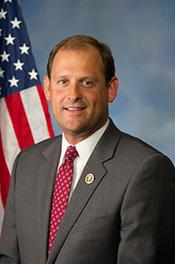
Andy Barr
RRepublicanKY-6 · Representative
56
/ 100
Average
Attendance93
Avg: 96
Independence1
Avg: 4
Bipartisan Tone10
Avg: 15
Ethics Record100
Avg: 99
Transparency70
Avg: 53
Accountability Score — composite of attendance, independence, bipartisan tone, ethics record & transparency.
Methodology41
Bills Sponsored
0
Enacted into Law
1
Passed a Chamber
40
In Committee
All Sponsored Bills
HR1653In Committee
Civil Investigative Demand Reform Act of 2025
Civil Investigative Demand Reform Act of 2025 This bill revises the Consumer Financial Protection Bureau’s (CFPB’s) civil investigative demand process. The demand process is used to gather information relevant to a violation of consumer financial law before formal proceedings. Under the bill, such demands must be issued and served no later than six years after the date of the violation. The demand must also provide specific reference to particular facts regarding the violation. The bill establishes a process that allows an advising attorney to submit questions on behalf of a person compelled by a demand to appear for oral testimony. The bill also allows for judicial review if the CFPB denies a petition to set aside or modify a demand. These petitions must be treated as confidential. In addition, the bill expands the grounds on which a petitioner may seek relief from such a demand to include a demonstration that the demand (1) is unduly burdensome, expensive, and outside the scope of the inquiry; (2) is unreasonably cumulative or duplicative; or (3) can be obtained from some other source that is more convenient, less burdensome, or less expensive.
HR10184In Committee
Consumer Financial Protection Accountability and Reform Act of 2026
HR10070In Committee
Border Patrol Overtime Parity Act
HR9830In Committee
Lawful Hemp Protection Act
The legislation would allow the legal sale of hemp products while cracking down on synthetic THC products that produce intoxicating effects similar to marijuana, protecting consumers from potentially dangerous high-potency substances. The bill affects hemp farmers and businesses that sell hemp products, as well as consumers who use these products, by establishing clearer rules about what can and cannot be sold in the marketplace. Multiple congressional committees are reviewing the proposal to determine how it fits within their areas of responsibility.
HR5929In Committee
Critical Minerals Supply Chain Resiliency Act of 2026
This bill aims to strengthen America's ability to obtain critical minerals needed for batteries, electronics, and defense without relying too heavily on other countries, while also protecting the environment during mining and processing. It would likely establish new policies and investments to develop domestic sources of minerals like lithium and cobalt, support recycling programs, and ensure mining operations meet environmental standards. The changes would affect mining companies, manufacturers of batteries and electronics, environmental groups, and consumers who depend on products containing these materials.
HR8956In Committee
Border Patrol Supervisors Retention Act
Border Patrol agents who hold higher-ranking positions (above grade GS-12) would become eligible to receive special overtime pay, which currently only applies to lower-ranked agents. This change would allow senior Border Patrol officers to earn extra compensation when they work beyond their regular hours, similar to benefits available to their junior colleagues. The bill would affect Border Patrol management and could increase labor costs for the agency.
HR8075In Committee
To authorize the Secretary of the Treasury to direct the Federal Deposit Insurance Corporation and the National Credit Union Administration to establish emergency transaction account guarantee programs, and for other purposes.
The bill would allow the Treasury Secretary to order the FDIC and credit union regulators to create emergency programs that guarantee all customer deposits in transaction accounts (like checking accounts) without the normal $250,000 limit, protecting people's everyday spending money during financial crises. This would help prevent bank runs and panic withdrawals if the financial system faces serious instability. The measure gives government officials tools to respond quickly to emergencies affecting regular depositors and small businesses that rely on access to their checking accounts.
HR7056In Committee
Community Bank Regulatory Tailoring Act
Community Bank Regulatory Tailoring Act This bill increases various statutory dollar amount thresholds applicable to financial regulations and requires periodic adjustments to such amounts in the future. By raising these thresholds, the bill expands the access of financial institutions to less stringent requirements. The adjustments apply to several asset thresholds used to regulate insured depository institutions, bank holding companies, credit unions, and other financial entities. Thresholds that are increased under this bill include those applicable to the Volcker Rule, which prohibits certain larger banking entities from engaging in proprietary trading or from having an interest in hedge funds or a private equity fund; limited routine examinations of smaller insured depository institutions to assess an institution’s record of meeting the credit needs of its community, including low- and moderate-income neighborhoods; risk assessments charged to larger bank holding companies by the Federal Deposit Insurance Corporation in accordance with the orderly liquidation authority under the Dodd-Frank Wall Street Reform and Consumer Protection Act; and home mortgage disclosures required by certain larger financial institutions. Every five years, the Federal Reserve Board must establish the ratio by which these amounts must be raised. This ratio shall reflect increases in the U.S. gross domestic product.
HR7897In Committee
No Tax on Drill Pay Act
This bill would exempt military members from paying federal income taxes on the pay they receive for drilling and training exercises with their reserve or National Guard units. The change would reduce the tax burden on part-time military personnel who balance civilian jobs with their military service obligations.
HR7758In Committee
The Dalilah Law
Without access to the specific text of this bill, I cannot provide an accurate summary of what it would do. The bill's title and referral to the Transportation and Infrastructure Committee suggest it may address immigration policy related to transportation or infrastructure, but the actual provisions are unclear from this information alone. To write a factual summary, I would need to review the bill's text or legislative description.
HR7759In Committee
Afghanistan Vetting and Accountability Act of 2026
This bill would establish stricter vetting procedures for Afghan nationals entering the United States, likely including enhanced background checks and security screening processes. It would also create accountability measures to track and monitor individuals admitted from Afghanistan, potentially affecting Afghan refugees and immigrants seeking to come to or remain in the country.
HR6552In Committee
Bank-Fintech Partnership Enhancement Act
This bill would make it easier for banks and financial technology companies to work together by relaxing some regulatory rules that currently keep them separate. The changes would allow these companies to share customer data and services more freely, which supporters say could give consumers better financial products and lower costs, though it could also raise concerns about data privacy and competition. The bill primarily affects banks, fintech startups, and their customers.
HR6553In Committee
TIER Act of 2025
Tailoring and Indexing Enhanced Regulations Act of 2025 or the TIER Act of 2025 This bill increases the dollar asset thresholds for various fees, reporting requirements, and regulatory supervision applicable to certain financial companies and banks. For example, the bill increases the asset threshold above which bank holding companies and savings and loan companies must pay certain Federal Reserve Board assessments; financial holding companies need board approval to acquire a company; bank holding companies must report on the company’s financial condition to the Financial Stability Oversight Council; and bank holding companies may be subject to increased supervision if, among other things, they are found to pose a grave threat to U.S. financial stability. Periodically, the Federal Reserve Board must increase statutory thresholds and thresholds established by rule to reflect increases in the gross domestic product.
HR4781In Committee
RESCUE Act of 2025
The RESCUE Act of 2025 would make changes to energy policy, though the specific details are still being examined in subcommittee hearings. Based on the bill's focus on energy, it likely addresses issues such as energy production, efficiency, renewable energy development, or grid modernization, affecting energy companies, utilities, and potentially consumers' electricity costs and access to different energy sources. The bill is currently in the early stages of the legislative process as lawmakers gather information and hear testimony about its provisions.
HR7644In Committee
Millennium Challenge Corporation Strategic Modernization Act
The Millennium Challenge Corporation, a U.S. government agency that provides aid to developing countries, would undergo updates to how it operates and makes decisions about which countries receive funding. The changes would likely modernize the agency's processes and strategies to better align with current foreign policy goals and improve how it evaluates and manages its assistance programs. This affects countries that receive U.S. development aid and the agency's staff who administer these programs.
HR7588In Committee
Eliminating Fraud in the CFPB’s Complaint Database Act
This bill would require the Consumer Financial Protection Bureau to verify complaints in its public database before posting them, aiming to remove false or misleading information that consumers and regulators currently rely on. The change would affect both financial companies, which could face fewer unverified complaints about their practices, and consumers looking for honest feedback about banks and lenders. Supporters argue this prevents fraud against companies, while critics worry it could slow down complaint reporting and hide legitimate consumer grievances.
HR7485In Committee
Taiwan SOS Act of 2026
This bill would strengthen U.S. support for Taiwan by establishing new diplomatic and military assistance measures to help the island defend itself and maintain its international standing. The legislation affects U.S. foreign policy toward China and Taiwan, potentially increasing military aid, expanding official government contacts, and enhancing Taiwan's ability to participate in international organizations. The bill has been sent to committees that handle foreign relations and military matters for review.
HR7484In Committee
Community Bank Relief Act
This bill would likely reduce regulatory requirements and compliance costs for smaller community banks, allowing them to operate with less paperwork and oversight than larger financial institutions. The changes would probably affect community banks' ability to lend to local businesses and homebuyers by freeing up resources currently spent on regulatory compliance. Customers of these smaller banks could potentially benefit from lower fees or more accessible lending, though the specific impacts would depend on the bill's detailed provisions.
HR7026In Committee
Fiscal State of the Nation Act
Fiscal State of the Nation Act This bill requires the congressional budget committees to conduct an annual joint hearing to receive a presentation from the Comptroller General regarding (1) the Government Accountability Office's audit of the financial statement of the executive branch, and (2) the financial position and condition of the federal government.
HR2405In Committee
The White Oak Resilience Act
The legislation would authorize the U.S. Forest Service and Bureau of Land Management to conduct forest management activities, including controlled burns and selective logging, on federal lands to reduce wildfire risk and improve forest health, particularly focusing on white oak ecosystems. These agencies would be given more flexibility to implement these projects without some of the usual environmental review requirements, allowing them to respond more quickly to forest conditions. The bill aims to help communities near federal forests become more resilient to wildfires while supporting timber-dependent economies in affected regions.
HR6920In Committee
SUCCESS for BEAD Act
This bill aims to improve how the federal government distributes broadband funding to help close the digital divide in underserved areas. It likely modifies or clarifies rules for the BEAD (Broadband Equity, Access and Deployment) program, which provides grants to states and communities to build high-speed internet infrastructure in rural and low-income neighborhoods. The changes would affect internet service providers, state governments, and millions of Americans currently lacking reliable broadband access.
HR5767In Committee
Secure Commercial Driver Licensing Act of 2025
The legislation would establish new security standards and requirements for commercial driver's licenses (CDLs) to prevent fraud and improve identification verification for truck drivers and other commercial vehicle operators. It would likely set uniform rules across states for how CDLs are issued, what information they contain, and what security features they must have to reduce counterfeiting and identity theft. These changes would affect trucking companies, professional drivers, and state motor vehicle departments that issue licenses.
HR3673In Committee
Small Business Investor Capital Access Act
Small Business Investor Capital Access Act This bill requires the Securities and Exchange Commission (SEC) to adjust annually for inflation the dollar threshold of an exemption from registration requirements for investment advisors of private funds. Currently, investment advisors of private funds of less than $150 million in assets under management are exempt. The bill requires the SEC to adjust that amount annually based on the change in the Consumer Price Index.
HR747Passed House
Stop Chinese Fentanyl Act of 2025
Stop Chinese Fentanyl Act of 2025 This bill subjects certain Chinese entities and government officials to potential sanctions related to opioid trafficking and requires the President to conduct certain preliminary analyses before regulating economic transactions in the event of a national emergency related to international drug trafficking. Specifically, for the purposes of the Fentanyl Sanctions Act, the bill changes the definition of foreign opioid trafficker to specify that the term includes (1) Chinese entities involved in the production or sale of synthetic opioids or related pharmaceutical ingredients that fail to take steps to detect or prevent opioid trafficking; and (2) certain senior Chinese government officials that aid and abet opioid trafficking, including through intentional inaction. Under current law, the President must impose certain sanctions on individuals and entities identified as foreign opioid traffickers. Further, the bill extends through 2029 an existing requirement that the President report to Congress annually on identified foreign opioid traffickers and any sanctions imposed on them. (This requirement expired in December 2024.) The bill also requires the President to take additional steps in issuing regulations under the International Emergency Economic Powers Act (IEEPA) pursuant to a declared national emergency related to international drug trafficking. (IEEPA authorizes the President to regulate a variety of economic transactions following a declaration of national emergency.) Under the bill, the President must evaluate the costs and benefits of issuing economic regulations for the purpose of resolving the drug trafficking emergency and publish a discussion of such costs and benefits.
HR4875In Committee
Coal Ash for American Infrastructure Act
This bill would allow coal ash—the leftover material from burning coal for electricity—to be reused in construction projects like roads, bridges, and concrete instead of being stored in landfills. The proposal aims to reduce waste and create a market for this material while potentially lowering construction costs, though environmental groups have raised concerns about whether coal ash is safe enough to use in infrastructure without stricter safety standards. The bill would primarily affect power plants, construction companies, and state environmental regulators who oversee how coal ash is managed.
HR4835In Committee
Strategic Resources Non-discrimination Act
This bill would likely prevent discrimination in access to energy resources or energy-related financing and investment opportunities. The exact scope isn't clear from the title alone, but it appears designed to ensure fair treatment for certain groups or regions in obtaining energy supplies, funding for energy projects, or participation in energy markets. The bill is currently under review by the House Financial Services Committee.
HR4630In Committee
WAGER Act of 2025
The proposal would establish new federal tax rules for gambling and sports betting winnings, likely requiring clearer reporting of gambling income and potentially adjusting how taxes are calculated on these earnings. This would affect individual gamblers, casinos, online betting platforms, and state governments that collect their own gambling taxes. The changes aim to improve tax compliance and clarify the tax treatment of gambling-related income across different types of betting activities.
HR4363In Committee
Defend Girls Athletics Act
The proposal would require schools to designate athletic teams and facilities based on biological sex rather than gender identity, affecting how transgender students can participate in school sports. It would apply to any school receiving federal education funding, potentially impacting millions of students and schools across the country. The bill aims to address concerns about fairness in girls' athletics, though it remains controversial among education advocates, civil rights groups, and medical organizations.
HJRES103In Committee
Proposing an amendment to the Constitution to protect American citizenship.
This proposed constitutional amendment would change the rules for who automatically becomes a U.S. citizen at birth, potentially affecting children born to non-citizen parents in the United States. The amendment would need approval from two-thirds of both the House and Senate, plus ratification by three-fourths of state legislatures to become part of the Constitution. It would impact immigration policy and citizenship eligibility for future generations of Americans.
HR2702In Committee
FIRM Act
Financial Integrity and Regulation Management Act or the FIRM Act This bill prohibits the consideration of reputational risk by federal banking agencies when regulating, examining, or supervising a depository institution or credit union. The bill defines reputational risk as the potential for negative publicity or public attention to decrease confidence in the institution, lead to litigation, reduce revenues, or result in other adverse impacts to the institution. Agencies must report on the implementation of this bill.
HR3230In Committee
Financial Institution Regulatory Tailoring Enhancement Act
Financial Institution Regulatory Tailoring Enhancement Act This bill limits the regulations applicable to certain financial institutions by increasing several different asset levels. The bill raises the asset level above which insured depository institutions and credit unions become subject to supervision by the Consumer Financial Protection Bureau for purposes of compliance with consumer financial laws and for risk assessments of products and services. The bill raises the asset level above which banks must comply with the Volcker Rule, which prohibits banks from proprietary trading and having an ownership interest in private funds. The bill raises the asset level below which financial institutions must comply with less prescriptive ability-to-repay determinations for residential mortgages. Finally, the bill raises the asset level below which certain depository institutions and depository institution holding companies qualify as community banks and are therefore subject to a simplified leverage ratio.
HR1900In Committee
Bank Failure Prevention Act of 2025
Bank Failure Prevention Act of 2025 This bill revises the Federal Reserve Board’s review process of merger and acquisition applications for bank holding companies. Specifically, the board must notify the applicant within a certain time period regarding whether the application is complete or if additional information is required. The board must grant or deny such an application no later than 90 days after submission, regardless of whether the application was deemed complete. (Currently, the board must grant or deny an application no later than 90 days after receipt of a complete application.) In addition, the board is prohibited from basing such application determinations on information provided by third parties.
HR478In Committee
Promoting New Bank Formation Act
Promoting New Bank Formation Act This bill eliminates and reduces certain requirements applicable to new depository institutions, certain rural community depository institutions, and federal savings associations. Federal banking agencies must issue rules allowing a new depository institution or depository institution holding company three years to meet capital requirements. During this period, a depository institution or its depository institution holding company may request to deviate from an approved business plan, and the appropriate agency has 30 days to approve or deny the request. In addition, the community bank leverage ratio—a way of evaluating debt levels—is reduced for new rural community depository institutions. Specifically, new rural community depository institutions must have a ratio of 8%, with a three-year phase-in of the rate. After this period, the ratio rises to its current level of 9%. Finally, the bill removes certain restrictions to allow federal savings associations to invest in, sell, or otherwise deal in agricultural loans.
HR3135In Committee
RACE Act of 2025
Regulation Advancement for Capital Enhancement Act of 2025 or the RACE Act of 2025 This bill allows issuers with offerings that were previously exempted from securities registration requirements to issue an additional class of securities if certain criteria are met. Specifically, this bill allows an issuer who issued securities under Regulation A (a small offering of securities exempt from registration requirements) to issue an additional class of securities if the securities in the additional class are substantially similar to the original class and the offering amount does not exceed specified dollar limits. However, the securities offered in the additional class are not required to have the same nature or terms.
HR2924In Committee
NATO Burden Sharing Enforcement Act
NATO Burden Sharing Enforcement Act This bill requires the Department of State to discontinue granting visas to citizens, subjects, nationals, and residents of a country that is a member of the North Atlantic Treaty Organization and does not spend at least 2% of its gross domestic product on national defense.
HJRES92In Committee
Providing for congressional disapproval under chapter 8 of title 5, United States Code, of the rule submitted by the Office of the Comptroller of the Currency of the Department of the Treasury relating to the review of applications under the Bank Merger Act.
Congress would reject a new rule from the Treasury Department's banking regulator that changes how it reviews bank merger applications. The rule would be blocked before it takes effect, meaning banks seeking to merge would continue operating under the previous approval process rather than the new one. This affects large financial institutions planning mergers and the communities they serve.
HR2666In Committee
CBO Scoring Accountability Act
CBO Scoring Accountability Act This bill requires the Congressional Budget Office (CBO) to provide additional cost estimates and reports regarding major legislation that has been enacted into law. Under the bill, major legislation is any bill or joint resolution that would be projected to result in outlays of mandatory spending or receipts of federal revenue equal to or greater than 0.25% of the current projected gross domestic product of the United States for that year. For the first 10 years after major legislation has been enacted into law, the bill requires CBO to annually prepare and make publicly available an analysis of the results of carrying out the provisions of the legislation. The analysis must include an estimate of the costs and the change in federal revenue as a result of the legislation, a comparison of the current and previous estimates of the costs and change in revenue, and any applicable updates to the estimates. The bill also requires CBO to submit reports to Congress that explain any discrepancy between the actual and estimated costs and change in revenue that is greater than or equal to 10%.
HR2358In Committee
ESG Act of 2025
Ensuring Sound Guidance Act of 2025 or the ESG Act of 2025 This bill further defines the best interest of a customer for purposes of the standard of conduct for all brokers, dealers, and investment advisers. Currently, these professionals must act in the best interest of the customer without regard to the financial or other interests of the professional providing the advice. The bill adds that the best interest standard must be based on pecuniary factors (i.e., a factor that a fiduciary determines will have a material effect on an investment's performance) unless the customer otherwise directs. In addition, the Securities and Exchange Commission must report on (1) municipal bond disclosures regarding climate change and environmental matters, and (2) the effectiveness of specified rules in preventing the payment of government officials or candidates in exchange for government business in connection with the sale or offer of municipal securities.
HR1236In Committee
Chief Herbert D. Proffitt Act of 2025
The legislation honors Chief Herbert D. Proffitt by establishing recognition or commemorative measures related to law enforcement, though the specific provisions would be determined during committee review. The bill affects how federal law enforcement agencies or the government recognize contributions to crime prevention and public safety. This measure is currently under consideration by the House Judiciary Committee.
HR987In Committee
Fair Access to Banking Act
Fair Access to Banking Act This bill places restrictions on certain banks, credit unions, and payment card networks if they refuse to do business with a person who complies with the law. Restrictions include prohibiting the use of electronic funds transfer systems and lending programs, termination of an institution's depository insurance, and specified civil penalties. Banks and other specified financial institutions are allowed to deny financial services to a person only if the denial is justified by a documented failure of that person to meet quantitative, impartial, risk-based standards established in advance by the institution. This justification may not be based upon reputational risks to the institution. The bill establishes the right for a person to bring a civil action for a violation of this bill.
HR654In Committee
TABS Act of 2025
Taking Account of Bureaucrats' Spending Act of 2025 or the TABS Act of 2025 This bill restructures the Consumer Financial Protection Bureau and renames it as the Consumer Financial Empowerment Agency. The new agency is established as an independent agency outside of the Federal Reserve System. The bill also changes the funding structure of the agency by prohibiting the transfer of funds to the agency from the Federal Reserve System and by authorizing congressional appropriations for FY2026-FY2027.