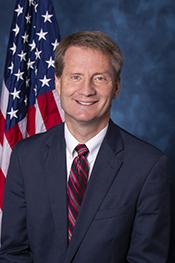
Tim Burchett
RRepublicanTN-2 · Representative
56
/ 100
Average
Attendance97
Avg: 96
Independence14
Avg: 4
Bipartisan Tone19
Avg: 15
Ethics Record100
Avg: 99
Transparency37
Avg: 53
Accountability Score — composite of attendance, independence, bipartisan tone, ethics record & transparency.
Methodology39
Bills Sponsored
0
Enacted into Law
4
Passed a Chamber
33
In Committee
All Sponsored Bills
HR10535In Committee
Paperwork Reduction Modernization Act of 2026
HR10487In Committee
Recovery First Housing Act
HR10422In Committee
Diesel Price Reduction Act of 2026
HR10423In Committee
To provide for a temporary prohibition on the export of diesel fuel.
This bill prohibits the export of diesel fuel until December 31, 2026.
HR1372Passed House
To designate the facility of the United States Postal Service located at 300 Macedonia Lane in Knoxville, Tennessee, as the "Reverend Harold Middlebrook Post Office Building".
This bill designates the facility of the United States Postal Service located at 300 Macedonia Lane in Knoxville, Tennessee, as the "Reverend Harold Middlebrook Post Office Building".
HR10225In Committee
No Federal Taxpayer-Funded Housing for Illegal Aliens Act of 2026
HR9800In Committee
Protection Against Mass Surveillance Act
Federal agencies would be banned from buying or using surveillance technology that can identify, track, or record people without explicit legal authorization. This restriction would apply to facial recognition systems, license plate readers, and similar automated tools used by agencies like the FBI, ICE, and local police departments that receive federal funding. The measure aims to protect Americans' privacy by preventing widespread government surveillance while still allowing agencies to use these tools only when Congress specifically approves them for particular purposes.
HR9775In Committee
Concealed Crime Prevention Act
In Washington, D.C., criminals who wear ski masks or other face coverings while committing crimes would face increased criminal penalties under this proposal. The enhanced punishments would apply on top of whatever sentence someone receives for the underlying crime itself, making the penalties steeper for offenders who try to hide their identity during criminal activity. This would affect anyone arrested for crimes in D.C. who wore a mask during the offense.
HR9697In Committee
Cyber Letters of Marque and Reprisal Act
The proposal would allow the President to authorize private individuals and companies to conduct offensive cyber operations against foreign targets in response to cyberattacks on the United States, similar to historical "letters of marque" that allowed privateers to attack enemy ships. This would essentially create a legal framework for government-sanctioned private hackers to retaliate against foreign cyber threats without those individuals facing criminal charges. The measure affects cybersecurity professionals, technology companies, and international relations, though it raises questions about oversight, accountability, and compliance with international law.
HR9649In Committee
Stop Retail Food Store SNAP Trafficking Act of 2026
The bill would crack down on fraud in the food stamp program by improving how the government tracks when stores illegally sell SNAP benefits for cash instead of food. It would also increase penalties for stores caught trafficking in benefits and require regular reports to Congress about how widespread the problem is. These changes aim to prevent criminals from stealing money meant to help low-income families buy groceries.
HR9456In Committee
SNAP Citizenship and Residency Act of 2026
The proposal would limit food assistance benefits to immigrants who have been approved as permanent residents and have lived legally in the United States for at least 10 years, making it harder for newer immigrants and other non-citizens to qualify for the federal food aid program. Currently, some immigrants with different legal statuses can receive these benefits, but this change would narrow who is eligible. The change would affect millions of immigrants and their families who rely on food assistance to put meals on the table.
HR9343In Committee
Easy Access to Mail Act
The proposal would set new rules for how the U.S. Postal Service handles mail delivery to apartment buildings and residential complexes, requiring clearer procedures for when mail gets delivered to centralized mailboxes instead of individual unit doors. This affects both postal workers and residents who receive mail, potentially changing how and where people pick up their packages and letters depending on their housing type. The bill is currently under review by a House committee.
HR8960In Committee
Local Beef Marketing Incentive Act of 2026
The federal government would create a new program to pay beef farmers and ranchers when they sell directly to consumers (rather than through traditional markets) and experience revenue losses. Eligible producers would receive subsidies to help offset financial losses from these direct-to-market sales, such as selling beef directly to restaurants or consumers instead of through middlemen. This program would primarily benefit small and mid-sized beef producers who rely on direct sales channels.
HR9215In Committee
Prioritizing Warfighters in Defense Contracting Act
The federal government would restrict defense contractors that fail to meet performance standards from using taxpayer money to buy back their own stock, pay shareholder dividends, or give large executive bonuses. The Defense Secretary would decide which contractors are underperforming and enforce these restrictions. This aims to ensure that defense spending goes toward improving services and products rather than enriching shareholders and executives at companies that aren't meeting their obligations.
HR8096In Committee
Duplication Scoring Act of 2026
This bill would require the federal government to identify and score overlapping or duplicate programs across different agencies to help reduce waste and inefficiency in how taxpayer money is spent. The measure aims to give Congress and the public a clearer picture of where government services overlap so lawmakers can make better decisions about consolidating or eliminating redundant programs. It would affect federal agencies and potentially save money by streamlining government operations.
HR8922In Committee
DROP Act of 2026
This proposal would change federal rules about how the death penalty is carried out in the United States. The amendment would modify the legal procedures and methods used when a death sentence is implemented in federal cases. This would affect how the federal government executes people who have been sentenced to death for federal crimes.
HR8847In Committee
Deporting Illegal Poachers Act
This bill would make it illegal for non-citizens to enter or stay in the United States if they have been convicted of or committed violations of state or federal hunting and fishing laws. People who break these wildlife laws could be deported, and immigration officials could deny them entry to the country. The change would apply to both serious and minor hunting or fishing violations.
HR8725In Committee
Survivor Tax Filing Simplification Act
The Treasury Department would create an online portal to help survivors of deceased taxpayers more easily handle tax-related matters, such as filing final tax returns and claiming refunds owed to the estate. This tool would simplify the process for families dealing with a loved one's death by providing guidance and streamlined access to necessary tax forms and information in one place.
HR8601In Committee
Veterans Protection from Fraud Act of 2026
The proposal would increase criminal penalties for crimes specifically targeting veterans, making punishments harsher for offenders who commit violent crimes, theft, or fraud against people who have served in the military. This would affect both the veterans who receive stronger legal protections and the individuals convicted of crimes against them, who would face longer prison sentences or larger fines. The bill aims to recognize veterans as a protected group deserving of enhanced legal safeguards.
HR8366In Committee
PEARL Act
This bill would allow pharmacists to refuse to fill prescriptions for medications that can induce abortion based on their religious beliefs, without facing legal consequences from their employers or state licensing boards. The measure protects pharmacists' ability to opt out of dispensing these drugs while potentially leaving patients responsible for finding another pharmacy to fill their prescriptions. It affects both pharmacists seeking religious exemptions and patients who may face delays or difficulty accessing these medications.
HR8197In Committee
To terminate the All-domain Anomaly Resolution Office of the Department of Defense, and for other purposes.
This bill would shut down the Pentagon's All-domain Anomaly Resolution Office, which was created to investigate unidentified flying objects and other unexplained phenomena affecting military operations. The measure is currently under review by congressional committees that oversee defense and intelligence matters to determine whether eliminating this office is the right approach.
HR7605Reported
African Development Foundation Termination Act of 2026
This bill would shut down the African Development Foundation, a U.S. government agency that provides grants and loans to help small businesses and communities in African countries develop economically. The action would eliminate the foundation's operations and redirect its remaining resources, affecting development projects across Africa and the American workers and contractors involved in those programs.
HR2247Passed House
Airmen Certificate Accessibility Act
Pilot Certificate Accessibility Act This bill allows a pilot to present a digital copy of certain certificates (e.g., an airman certificate or a medical certificate) when required to present such documentation by a Federal Aviation Administration (FAA) inspector. Under current FAA regulations, a pilot must present for inspection a physical copy of an airman certificate and other paperwork upon a request from the FAA; a federal, state, or local law enforcement officer; or an authorized representative of the Transportation Security Administration or the National Transportation Safety Board. This bill allows a pilot to present a certificate such as an airman certificate or a medical certificate to an FAA inspector as (1) a physical, original copy; or (2) a digital copy stored on an electronic device or cloud storage platform. The FAA must update current regulations to implement this change.
HR7818In Committee
American Meat Freedom Act
This bill would likely prevent the federal government from imposing new regulations on meat production, processing, or labeling without approval from Congress. It appears designed to protect meat producers and farmers from what supporters view as excessive federal oversight, though it could limit food safety or environmental rules. The bill affects livestock farmers, meat companies, and potentially consumers depending on what regulations it blocks.
HR260Passed House
No Tax Dollars for Terrorists Act
No Tax Dollars for Terrorists Act This bill requires the Department of State to develop and implement a strategy to discourage foreign countries and nongovernmental organizations from providing financial or material support to the Taliban, including by using U.S.-provided foreign assistance to discourage countries and organizations from providing such support to the Taliban. The State Department must report to Congress on (1) foreign countries and nongovernmental organizations that have provided financial or material support to the Taliban and U.S. efforts to oppose such support; (2) the strategy to discourage such support and a plan for the strategy's implementation; (3) U.S.-funded direct cash assistance programs in Afghanistan; and (4) the Afghan Fund, including Taliban influence over Da Afghanistan Bank (the Afghan central bank).
HR7028Reported
To require the Secretary of State to submit a notification to Congress prior to obligating funds for certain art-related purchases, and for other purposes.
The State Department would need to notify Congress before spending money on art purchases or related cultural projects. This gives lawmakers a chance to review and potentially object to how taxpayer money is being used for art acquisitions and international cultural initiatives. The requirement affects the State Department's ability to make these spending decisions independently.
HR6515In Committee
To amend the Patient Protection and Affordable Care Act to prevent duplicate enrollments in Exchanges.
The bill would fix a problem where people can accidentally sign up for health insurance through multiple government exchanges at the same time, which creates confusion and billing issues. It would add safeguards to the healthcare law to prevent these duplicate enrollments and ensure people only have one active insurance plan when they use the government marketplaces. This affects anyone who buys insurance through the healthcare exchanges and the insurance companies that serve them.
HR6174In Committee
Ending Crime and Disorder on America’s Streets Act
Ending Crime and Disorder on America’s Streets Act This bill requires federal agencies to incentivize the use of civil commitment (i.e., involuntary psychiatric hospitalization or treatment) to address homelessness, such as through prioritizing grant funding for certain activities and other policy changes. The bill provides statutory authority for many provisions of an executive order issued by President Donald Trump on July 24, 2025, titled Ending Crime and Disorder on America’s Streets . The bill requires the Department of Justice (DOJ) to seek reversal of federal and state court decisions and termination of certain court orders that impede a policy of encouraging the civil commitment of unhoused individuals. DOJ must assist jurisdictions with implementing flexible standards for civil commitment and institutional treatment. DOJ must also review whether entities receiving federal housing funds are operating safe consumption sites (i.e., supervised use of illicit drugs) in violation of federal law, ensure that unhoused individuals arrested for federal crimes are evaluated and referred for civil commitment if they are found to be sexually dangerous persons, and ensure availability of certain federal funding for state and local governments for encampment removal. Additionally, the bill requires various agencies to implement certain measures, as deemed appropriate, including conditioning participation of certain individuals in federally funded housing and homelessness assistance programs on the receipt of substance abuse treatment or mental health services, allowing federally funded housing programs to exclusively house women and children, and prioritizing grants for jurisdictions that prohibit urban encampments and squatting.
HR6173In Committee
Public Transit Crime Prevention Act
This bill would likely establish new federal funding, programs, or requirements to help reduce crime on public transportation systems like buses and trains. It could include measures such as increased security personnel, surveillance systems, or coordination between transit agencies and law enforcement to make riders and workers safer. The legislation would affect public transit systems, their riders, and local law enforcement agencies across the country.
HR6079In Committee
Social Security Guarantee Act of 2025
Social Security Guarantee Act of 2025 This bill requires the Department of the Treasury to issue certificates to Social Security beneficiaries that guarantee them the full monthly benefit amount to which they are entitled and at least an annual cost-of-living increase to their benefits. It also provides additional mandatory funding for those benefits. Currently, Social Security beneficiaries are entitled to their benefits, but benefits are primarily funded through a payroll tax (including assets derived from the tax held in reserve). Actuarial projections reported by the Social Security Board of Trustees indicate that in 2035 there will be insufficient tax revenue and reserved assets to cover the full amount of benefit payments.
HR1373Passed House
Tennessee Valley Authority Transparency Act of 2025
Tennessee Valley Authority Transparency Act of 2025 This bill revises the duties of the Tennessee Valley Authority (TVA) Board of Directors to include holding public meetings at least four times each year. The board must provide public notice at least six days before such a meeting, unless the meeting is designated as an emergency. TVA, a federally owned electric utility corporation, provides low-cost electricity in Alabama, Georgia, Kentucky, Mississippi, North Carolina, Tennessee, and Virginia. It also provides flood control, navigation, and land management for the Tennessee River system.
HR3803In Committee
EO 14285 Act of 2025
EO 14285 Act of 2025 This bill provides statutory authority for Executive Order 14285, which expedites the process for reviewing and issuing permits and licenses for seabed mineral resource development.
HR3507In Committee
Legislative Accountability Act
The proposal would require Congress to follow the same laws and regulations that apply to other employers and workers, removing certain exemptions that currently allow lawmakers and congressional staff to operate under different rules. This would affect members of Congress, their staff, and potentially other federal employees by making them subject to workplace laws covering issues like discrimination, harassment, and labor standards. The bill is currently being reviewed by House committees to determine how its provisions should be handled.
HR2490In Committee
No In-State Tuition for Illegal Immigrants Act
This proposal would prevent states from offering in-state tuition rates to students who are in the country illegally, requiring them to pay the higher out-of-state tuition instead. The bill would affect undocumented immigrants seeking higher education and states that currently allow in-state tuition for this population. It's currently being reviewed by committees in Congress to determine whether it should move forward for a vote.
HR1908In Committee
End Congressional Stock Trading Act
Members of Congress would be prohibited from buying and selling individual stocks, bonds, and other securities while serving in office, though they could still invest in diversified funds like mutual funds or index funds. The goal is to prevent lawmakers from potentially profiting from insider information they gain through their work in government or making decisions that benefit their personal investments rather than the public interest. This would apply to Congress members and their spouses, with some exceptions for investments made before taking office.
HR1979In Committee
Legislative Line Item Veto Act of 2025
HR1238In Committee
Cartel Marque and Reprisal Authorization Act of 2025
The legislation would authorize the U.S. government to issue letters of marque and reprisal, which are legal documents that would allow private individuals and companies to attack and capture vessels or property belonging to cartels and criminal organizations operating internationally. This would essentially permit private citizens to conduct military-style operations against designated criminal groups outside traditional government military channels. The measure would affect shipping companies, maritime security firms, and potentially private military contractors, while raising questions about international law and the government's role in authorizing private military action.
HR921In Committee
Master Sergeant Roddie Edmonds Congressional Gold Medal Act
Master Sergeant Roddie Edmonds Congressional Gold Medal Act This bill provides for the posthumous award of a Congressional Gold Medal to Roddie Edmonds in recognition of his achievements and heroic actions during World War II.
HR141In Committee
Trailer Safety Improvement Act
Trailer Safety Improvement Act This bill requires that state highway safety programs address trailer safety equipment, preventive maintenance, and other aspects of the proper and safe usage of light- and medium-duty trailers.