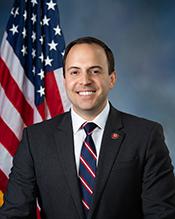
Lance Gooden
RRepublicanTX-5 · Representative
50
/ 100
Average
Attendance99
Avg: 96
Independence3
Avg: 4
Bipartisan Tone9
Avg: 15
Ethics Record80
Avg: 99
Transparency46
Avg: 53
Accountability Score — composite of attendance, independence, bipartisan tone, ethics record & transparency.
Methodology11
Bills Sponsored
0
Enacted into Law
0
Passed a Chamber
11
In Committee
All Sponsored Bills
HR10272In Committee
End Gas Station Heroin Act
HR1468In Committee
Protect America’s Innovation and Economic Security from CCP Act
Protect America’s Innovation and Economic Security from CCP Act This bill reestablishes an initiative in the National Security Division of the Department of Justice (DOJ) to combat espionage, theft of intellectual property and trade secrets, and threats to critical infrastructure posed by the Chinese government. A similar initiative was launched in 2018 and discontinued in 2022. Specifically, this bill establishes the CCP (Chinese Communist Party) Initiative and sets forth its objectives, including to curb spying by the Chinese Communist Party on U.S. intellectual property and academic institutions; develop an enforcement strategy for technology transfers by nontraditional collectors (e.g., researchers in labs or at universities) to Chinese individuals and entities or their agents contrary to U.S. interests; and address China-related risks arising from foreign investments in U.S. businesses and real estate. The bill further specifies that the CCP Initiative must prioritize the identification and prosecution of trade secret theft, hacking, and economic espionage; the protection of critical infrastructure in the United States; and the identification of intellectual property theft from U.S. businesses. Under the bill, the CCP Initiative terminates six years after enactment.
HR9276In Committee
Federal Cryptocurrency Theft Enforcement and Coordination Act
The proposal would create a specialized federal task force dedicated to investigating and prosecuting cryptocurrency theft and fraud. This new unit would bring together law enforcement agencies to combat crimes involving stolen digital assets, helping protect people and businesses who use cryptocurrency. The task force would work to track down criminals who steal digital wallets and coins while developing better tools to recover stolen funds.
HR8685In Committee
Protect the Presidency Act
The proposal would expand federal death penalty laws to allow capital punishment for people who attempt to assassinate the President, Vice President, or other high-ranking government officials, even if the assassination attempt fails. Currently, federal law allows the death penalty only for successful assassinations of these officials, not for failed attempts. This change would affect anyone prosecuted in federal court for attempting to kill these protected individuals.
HR7612In Committee
End Sanctuary Cities Act of 2026
This bill would restrict cities and states from adopting policies that limit cooperation with federal immigration enforcement, potentially requiring local police to assist with immigration-related arrests and detentions. It would affect immigrants, local law enforcement agencies, and sanctuary jurisdictions that currently have policies protecting undocumented immigrants from deportation. The legislation aims to increase coordination between local and federal authorities on immigration enforcement matters.
HR7387In Committee
Stop Settlement Slush Funds Act of 2026
This bill would restrict how federal agencies can use money they receive from settling legal cases or violations, preventing them from directing those funds to causes or programs not directly related to the violation. Currently, agencies sometimes use settlement money more broadly, and this bill aims to ensure that money goes toward compensating victims or fixing the specific problem that led to the settlement rather than funding unrelated agency priorities. The change would affect how federal agencies manage billions of dollars in annual settlements with companies and individuals.
HR7361In Committee
No Tax on Restored Benefits Act
This bill would prevent people from having to pay federal income taxes on benefits that are restored to them after being wrongfully denied or reduced. The change would primarily help workers and retirees who receive back payments of Social Security, unemployment insurance, or similar government benefits after successfully appealing a denial or correction of an error.
HR7035In Committee
Credit Card Competition Act of 2026
The proposal would require credit card companies to allow customers to choose which payment network (like Visa or Mastercard) processes their transactions, rather than having the card issuer make that choice automatically. This could give consumers more options and potentially lower fees, though it would affect how credit card companies, banks, and payment networks operate their businesses. The change aims to increase competition in the credit card processing industry.
HR6792In Committee
Foreign-Trade Zone Export Enhancement Act of 2025
This bill would make it easier for U.S. companies to export goods by expanding and improving foreign trade zones—special areas where businesses can store, process, and ship products with reduced tariffs and taxes. The changes would help American manufacturers and exporters compete better in global markets by lowering their costs and simplifying the rules they have to follow. Companies that rely on international trade, from small manufacturers to large exporters, would likely benefit from these streamlined procedures.
HR3966In Committee
Think Tank and Nonprofit Foreign Influence Disclosure Act
The legislation would require think tanks and nonprofit organizations to disclose any funding they receive from foreign governments or foreign-controlled entities, similar to existing rules for lobbyists. This transparency measure would help the public and policymakers understand which foreign interests may be influencing policy research and advocacy in the United States. The bill affects research institutions, advocacy groups, and foreign donors who currently may not have to publicly report such financial relationships.
HR1792In Committee
No Tax Dollars for the United Nation’s Immigration Invasion Act
This bill would prohibit the United States from providing financial support to United Nations programs and activities related to immigration, based on the bill's characterization of immigration as an "invasion." The legislation would affect U.S. funding contributions to international organizations that work on migration and refugee issues, potentially reducing American involvement in global immigration policy coordination.