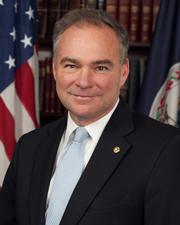
Tim Kaine
DDemocratVA · Senator
60
/ 100
Average
Attendance99
Avg: 97
Independence23
Avg: 23
Bipartisan Tone11
Avg: 14
Ethics Record100
Avg: 100
Transparency56
Avg: 47
Accountability Score — composite of attendance, independence, bipartisan tone, ethics record & transparency.
Methodology88
Bills Sponsored
1
Enacted into Law
3
Passed a Chamber
74
In Committee
All Sponsored Bills
S5660In Committee
SUCCESS Act of 2026
S5657In Committee
SOS Campus Act
S603Enacted
A bill to designate the General George C. Marshall House, in the Commonwealth of Virginia, as an affiliated area of the National Park System, and for other purposes.
This bill establishes the General George C. Marshall House in Leesburg, Virginia, as an affiliated area of the National Park System to promote public appreciation of the historic contributions made by George Catlett Marshall, Jr. (George Catlett Marshall, Jr. served as Army Chief of Staff during World War II, and later as Secretary of State, president of the American Red Cross, and Secretary of Defense.) The bill designates the George C. Marshall International Center as the management entity for the affiliated area. The Department of the Interior must enter into an agreement with the center that describes the roles and responsibilities for management of the affiliated area. Further, Interior may provide technical assistance and enter into cooperative agreements with the center for the purpose of providing financial assistance for the marketing, marking, interpretation, and preservation of the affiliated area.
S5540In Committee
PREP Act of 2026
SRES883In Committee
A resolution requesting information on the Republic of Burundi's human rights practices pursuant to section 502B(c) of the Foreign Assistance Act of 1961.
SRES885In Committee
A resolution requesting information on the Republic of Guinea-Bissau's human rights practices pursuant to section 502B(c) of the Foreign Assistance Act of 1961.
SRES886In Committee
A resolution requesting information on the Republic of Liberia's human rights practices pursuant to section 502B(c) of the Foreign Assistance Act of 1961.
SRES884In Committee
A resolution requesting information on Belize's human rights practices pursuant to section 502B(c) of the Foreign Assistance Act of 1961.
SRES877In Committee
A resolution requesting information on the Republic of Uganda's human rights practices pursuant to section 502B(c) of the Foreign Assistance Act of 1961.
S5480In Committee
School Infrastructure Modernization Act of 2026
SRES874In Committee
A resolution requesting information on the Republic of Paraguay's human rights practices pursuant to section 502B(c) of the Foreign Assistance Act of 1961.
SRES876In Committee
A resolution requesting information on the Republic of Sierra Leone's human rights practices pursuant to section 502B(c) of the Foreign Assistance Act of 1961.
SRES878In Committee
A resolution requesting information on the Republic of El Salvador's human rights practices pursuant to section 502B(c) of the Foreign Assistance Act of 1961.
SRES873In Committee
A resolution requesting information on the Republic of Moldova's human rights practices pursuant to section 502B(c) of the Foreign Assistance Act of 1961.
SRES875In Committee
A resolution requesting information on the Federation of Saint Kitts and Nevis's human rights practices pursuant to section 502B(c) of the Foreign Assistance Act of 1961.
SRES882In Committee
A resolution requesting information on the Central African Republic's human rights practices pursuant to section 502B(c) of the Foreign Assistance Act of 1961.
SRES881In Committee
A resolution requesting information on the Democratic Republic of the Congo's human rights practices pursuant to section 502B(c) of the Foreign Assistance Act of 1961.
SRES880In Committee
A resolution requesting information on the Commonwealth of Dominica's human rights practices pursuant to section 502B(c) of the Foreign Assistance Act of 1961.
S3313Reported
Wintergreen Emergency Egress Act
The bill would establish or improve emergency exit routes and safety measures on public lands, likely focusing on areas managed by federal agencies like national forests or public lands. This would help ensure that people using these public lands—including hikers, campers, and outdoor recreationists—have clear escape routes during emergencies like wildfires or other disasters. The changes would apply to how federal land managers design and maintain trails and access points on the lands they oversee.
SRES879In Committee
A resolution requesting information on the Republic of Ecuador's human rights practices pursuant to section 502B(c) of the Foreign Assistance Act of 1961.
SRES887In Committee
A resolution requesting information on the Republic of Palau's human rights practices pursuant to section 502B(c) of the Foreign Assistance Act of 1961.
S5449In Committee
Mothers and Newborns Success Act
SJRES215In Committee
A joint resolution to direct the removal of United States Armed Forces from hostilities within or against the Sultanate of Oman that have not been authorized by Congress.
S5387In Committee
DCA Air Safety Act
S5391In Committee
Robert C. Byrd Mine Safety Protection Act of 2026
S3294Reported
A bill to designate the facility of the United States Postal Service located at 10660 Page Avenue in Fairfax, Virginia, as the "Congressman Gerald E. Connolly Post Office Building".
This bill designates the facility of the United States Postal Service located at 10660 Page Avenue in Fairfax, Virginia, as the "Congressman Gerald E. Connolly Post Office Building".
S5046Reported
A bill to prohibit the transfer of certain offices and functions of the Department of Education to other Federal agencies, and for other purposes.
This bill prohibits the Department of Education (ED) from transferring specified offices and functions to other federal agencies. Specifically, the bill prohibits ED from entering into or carrying out interagency agreements related to the following four offices: the Office of Special Education and Rehabilitative Services, the Office of Postsecondary Education, the Office of Indian Education, and the Office of Elementary and Secondary Education. This prohibition applies to the transfer of functions such as administering or operating programs, making grants, carrying out technical assistance, enforcing rights and requirements (e.g., data collection requirements), conducting administrative and oversight functions, and monitoring grantees. Additionally, ED may not transfer a function or program of one of the four offices to another ED office and then subsequently enter into an interagency agreement related to the function or program. The bill does not apply to agreements in effect on February 1, 2025, or renewals with substantially similar terms. ED must, within 14 days of the bill's enactment and on a quarterly basis, provide to Congress (and publish on its website) a report and cost analysis for each interagency agreement entered into on or after February 1, 2025. ED may not use specified FY2026 or FY2027 funds for travel expenses unless ED provides this required information. (As of July 30, 2026, ED has entered into 14 interagency agreements to transfer functions of ED to other federal agencies, including the ED offices listed in the bill.)
S5175In Committee
Fast Tracking European Investment in Ukraine’s Defense Act
The legislation would modify rules governing the export and transfer of military equipment to allow allied countries to more easily send American defense equipment to Ukraine without needing separate approval from the U.S. government each time. This would streamline the process for countries like Poland or the Baltic states that want to send weapons and military gear they received from the U.S. to help Ukraine defend itself against Russian invasion. The change primarily affects foreign governments and defense contractors involved in military aid shipments.
S5206In Committee
Cold War Military Force Repeal Act
This bill would cancel a previous congressional resolution aimed at promoting peace and stability in the Middle East. The change would affect U.S. foreign policy in that region and could impact diplomatic efforts and military decisions made under the authority of the original resolution. Congress would need to approve this repeal before it becomes law.
S2578Reported
Strengthening the Rule of Law in the Brazilian Amazon Act
The legislation aims to support efforts to strengthen legal enforcement and governance in the Brazilian Amazon region, addressing concerns about illegal logging, mining, and other environmental crimes. It would likely authorize U.S. support—through funding, technical assistance, or diplomatic coordination—to help Brazilian authorities better enforce existing laws and protect the rainforest. The measure affects environmental advocates, indigenous communities, Brazilian officials, and anyone concerned with preserving the Amazon and combating illegal activities in the region.
S5041In Committee
Advancing Research for Chronic Pain Act of 2026
The bill would fund research to better understand how chronic pain affects different populations and communities across the country. This research would help doctors and public health officials develop better treatments and prevention strategies for the millions of Americans living with long-term pain conditions. The funding would support studies examining which groups are most affected by chronic pain and why, potentially leading to more effective and equitable pain management options.
S5012In Committee
Welcome Back to the Health Care Workforce Act
The federal government would provide grants to help internationally trained doctors, nurses, and other healthcare workers get the credentials and support they need to work in the United States. This program aims to address healthcare worker shortages by making it easier for skilled foreign-trained professionals to enter the American healthcare system. The grants would cover things like licensing exams, credential verification, and career guidance services.
SJRES185In Committee
A joint resolution to direct the removal of United States Armed Forces from hostilities within or against the Islamic Republic of Iran that have not been authorized by Congress.
This joint resolution directs the President to remove U.S. Armed Forces from hostilities within or against Iran unless a declaration of war or authorization to use military force for such purpose has been enacted. The resolution specifies that it shall not be construed to prevent the United States from defending against an attack on the United States or its personnel or facilities in other nations.
S4899In Committee
Securing Partner Supply Chains Act
The federal government would create a new program to review and evaluate foreign investments in the United States, particularly those that might affect national security or critical industries. This screening initiative would help the State Department identify potential risks from foreign companies or investors buying American businesses, technology, or infrastructure. The effort would affect major corporations, foreign investors, and government agencies involved in evaluating deals that could impact American economic and security interests.
S4889In Committee
Supporting Our Direct Care Workforce and Family Caregivers Act
The federal government would provide money to help hire, train, and keep workers who provide direct care to elderly people, people with disabilities, and others who need assistance with daily activities. The bill would also give grants to support family members who serve as unpaid caregivers for their loved ones. These funds aim to address the shortage of caregivers and help both professional care workers and families afford the costs of providing care.
S4900In Committee
North Korean Human Rights Reauthorization Act of 2026
The legislation would extend and update a law that supports efforts to promote human rights in North Korea, including programs that document abuses, assist defectors, and raise awareness about conditions there. The bill allows the U.S. government to continue funding and coordinating these humanitarian initiatives through various agencies and organizations working on North Korean issues. It affects diplomats, humanitarian workers, and organizations focused on international human rights advocacy.
S4809In Committee
Venezuela Democratic Transition Act
The federal government would develop a plan to help support democratic elections in Venezuela and would punish individuals involved in serious human rights abuses there through economic sanctions. These penalties would target people responsible for violations like torture, unlawful detention, or suppression of political freedoms. The measure aims to pressure the Venezuelan government to respect basic human rights and allow citizens to participate in free and fair elections.
S4790In Committee
Esther Coopersmith Award Act
The State Department would create a new award named after Esther Coopersmith to honor diplomats who have made outstanding contributions to promoting peace and security around the world. This recognition would highlight and celebrate the work of career diplomats and foreign service professionals who advance international stability through their diplomatic efforts. The award would serve as a way to acknowledge excellence in diplomatic service focused on sustainable peace-building.
SJRES190In Committee
A joint resolution providing for congressional disapproval under chapter 8 of title 5, United States Code, of the rule submitted by the Executive Office for Immigration Review relating to "Appellate Procedures for the Board of Immigration Appeals".
Congress is considering blocking a new rule from the immigration courts that would change how people can appeal decisions made by the Board of Immigration Appeals. If approved, this resolution would prevent the rule from taking effect, keeping the current appeal procedures in place instead of allowing the new changes to go forward. This affects immigrants and their lawyers who use the appeals process when fighting deportation or immigration decisions.
SRES766In Committee
A resolution acknowledging and apologizing for the mistreatment of, and discrimination against, lesbian, gay, bisexual, and transgender individuals who served the United States in the uniformed services, the Foreign Service, and the Federal civil service and committing to the pursuit of equal rights, protections, and respect for all LGBT servicemembers and Federal civil servants.
The resolution formally apologizes to LGBT individuals who served in the military, Foreign Service, and federal government for past discrimination and mistreatment they experienced. It commits Congress to working toward equal rights, protections, and respect for current and future LGBT servicemembers and federal employees. The measure acknowledges historical wrongs while pledging support for fair treatment going forward.
S4733In Committee
Beginning Educator Mentorship and Retention Act
The federal government would create a new grant program to help public schools develop and run induction programs that support new teachers and school leaders during their first few years on the job. These programs would provide mentoring, training, and other resources to help new educators succeed and stay in the profession. Schools across the country could apply for these grants to strengthen their ability to recruit and retain quality teachers and leaders.
S4719In Committee
State Department Integrity and Transparency Act
The bill would require the State Department to provide more detailed information to Congress about people nominated to be ambassadors and other top diplomats at U.S. embassies around the world. This would give lawmakers and the public better insight into the backgrounds and qualifications of these nominees before they are confirmed. The measure affects the diplomatic appointment process and the transparency of who represents America abroad.
SJRES193In Committee
A joint resolution to direct the removal of United States Armed Forces from hostilities within or against the Republic of Cuba that have not been authorized by Congress.
This joint resolution directs the President to remove U.S. Armed Forces from hostilities within or against Cuba unless a declaration of war or authorization to use military force for such purpose has been enacted. The resolution specifies that it shall not be construed to prevent the United States from defending itself from an armed attack, the threat of an imminent armed attack, or the lawful execution of counternarcotics operations.
SJRES182In Committee
A joint resolution providing for congressional disapproval under chapter 8 of title 5, United States Code, of the rule submitted by the Department of Education relating to "William D. Ford Federal Direct Loan (Direct Loan) Program".
Congress is considering blocking a new Department of Education rule about federal student loans, which would overturn the rule if approved. The resolution would prevent changes the Education Department made to how the Direct Loan Program operates, affecting millions of student borrowers and how they repay their loans. If passed, the rule would be canceled and the previous version would remain in effect.
SRES712In Committee
A resolution expressing the sense of the Senate in support of general elections in Venezuela.
The Senate is expressing its official support for holding general elections in Venezuela as a way to address the country's political situation. This resolution reflects the Senate's position on Venezuelan democracy and governance, though it does not create any binding laws or requirements. The measure has been sent to the Foreign Relations Committee for consideration.
S4468In Committee
Supporting the Mental Health of Educators and Staff Act of 2026
The bill would create programs and resources to support the mental health and well-being of teachers, counselors, administrators, and other school staff members who face high stress and burnout in their jobs. It would likely fund training, counseling services, and workplace improvements to help school employees manage stress and prevent mental health crises. This affects millions of educators and school workers across the country who struggle with job-related stress and limited access to mental health support.
SJRES124In Committee
A joint resolution to direct the removal of United States Armed Forces from hostilities within or against the Republic of Cuba that have not been authorized by Congress.
This joint resolution directs the President to remove U.S. Armed Forces from hostilities within or against Cuba unless a declaration of war or authorization to use military force for such purpose has been enacted. The resolution specifies that it shall not be construed to prevent the United States from defending itself from an armed attack, the threat of an imminent armed attack, or the lawful execution of counternarcotics operations.
S4370In Committee
PCTEC Act
I don't have enough information to write an accurate summary. The bill title "PCTEC Act" and the referral to the Health, Education, Labor, and Pensions Committee suggest it relates to one of those policy areas, but without the bill's actual text or a description of its subjects and provisions, I cannot reliably explain what it would do or who it would affect. To provide you with an accurate summary, I would need access to the bill's full text or a detailed description of its contents.
S4363In Committee
Engineering Biology Readiness Act
The proposal would establish federal programs and funding to prepare the United States for advances in engineering biology—the science of designing and modifying living organisms for practical applications. It aims to help government agencies, researchers, and companies develop the tools, expertise, and safety standards needed to work with engineered biological systems while managing potential risks. The bill affects scientists, biotechnology companies, federal agencies, and ultimately the public by shaping how the country approaches this emerging field.
S4339In Committee
Virginia Plan to Reduce Gun Violence Act of 2026
This bill would make changes to federal gun laws, though the specific reforms are not detailed in the available information. Without knowing the exact provisions, the bill could potentially affect gun owners, manufacturers, law enforcement, or public safety depending on whether it aims to expand or restrict firearm regulations. The proposal is currently under review by the Senate Judiciary Committee.
SJRES165In Committee
A joint resolution providing for congressional disapproval under chapter 8 of title 5, United States Code, of the rule submitted by the Bureau of Consumer Financial Protection relating to the withdrawal of the rule relating to "Bulletin 2015-02 re: Section 8 housing choice voucher homeownership program".
Congress is considering blocking a recent decision by the Consumer Financial Protection Bureau to withdraw guidance it had previously issued about the Section 8 housing choice voucher homeownership program. If approved, this resolution would overturn the bureau's action and restore the original guidance that helped explain how the program works for low-income families trying to buy homes. The measure is currently being reviewed by the Senate Banking Committee.
S4129In Committee
State Department Disability Policy and Accommodations Act
This bill would require the State Department to develop and implement policies ensuring that employees and visitors with disabilities receive appropriate accommodations and have equal access to department facilities and services. The legislation aims to improve how the State Department handles disability-related needs for its workforce and the public it serves, covering everything from physical accessibility to assistive technology and workplace adjustments.
S4132In Committee
Maternal Vaccinations Act
This bill would likely establish or expand programs to increase vaccination rates among pregnant women and new mothers, potentially by improving access to vaccines, providing education about vaccine safety during pregnancy, or requiring health insurance coverage for maternal vaccines. The legislation would affect pregnant women, new mothers, healthcare providers, and possibly insurance companies by ensuring that vaccines recommended during pregnancy—such as those for flu and whooping cough—are more readily available and affordable. The goal would be to protect both mothers and newborns from vaccine-preventable diseases.
S4049In Committee
Reclaim Trade Powers Act
Reclaim Trade Powers Act This bill repeals the statute that directs the President to take certain actions, such as imposing a tariff of up to 15% for up to 150 days on articles imported into the United States, when necessary to address large and serious U.S. balance-of-payments deficits or certain other situations that present fundamental international payments problems.
SRES633In Committee
A resolution requesting information on the Republic of Honduras's human rights practices pursuant to section 502B(c) of the Foreign Assistance Act of 1961.
Congress is asking the State Department to provide detailed information about how well the government of Honduras respects human rights, including whether it tortures prisoners, allows free speech, or protects citizens from violence. This information would help Congress decide whether the United States should continue providing military and economic aid to Honduras, since U.S. law requires the government to consider human rights records when deciding which countries to support. The request focuses on whether Honduras meets basic standards for treating its own people fairly.
SRES634In Committee
A resolution requesting information on the Republic of Equatorial Guinea's human rights practices pursuant to section 502B(c) of the Foreign Assistance Act of 1961.
Congress is requesting detailed information about human rights conditions in Equatorial Guinea to help determine whether the country should continue receiving U.S. foreign aid and military assistance. The resolution asks the State Department to report on issues like freedom of speech, fair trials, and treatment of prisoners in that African nation. This type of review can lead Congress to reduce or cut off aid if serious human rights violations are found.
SRES631In Committee
A resolution requesting information on the Republic of Uzbekistan's human rights practices pursuant to section 502B(c) of the Foreign Assistance Act of 1961.
Congress is asking the State Department to provide detailed information about human rights conditions in Uzbekistan, including any concerns about torture, unfair trials, or restrictions on freedom of speech and assembly. This request is part of a law that requires the U.S. government to review human rights practices in countries that receive American foreign aid. The information would help Congress decide whether the U.S. should continue providing assistance to Uzbekistan or attach conditions to that aid.
SRES635In Committee
A resolution requesting information on the Republic of Kosovo's human rights practices pursuant to section 502B(c) of the Foreign Assistance Act of 1961.
Congress is asking the State Department to provide detailed information about how well the government of Kosovo respects human rights, including whether it protects freedoms like speech, assembly, and fair treatment under the law. This information would help Congress decide whether the United States should continue providing foreign aid to Kosovo or adjust the terms of that assistance based on their human rights record. The request is part of a law that requires the U.S. government to monitor human rights practices in countries that receive American aid.
SRES636In Committee
A resolution requesting information on the Republic of Guatemala's human rights practices pursuant to section 502B(c) of the Foreign Assistance Act of 1961.
Congress is asking the State Department to provide detailed information about how well the government of Guatemala is protecting human rights, including whether it's respecting freedoms like speech, assembly, and fair treatment under the law. This information would help Congress decide whether the United States should continue providing military and economic aid to Guatemala, since U.S. law requires the government to consider a country's human rights record before giving it assistance. The request is part of Congress's oversight responsibility to ensure American taxpayer money supports countries that meet basic standards for treating their citizens fairly.
SRES632In Committee
A resolution requesting information on the Republic of Ghana's human rights practices pursuant to section 502B(c) of the Foreign Assistance Act of 1961.
Congress is asking the State Department to provide detailed information about Ghana's human rights record, including any concerns about government treatment of citizens, freedom of speech, and other basic rights protections. This request is part of a legal requirement that the U.S. government regularly review human rights practices in countries that receive American foreign aid. The information would help Congress decide whether the U.S. should continue, reduce, or adjust its aid to Ghana based on how well the country respects human rights.
SRES637In Committee
A resolution requesting information on the Republic of Cameroon's human rights practices pursuant to section 502B(c) of the Foreign Assistance Act 1961.
Congress is asking the State Department to provide detailed information about human rights violations and abuses by the government of Cameroon, as required by a 1961 law that ties U.S. foreign aid to countries' treatment of their citizens. The report would help lawmakers decide whether the United States should continue providing military and economic assistance to Cameroon or impose conditions on that aid based on their human rights record.
SJRES104In Committee
A joint resolution to direct the removal of United States Armed Forces from hostilities within or against the Islamic Republic of Iran that have not been authorized by Congress.
This joint resolution directs the President to remove U.S. Armed Forces from hostilities within or against Iran unless a declaration of war or authorization to use military force for such purpose has been enacted. The resolution specifies that it shall not be construed to prevent the United States from defending against an attack on the United States or its personnel or facilities in other nations.
SRES617Introduced
A resolution supporting the goals and ideals of "Career and Technical Education Month".
This resolution recognizes and celebrates Career and Technical Education Month, which promotes vocational training programs that teach students practical job skills in fields like construction, healthcare, manufacturing, and information technology. The resolution supports efforts to raise awareness about these career pathways as valuable alternatives to traditional four-year college degrees, helping students and workers develop in-demand skills for good-paying jobs.
S1369Reported
Protecting Global Fisheries Act of 2026
This bill aims to protect ocean fish populations and fishing resources by establishing or strengthening international agreements and regulations that prevent overfishing and illegal fishing practices. It would affect commercial fishing companies, seafood consumers, and coastal communities that depend on healthy fish stocks for their livelihoods and food supply. The legislation likely includes measures to monitor fishing activities, enforce fishing limits, and coordinate with other countries to manage shared ocean resources.
S3771In Committee
Department of Veterans Affairs Therapeutic Medical Physicist Pay Cap Relief Act of 2026
This bill would remove or raise the salary cap that currently limits how much the Department of Veterans Affairs can pay therapeutic medical physicists—specialists who use radiation to treat cancer and other diseases in VA hospitals. The change would allow the VA to offer more competitive wages to attract and retain these skilled medical professionals, addressing potential staffing shortages at veterans' medical facilities. Veterans receiving cancer treatment and other radiation-based therapies at VA hospitals could benefit from having access to more experienced and stable medical physics staff.
SJRES105In Committee
A joint resolution redesignating the Robert E. Lee Memorial in Arlington National Cemetery as the "Arlington House National Historic Site".
This proposal would change the official name of the Robert E. Lee Memorial at Arlington National Cemetery to "Arlington House National Historic Site," reflecting a shift in how the federal government designates this historic property. The change would affect how the site is officially referred to in government documents and public materials, though it would not physically alter the building or its location on the cemetery grounds. The measure is currently under review by the Senate committee responsible for federal lands and historic preservation.
S3731In Committee
Cost of Police Misconduct Act of 2026
This bill would likely establish new rules about how police misconduct cases are handled and paid for, possibly requiring departments or the government to cover costs of settlements and judgments when officers are found to have acted improperly. The measure would affect police departments, taxpayers, and people who have experienced misconduct by law enforcement. The goal appears to be increasing accountability and transparency around the financial consequences of police wrongdoing.
SJRES98In Committee
A joint resolution to direct the removal of United States Armed Forces from hostilities within or against Venezuela that have not been authorized by Congress.
This joint resolution directs the President to terminate the use of U.S. Armed Forces for hostilities within or against Venezuela unless a declaration of war or authorization to use military force for such purpose has been enacted. The joint resolution specifies that it shall not be construed to prevent the United States from defending itself from an armed attack or threat of an imminent armed attack.
S2708In Committee
Appalachian Trail Centennial Act
This bill would authorize funding and support for celebrations and improvements marking the 100th anniversary of the Appalachian Trail, a 2,190-mile hiking path stretching from Georgia to Maine. The legislation likely directs money toward trail maintenance, visitor facilities, and commemorative events while involving the National Park Service and other agencies that manage the trail. Hikers, outdoor enthusiasts, and communities along the trail corridor would benefit from the enhanced infrastructure and recognition of this historic recreational resource.
SJRES90In Committee
A joint resolution to direct the removal of United States Armed Forces from hostilities within or against Venezuela that have not been authorized by Congress.
This joint resolution directs the President to terminate the use of U.S. Armed Forces for hostilities within or against Venezuela unless a declaration of war or authorization to use military force for such purpose has been enacted. The resolution specifies that it shall not be construed to prevent the United States from defending itself from an armed attack or threat of an imminent armed attack.
SJRES81Passed Senate
A joint resolution terminating the national emergency declared to impose duties on articles imported from Brazil.
This joint resolution terminates the national emergency that was declared by President Donald J. Trump in an executive order on July 30, 2025, that also imposed an additional 40% tariff on certain imports from Brazil based on the emergency declaration. (The executive order exempted certain products, such as civil aircraft and parts, wood pulp, precious metals, energy and energy products, and fertilizers, from this additional tariff.)
SJRES77Passed Senate
A joint resolution terminating the national emergency declared to impose duties on articles imported from Canada.
This joint resolution terminates the national emergency declared by President Donald J. Trump on February 1, 2025, which imposed an additional 25% tariff on most imports from Canada (except for Canadian energy or energy resources, which have an additional 10% tariff).
S1680Reported
Virginia Wilderness Additions Act of 2025
S1681Reported
Shenandoah Mountain Act
Shenandoah Mountain Act This bill establishes the Shenandoah Mountain National Scenic Area, consisting of approximately 92,562 acres of National Forest System land in Virginia in the George Washington and Jefferson National Forest. The bill designates specified lands in the forest as wilderness and as components of the National Wilderness Preservation System, including approximately (1) 5,088 acres as the Skidmore Fork Wilderness, (2) 3,568 acres as the Lynn Hollow Wilderness, (3) 12,461 acres as the Little River Wilderness, and (4) 5,779 acres as the Beech Lick Knob Wilderness. It also incorporates approximately 6,961 acres into the Ramseys Draft Wilderness.
SJRES71In Committee
A joint resolution terminating the national emergency declared with respect to energy.
This joint resolution terminates the national emergency relating to energy declared by the President on January 20, 2025, in Executive Order 14156. The executive order states that the supply of and infrastructure for energy in the United States is insufficient to meet the country's needs. It defines energy as crude oil, natural gas, lease condensates, natural gas liquids, refined petroleum products, uranium, coal, biofuels, geothermal heat, the kinetic movement of flowing water, and critical minerals. The executive order directs the heads of executive departments and agencies to use available emergency and other authorities to take certain actions to address this topic, including approving development of domestic energy resources, expediting the completion of authorized energy infrastructure (particularly in the Northeast, West Coast, and Alaska), and pursuing the use of emergency permitting provisions under certain environmental regulations. The executive order also directs the Department of Defense to conduct an assessment of its ability to acquire and transport energy resources (particularly in the Northeast and West Coast), and invokes emergency military construction authority to address any vulnerabilities identified in the assessment.
S606Reported
Contaminated Wells Relocation Act
Contaminated Wells Relocation Act This bill permits the National Aeronautics and Space Administration (NASA) to enter into an agreement to reimburse the town of Chincoteague, Virginia for costs directly associated with the removal and relocation of drinking water wells currently situated on NASA property. (Drinking water wells located at NASA’s Wallops Flight Facility near Chincoteague have tested positive for perfluoroalkyl or polyfluoroalkyl substances, commonly referred to as PFAS, resulting from the use of certain firefighting foams at the site beginning in the 1970s. NASA currently operates a water treatment system to remove PFAS from the affected water supply.) Any such agreement must include, to the extent practicable, (1) a provision for the removal and relocation of the wells remaining on NASA property, (2) a description of the location to which the wells are planned to be relocated, and (3) a current cost estimate of such relocation. Replacement wells must be established on property under the administrative control of the town of Chincoteague.
S2490In Committee
Strengthening Advocacy for Long-Term Care Residents Act
The proposal would strengthen protections for people living in nursing homes and other long-term care facilities by enhancing advocacy programs that help residents understand their rights and file complaints about poor care or mistreatment. It aims to give residents better access to ombudsmen—independent advocates who investigate problems and push facilities to make improvements—and would likely increase funding and staffing for these advocacy programs. The changes would primarily benefit elderly residents and people with disabilities in care facilities who may be vulnerable or unable to advocate effectively for themselves.
SJRES59In Committee
A joint resolution to direct the removal of United States Armed Forces from hostilities against the Islamic Republic of Iran that have not been authorized by Congress.
This joint resolution directs the President to terminate the use of U.S. Armed Forces for hostilities against Iran unless explicitly authorized by a congressional declaration of war or a specific authorization for use of military force against Iran.
S1831In Committee
Auto Reenroll Act of 2025
This bill would automatically re-enroll workers in their health insurance plans each year unless they actively choose to switch, making it easier for people to maintain continuous coverage without having to remember enrollment deadlines. The measure aims to reduce the number of uninsured workers and simplify the enrollment process, particularly affecting employees who might otherwise lose coverage due to missed deadlines or administrative confusion.
S1298In Committee
Religious Workforce Protection Act
Religious Workforce Protection Act This bill allows the Department of Homeland Security (DHS) to extend the nonimmigrant visa status of certain religious workers. Under current law, if specified conditions are met, nonimmigrant religious workers may receive a visa for a period not to exceed five years. The bill allows DHS to grant an extension until the individual’s application for adjustment of status to permanent resident or an immigrant visa has been processed and a decision has been made. To be eligible for the extension, the individual must be (1) the beneficiary of a certain type of immigrant petition, and (2) eligible for such immigrant status absent the application of certain numerical limitations. Such individuals who have pending adjustment of status applications are also granted certain job flexibilities, such as the ability to change employers. Individuals who have previously departed the U.S. due to the expiration of their visa are exempt from the one-year foreign residence requirement to renew their visa.
SJRES37Passed Senate
A joint resolution terminating the national emergency declared to impose duties on articles imported from Canada.
This joint resolution terminates the national emergency declared by President Donald J. Trump on February 1, 2025, which imposed an additional 25% tariff on most imports from Canada (except for Canadian energy or energy resources, which have an additional 10% tariff).
S1027In Committee
Military Spouse Hiring Act
The proposal would provide tax incentives to employers who hire military spouses, helping address employment challenges that military families face due to frequent relocations. By offering tax credits or deductions to companies that hire these spouses, the bill aims to improve job opportunities and economic stability for military families while encouraging businesses to recruit from this workforce.
S986In Committee
Safe Schools Improvement Act
Safe Schools Improvement Act This bill requires states to direct their local educational agencies (LEAs) to establish policies that prevent and prohibit bullying and harassment of elementary and secondary school students. In particular, these policies must prohibit bullying and harassment based on race, color, national origin, disability, religion, or sex. Sex includes sexual orientation, gender identity, and sex characteristics (including intersex traits). Further, LEAs must provide (1) students, parents, and educational professionals with annual notice of the conduct prohibited in their disciplinary policies; (2) students and parents with grievance procedures that target such conduct; and (3) the public with annual data on the incidence and frequency of that conduct at the school and LEA level. The Department of Education must conduct and report on an independent biennial evaluation of programs and policies to combat bullying and harassment in elementary and secondary schools. The National Center for Education Statistics must collect state data to determine the incidence and frequency of the conduct prohibited by LEA disciplinary policies.
SJRES10In Committee
A joint resolution terminating the national emergency declared with respect to energy.
This joint resolution terminates the national emergency relating to energy declared by the President on January 20, 2025, in Executive Order 14156. The executive order states that the supply of and infrastructure for energy in the United States is insufficient to meet the country's needs. It defines energy as crude oil, natural gas, lease condensates, natural gas liquids, refined petroleum products, uranium, coal, biofuels, geothermal heat, the kinetic movement of flowing water, and critical minerals. The executive order directs the heads of executive departments and agencies to use available emergency and other authorities to take certain actions to address this topic, including approving development of domestic energy resources, expediting the completion of authorized energy infrastructure (particularly in the Northeast, West Coast, and Alaska), and pursuing the use of emergency permitting provisions under certain environmental regulations. The executive order also directs the Department of Defense to conduct an assessment of its ability to acquire and transport energy resources (particularly in the Northeast and West Coast), and invokes emergency military construction authority to address any vulnerabilities identified in the assessment.
SRES66Introduced
A resolution supporting the goals and ideals of "Career and Technical Education Month".
This resolution expresses support for Career and Technical Education Month, which celebrates vocational training programs that teach students practical job skills in fields like construction, healthcare, manufacturing, and information technology. The resolution recognizes the importance of these educational pathways as alternatives to traditional four-year college degrees and highlights how they help workers prepare for in-demand careers. The Senate unanimously agreed to the resolution, showing broad support for promoting career and technical education opportunities.
S383In Committee
JOBS Act of 2025
Jumpstart Our Businesses by Supporting Students Act of 2025 or the JOBS Act of 2025 This bill expands student eligibility for Pell Grants by establishing the Job Training Federal Pell Grant program. Specifically, the bill requires the Department of Education to award a job training Pell Grant to a student who does not have a degree; attends an institution of higher education (IHE); is enrolled in a career and technical education program at an IHE that provides 150 to 600 clock hours of instructional time over a period of 8 to 15 weeks and provides training aligned with high-skill, high-wage, or in-demand industry sectors (i.e., job training programs); and meets all other eligibility requirements for a Pell Grant. The bill also specifies that any period during which a student receives a job training Pell Grant counts toward that student's Pell Grant eligibility period.
S340In Committee
African Diaspora Heritage Month Act of 2025
African Diaspora Heritage Month Act of 2025 This bill requires the President to designate by proclamation African Diaspora Heritage Month. The proclamation shall be issued every year and urge the observation of African Diaspora Heritage Month by state and local governments.
S134In Committee
Saving the Civil Service Act
Saving the Civil Service Act This bill generally prohibits changes to the classification of positions in the competitive service and excepted service unless certain conditions are met. (Competitive service positions are subject to competitive examination while excepted service positions are appointed under one of five schedules. Competitive service positions have notice and appeal requirements for adverse actions that are not applicable to most excepted positions, including those of a confidential, policy-determining, policy-making, or policy-advocating character under Schedule C.) On October 21, 2020, President Donald Trump issued an executive order that placed executive agency positions that are of a confidential, policy-determining, policy-making, or policy-advocating character, and that are not normally subject to change as a result of a presidential transition, under a new Schedule F in the excepted service. The order was subsequently revoked by President Joe Biden. The bill prohibits executive agency positions in the competitive service from being placed in the excepted service, unless such positions are placed in a schedule in the excepted service as in effect on September 30, 2020. The bill also prohibits positions in the excepted service from being placed in any schedule other than the aforementioned schedules. Additionally, agencies may not (1) transfer occupied positions from the competitive or excepted service into Schedule C without the consent of the Office of Personnel Management, or (2) transfer employees in the excepted service to another schedule or transfer employees in the competitive service to the excepted service without employee consent.