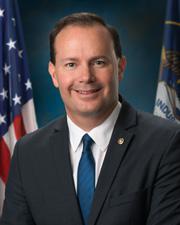
Mike Lee
RRepublicanUT · Senator
60
/ 100
Average
Attendance97
Avg: 97
Independence25
Avg: 23
Bipartisan Tone15
Avg: 14
Ethics Record100
Avg: 100
Transparency49
Avg: 47
Accountability Score — composite of attendance, independence, bipartisan tone, ethics record & transparency.
Methodology99
Bills Sponsored
0
Enacted into Law
0
Passed a Chamber
89
In Committee
All Sponsored Bills
S2970In Committee
A bill to authorize the use of off-highway vehicles in certain areas of the Capitol Reef National Park, Utah.
This bill makes the state law of Utah applicable to the use of motor vehicles (including off-highway vehicles) on the portions of each of Burr Trail Road, Cathedral Road, Hartnet Road, Highway 24, Notom Bullfrog Road, Polk Creek Road, Oil Well Bench Road, Baker Ranch Road, South Desert Overlook Road, Temple of the Sun and Moon Road, Gypsum Sinkhole Road, and Sulphur Creek Road that are located within the boundaries of the Capitol Reef National Park in Utah.
S5646In Committee
Direct Seller and Real Estate Agent Harmonization Act
S1568In Committee
LIT Act of 2025
I don't have enough information to write an accurate summary. The bill title "LIT Act of 2025" is too vague to determine what specific energy policy it addresses without seeing the actual bill text or more detailed subject matter. To provide a meaningful summary, I would need to know whether this bill covers renewable energy, fossil fuels, energy efficiency, grid modernization, or another energy-related topic.
S5478In Committee
GRANITE Act
S5039Reported
License to Drill Act
License to Drill Act This bill extends through FY2037 the Bureau of Land Management’s (BLM’s) authority to collect oil and gas permit processing fees. For each new permit application, BLM collects a fee that is transferred to the BLM Permit Processing Improvement Fund. (Under current law, the fees are authorized through FY2026.)
S3743Reported
A bill to direct the Secretary of the Interior to carry out a feasibility study on a selective water withdrawal system at Glen Canyon Dam, and for other purposes.
The federal government would study whether a special system could be installed at Glen Canyon Dam to allow water managers to withdraw water from different depths of the reservoir, which could help protect fish populations and improve water quality downstream. This feasibility study would examine the technical and financial aspects of such a system before deciding whether to actually build it. The study would affect water management decisions for the Colorado River and communities that depend on the dam for water and electricity.
S5338In Committee
Energy Efficiency Reform Act of 2026
S4787In Committee
FEAT Act
The bill would speed up how the Department of the Interior handles administrative cases and disputes, making decisions faster on matters like land use permits, environmental reviews, and resource management issues. This could affect companies, environmental groups, Native American tribes, and individuals who deal with Interior Department decisions, by reducing the time they wait for final rulings on their cases.
S5408In Committee
Student Voter Data Protection Act
S3331Reported
A bill to designate the facility of the United States Postal Service located at 50 East 100 North in Moab, Utah, as the "2nd Lieutenant Mitch Williams Post Office".
This bill designates the facility of the United States Postal Service located at 50 East 100 North in Moab, Utah, as the "2nd Lieutenant Mitch Williams Post Office".
S5371In Committee
Stopping Border Surges Act
S5372In Committee
Kayleigh’s Law Act of 2026
Kayleigh’s Law Act of 2026 This bill establishes a federal statutory framework to require federal courts to issue an order prohibiting contact with a victim (i.e., a no-contact order) in the case of a defendant who is convicted of certain violent crimes or sex crimes. Specifically, in the case of a defendant convicted of a felony offense that is a crime of violence or that involves a sexual act or sexual conduct, on a motion by the victim or federal government, the court must issue a no-contact order. Under the framework, the no-contact order must be imposed at sentencing and be in effect for the lifetime of the defendant unless it is terminated or suspended in accordance with specified procedures. Additionally, no fee may be assessed or collected from a victim in connection with the issuance of a no-contact order.
S5347In Committee
Circuit Court of Appeals Reorganization Act of 2026
S5202In Committee
Protecting Our Kids from Harmful Research Act
The proposal would prevent federal money from being used to pay for gender transition medical treatments for people under 18 years old, affecting programs like Medicaid, Medicare, and military health services. This would impact transgender youth and their families who rely on federal healthcare coverage, as well as hospitals and clinics that receive federal funding for treating minors. The bill is currently under review by a Senate committee.
S5191In Committee
Citizenship for International Adoptees Act of 2026
The legislation would automatically grant U.S. citizenship to certain people who were adopted internationally by American parents, eliminating the need for them to go through separate naturalization procedures. This would primarily benefit adoptees who may have fallen through legal gaps and never formally became citizens despite being raised as Americans. The bill aims to simplify the citizenship process for this group of adopted individuals.
S4708Reported
Arctic Security and Diplomacy Act
The legislation aims to strengthen U.S. military and security capabilities in the Arctic region, likely addressing concerns about increased activity from Russia and China in that area. The bill would affect military personnel, defense contractors, and potentially Arctic communities by directing resources toward infrastructure, technology, and strategic positioning in the far north. It has been sent to the Senate Foreign Relations Committee for review and debate.
S1954Reported
Biosimilar Red Tape Elimination Act
Biosimilar Red Tape Elimination Act This bill deems all biosimilars licensed by the Food and Drug Administration (FDA) interchangeable with their reference products. A biosimilar is a biological product (e.g., a drug or vaccine) that is very similar to a brand-name biological product (i.e., the reference product). Under current law, a biosimilar that meets additional requirements may be deemed interchangeable with the reference product; this designation allows pharmacists to substitute the interchangeable biosimilar when filling a prescription for the reference product, depending on state law. Further, the first biosimilar deemed interchangeable with a given reference product is awarded a period of marketing exclusivity. The bill eliminates additional requirements for demonstrating interchangeability so that all licensed biosimilars are deemed interchangeable with their reference products. (Draft guidance released by the FDA in 2024 proposed to make some of these interchangeability requirements optional, including studies related to the safety of switching between use of the biosimilar and reference product. It has not been finalized.) This change takes effect 60 days after the bill is enacted, and previously licensed biosimilars must be deemed interchangeable with their reference products on that date. However, the bill preserves the exclusivity period for first interchangeable biosimilars licensed before the bill’s enactment. For example, if a new biosimilar licensed after the bill takes effect relies on the same reference product as an existing biosimilar that is subject to an unexpired exclusivity period, the new biosimilar is not deemed interchangeable with the reference product until the exclusivity period has ended.
S5129In Committee
PROTECT Act of 2026
The legislation would make it illegal to share intimate photos or videos of someone without their permission, creating federal penalties for this violation of privacy. The law would protect people from having their private sexual images distributed online or elsewhere without consent, addressing a growing problem often called "revenge porn." Anyone convicted could face criminal charges, while victims would have legal recourse against those who share such images.
S3004Reported
Upper Price River Watershed Project Act of 2026
This bill authorizes a watershed restoration project in the Upper Price River area, likely involving water management, habitat protection, or land conservation efforts. The project would affect local communities, environmental groups, and potentially water users or landowners in the region by improving water quality, restoring natural ecosystems, or managing water resources. The bill has advanced through the Senate Energy and Natural Resources Committee with recommended changes.
S1860Reported
Brian Head Town Land Conveyance Act
Brian Head Town Land Conveyance Act This bill directs the Forest Service to convey approximately 24 acres of land within the Dixie National Forest to Brian Head Town, Utah, along with any improvements made to the land. The town must use the land for a public works facility or any other uses determined to be necessary by the town. The Forest Service must convey the land to the town without consideration (such as payment).
S5128In Committee
GRACE Act
Schools and universities that receive federal education funding would be required to allow students and staff to opt out of vaccination requirements for religious reasons or lose that federal money. This would affect public schools, colleges, and other educational institutions that depend on federal grants and aid programs. The bill essentially gives religious exemptions legal protection by making them a condition for schools to keep receiving federal dollars.
S2969In Committee
A bill to amend title 54, United States Code, to provide that State law shall apply to the use of motor vehicles on roads within a System unit.
This bill makes the law of the state in which a National Park System unit is located applicable to the use of motor vehicles (including off-highway vehicles) on roads within a system unit.
S5000In Committee
Cyber Letters of Marque and Reprisal Act
This bill would allow the President to authorize private individuals and companies to conduct cyberattacks against foreign targets in response to cyberattacks against the United States, similar to historical "letters of marque" that allowed privateers to attack enemy ships. The measure would essentially create a legal framework for government-sanctioned hacking operations carried out by non-government actors, affecting cybersecurity companies, tech firms, and potentially exposing the U.S. to international legal disputes. The bill is currently under review by the Senate Foreign Relations Committee.
S4931In Committee
End EPA Abuse Act of 2026
This bill would limit the federal government's ability to regulate air pollution and vehicle emissions under the Clean Air Act, while also restricting rules that could affect the electric power grid. It aims to preserve consumer choices in vehicle types, potentially slowing the transition to electric vehicles by limiting stricter emissions standards. The legislation would affect automakers, power companies, and consumers by changing how aggressively the government can push for cleaner air and transportation.
S4756In Committee
Allied Partnership and Port Modernization Act
The bill would allow the U.S. military and government to use dredging ships from NATO countries and close U.S. military allies to maintain and deepen American waterways and ports. This could speed up dredging projects that keep shipping channels navigable and ports functional, affecting maritime commerce, shipping companies, and port operations across the country. Currently, U.S. law restricts such work to American-flagged vessels, so this change would expand which ships can be used for these critical waterway maintenance tasks.
S4753In Committee
Port Modernization and Supply Chain Protection Act
The bill would eliminate rules from a 1906 law that require dredging work in U.S. waters to use American-built ships and equipment. This change would allow shipping companies and ports to hire foreign dredging vessels for projects like maintaining shipping channels and removing sediment from waterways, potentially reducing costs but affecting American dredging workers and domestic shipbuilding companies.
S4758In Committee
Incentivizing the Expansion of U.S. Ports Act
The bill would remove certain federal rules and requirements that currently govern dredging operations (the process of removing sediment and debris from waterways) and how dredged material must be handled and disposed of. This could affect shipping companies, ports, construction firms, and environmental agencies that work with waterways. The changes would likely make dredging projects faster and potentially less expensive, though they could also reduce environmental oversight of these activities.
S4755In Committee
DEEP Act
The bill would direct the Army Corps of Engineers to create a streamlined permit process that allows dredging projects across the country to proceed more quickly without going through individual case-by-case reviews. Dredging—removing sediment and debris from waterways—is commonly needed for maintaining shipping channels, ports, and flood control systems, and this change would make it easier for companies, ports, and local governments to get approval for these projects. The measure aims to reduce the time and paperwork involved in obtaining permits for routine dredging work.
S4649In Committee
Email Privacy Act
The government would need to get a warrant before accessing emails, text messages, and other private communications that companies like Gmail or iCloud store on their servers, bringing digital privacy rules up to date with modern technology. Currently, older laws allow law enforcement to access some stored messages with just a subpoena instead of the stronger warrant requirement, which this bill would change. The update aims to balance protecting people's private communications with giving law enforcement the tools they need to investigate crimes.
S4626In Committee
PERFECT Act of 2026
The Department of Defense would be required to create and publish an official list of dietary supplement ingredients that military members are not allowed to use, helping service members know which supplements could get them in trouble or affect their health and readiness. This would give the military a clear way to communicate which ingredients are banned due to safety concerns, performance-enhancing drug policies, or other military standards. The rule would apply to all active duty, reserve, and National Guard members.
S4477In Committee
Davis-Bacon Repeal Act
The proposal would eliminate the requirement that workers on federally funded construction projects be paid prevailing wages in their area. This change would affect construction workers and companies bidding on government building projects, potentially lowering labor costs but also reducing pay standards for workers on these jobs. The bill is currently under review by the Senate committee responsible for labor and employment issues.
S4390In Committee
Ending Discrimination in Government Contracting Act
The proposal would eliminate federal contracting preferences that currently help disadvantaged individuals and small businesses owned by minorities, women, and veterans win government contracts. This change would affect thousands of small business owners who rely on these preferences to compete for federal work, as well as government agencies that use these programs to diversify their contractor base. The bill would fundamentally reshape how the federal government awards billions of dollars in annual contracts.
S4336In Committee
Restoring Rights of Medical Residents Act
This bill would remove a special legal exemption that allows graduate medical resident matching programs to operate without following normal antitrust laws, which prohibit unfair business practices that limit competition. Currently, these matching programs—which help pair medical school graduates with hospital residency positions—are protected from antitrust lawsuits, but this bill would eliminate that protection and subject them to the same competition rules as other industries. The change could potentially affect how medical residencies are assigned and might increase legal challenges to how these programs operate.
SRES672In Committee
A resolution expressing the sense of Congress that the United States should prioritize bilateral security partnerships over multilateral security partnerships and institutions.
This resolution expresses Congress's view that the United States should focus on building direct security relationships with individual countries rather than relying on multilateral organizations like NATO or the United Nations. The measure does not create new laws or require any specific actions, but instead states a preference for how the country should approach its defense and security partnerships going forward.
S4284In Committee
Nuclear Energy Innovation and Deployment Act of 2026
This bill would likely support the development and use of nuclear power as an energy source by funding research, streamlining the approval process for new nuclear plants, and encouraging private companies to build and operate nuclear reactors. It would affect energy companies, utility providers, and communities considering nuclear facilities, with the goal of making nuclear energy a larger part of America's electricity supply.
S4280Introduced
SAFE Act
I cannot provide an accurate summary because the bill's subjects are not listed and "SAFE Act" is too generic a title—there have been multiple bills with this acronym covering different policy areas like financial services, immigration, and gun safety. To write a meaningful summary, I would need information about what specific policy area this bill addresses.
S4090In Committee
Protecting Access to American Products Act
This bill would likely make it easier for companies to extract natural resources like timber, minerals, and oil from federal public lands by streamlining the approval process and reducing environmental reviews. The goal appears to be increasing domestic production of raw materials and reducing American dependence on imports, which would affect both resource companies seeking to develop these lands and environmental groups concerned about conservation. Workers in mining, logging, and energy industries could see more job opportunities, while outdoor recreation users and environmentalists may worry about impacts to wilderness areas and wildlife habitats.
S4013In Committee
National Constitutional Carry Act
This bill would allow people to carry concealed handguns in all 50 states without needing a permit, overriding state and local gun licensing laws. Currently, some states require permits and background checks before allowing concealed carry, but this federal law would eliminate those requirements nationwide. Gun owners would benefit from easier access to carry firearms, while gun control advocates worry it could reduce safety checks and make it harder for law enforcement to track who is carrying weapons.
S4010In Committee
21st Century Worker Act
The bill aims to update labor and employment policies for the modern workforce, likely addressing issues like worker protections, benefits, or job training in today's economy. While the specific provisions aren't detailed in the title alone, the bill probably targets changes that affect how workers are classified, compensated, or supported in their careers. The measure is currently under review by the Senate Finance Committee.
S3998In Committee
PIONEER Act
The PIONEER Act likely aims to improve how federal agencies operate or reorganize government functions, though the specific details would depend on the bill's full text. Based on its referral to the Homeland Security and Governmental Affairs Committee, it probably addresses issues related to government efficiency, agency coordination, or national security operations. The bill would affect federal employees and potentially the public by changing how government services are delivered or managed.
SJRES109In Committee
A joint resolution providing for congressional disapproval under chapter 8 of title 5, United States Code, of the rule submitted by the Bureau of Land Management relating to "Grand Staircase-Escalante National Monument Record of Decision and Approved Resource Management Plan".
This resolution would block a federal rule from the Bureau of Land Management that governs how the Grand Staircase-Escalante National Monument in Utah will be managed and used. If passed, it would overturn the agency's resource management plan for the monument, potentially allowing different activities like mining or grazing on the land. The resolution affects outdoor enthusiasts, energy companies, ranchers, and conservation groups with interests in how this public land is used.
S3893In Committee
SAFE Act
I don't have enough information to write an accurate summary. "SAFE Act" is a common acronym used for multiple bills covering different topics (from cybersecurity to financial regulations to immigration). To provide a meaningful explanation of what this specific bill would do and who it affects, I would need additional details such as the bill number, the full official title, or the specific policy provisions it contains.
S2968In Committee
Outdoor Americans with Disabilities Act
This bill would make it easier for people with disabilities to access and enjoy public lands like national parks, forests, and recreation areas by requiring improvements to trails, facilities, and services. The changes would help ensure that wheelchair users, people with mobility issues, and those with other disabilities can participate in outdoor activities that are currently difficult or impossible for them to access. The bill affects both the federal agencies that manage these lands and the millions of Americans with disabilities who want to experience nature.
S3868In Committee
Count the Crimes to Cut Act
Count the Crimes to Cut Act This bill establishes public databases of federal criminal offenses. Specifically, the bill requires the Department of Justice to report on and create a public database of all criminal statutory offenses. Additionally, the bill requires federal agencies to report on and create public databases of criminal regulatory offenses that they enforce.
S714Reported
Critical Mineral Consistency Act of 2025
Critical Mineral Consistency Act of 2025 This bill modifies the Energy Act of 2020 to expand the definition of critical minerals used by the U.S. Geological Survey (USGS) to include critical materials designated by the Department of Energy (DOE). It also directs USGS to update its list within 45 days of DOE adding a mineral, element, substance, or material to its critical materials list. Thus, the bill requires the lists to be treated consistently and makes critical materials eligible for the same benefits (e.g., financing support or clean energy tax credits) provided to critical minerals. By way of background, DOE's critical materials list contains certain materials that are essential for energy, including those on the critical minerals list of the USGS. The USGS's list, which contains certain minerals that are essential to the nation's economic or national security, is currently not required to include the materials on DOE's list.
S1453Reported
University of Utah Research Park Act
University of Utah Research Park Act This bill confirms the use by the University of Utah of approximately 593 acres of specified nonfederal land in Salt Lake City, Utah, as a university research park and for related university purposes (including development of student housing and a transit hub) as a valid public purpose.
S3786In Committee
Balance the Highway Trust Fund Act
This bill would address funding problems with the Highway Trust Fund, which pays for road and bridge construction and maintenance across the country. The legislation likely aims to ensure the fund has enough money to continue supporting transportation projects without running short, which could affect construction workers, commuters, and communities that depend on road improvements and repairs.
S90In Committee
Historic Roadways Protection Act
Historic Roadways Protection Act This bill prohibits the Bureau for Land Management (BLM) from closing historical roads on public lands in certain areas of Utah until the Federal District Court for Utah makes a decision on each of the R.S. 2477 cases, which are cases brought by Utah and counties to keep historical roads on BLM land in Utah open for public use. By way of background, a provision of the Mining Law of 1866, commonly known as R.S. 2477, granted rights-of-way to states and counties across public lands for the construction of roads for public use in order to promote settlement of the American West. In 1976, Congress repealed R.S. 2477 when it enacted the Federal Land Policy and Management Act (FLPMA), but FLPMA preserved rights-of-way that had been established under R.S. 2477. After the BLM released travel management plans that closed some historical roads, Utah and 22 counties filed lawsuits about their rights-of-way across public lands for historical roads. Until the BLM certifies that those cases have been decided, the bill prohibits the BLM from obligating or expending federal funds to (1) finalize or implement a new travel management plan for certain travel management areas in Utah; or (2) implement, with respect to land within the boundary of Utah, the Indian Creek (Canyon Rims) Travel Management Plan, the San Rafael Desert Travel Management Plan, the San Rafael Swell Travel Management Plan, or the Labyrinth/Gemini Bridges Travel Management Plan.
S3748In Committee
Terminate Unaccountable Spending, Abuse, Deception, and Fraud Act
This bill aims to reduce what lawmakers view as wasteful spending and mismanagement in U.S. international aid and foreign affairs programs by increasing oversight and accountability measures. The legislation would likely require stricter tracking of how federal money is spent abroad and create mechanisms to identify and eliminate programs that are ineffective or poorly managed. The changes would affect how federal agencies distribute foreign aid and conduct international operations.
S3752In Committee
SAVE America Act
Safeguard American Voter Eligibility Act or the SAVE America Act This bill requires individuals to provide documentary proof of U.S. citizenship when registering to vote, and requires photo identification to vote, in federal elections. Specifically, the bill prohibits states from accepting and processing an application to register to vote in a federal election unless the applicant presents documentary proof of U.S. citizenship. The bill specifies what documents are considered acceptable proof of U.S. citizenship, such as identification that complies with the REAL ID Act of 2005 that indicates U.S. citizenship. Further, the bill (1) prohibits states from registering an individual to vote in a federal election unless, at the time the individual applies to register to vote, the individual provides documentary proof of U.S. citizenship; and (2) requires states to establish an alternative process to demonstrate U.S. citizenship. Each state must take affirmative steps on an ongoing basis to ensure that only U.S. citizens are registered to vote, which shall include establishing a program to identify individuals who are not U.S. citizens using information supplied by certain sources. Additionally, states must remove noncitizens from their official lists of eligible voters. The bill (1) provides for a private right of action for certain violations, and (2) establishes criminal penalties for certain offenses. Individuals voting in federal elections must present an eligible photo identification document. An individual who votes by absentee ballot must submit a copy of their identification document with both the request for, and the submission of, the absentee ballot.
S3648In Committee
Immediate Access for the Terminally Ill Act
Immediate Access for the Terminally Ill Act This bill permits Social Security Disability Insurance (SSDI) beneficiaries with specified terminal illnesses to elect expedited payment of benefits in exchange for a reduction in the amount of their monthly benefit. Specifically, the bill requires the Social Security Administration (SSA) to establish a list of medical conditions that qualify an individual for expedited payment. These conditions must have no known cure, must involve a life expectancy of five years or less, and must be present on the most recent Compassionate Allowances list (a list of medical conditions that, by definition, meet the standards for SSDI benefits). The bill directs SSA to update the list every five years. Congress must approve each medical condition added to the list. Under the bill, individuals diagnosed with a specified terminal condition may elect to receive SSDI benefits beginning the month after the onset of disability. Under current law, individuals generally must wait five months after the onset of disability to begin receiving SSDI benefits. Individuals who opt to receive expedited payment must accept a 7% reduction in monthly benefits. Separately, the bill prohibits individuals receiving unemployment benefits from simultaneously receiving SSDI benefits. The bill also permits SSA to collect less than 100% of an overpaid Social Security beneficiary’s monthly benefit, so long as the collection amount is not less than 10% of their monthly benefit.
S3494In Committee
Auto Data Privacy and Autonomy Act
The legislation would require automakers to give car owners control over the data their vehicles collect, including location information and driving habits, and would allow owners to delete or prevent the sharing of this personal information with third parties. It would also establish rules about what companies can do with vehicle data and create penalties for violations. The rules would apply to car manufacturers and any companies they share data with, affecting both consumers concerned about privacy and the auto industry's data practices.
S3284In Committee
Streamline Transit Projects Act
The proposal would speed up the approval process for public transportation projects by reducing the time federal agencies have to review and approve transit plans. This would help cities and transit agencies build new bus, train, and other public transportation systems faster, though it could mean less time for environmental and safety reviews. The changes would mainly affect local governments, transportation agencies, and communities that depend on or would be affected by new transit construction.
S3197In Committee
Flight Risk Reduction Act
The proposal would give federal judges and law enforcement officials new tools to assess whether criminal defendants are likely to flee before trial, and would establish standards for deciding when to detain someone or set bail conditions. It aims to reduce the number of defendants who fail to appear in court by improving how courts evaluate flight risk. This would affect criminal defendants, judges, prosecutors, and the bail system used across federal courts.
S3105In Committee
ISLET Act
The ISLET Act likely aims to improve access to or regulation of islet cell transplantation, a medical procedure where insulin-producing cells are transplanted to help patients with type 1 diabetes manage their condition. The bill would affect diabetic patients seeking this treatment as well as the medical centers and researchers involved in developing and performing these transplants. The specific changes would depend on whether the bill focuses on funding, insurance coverage, research support, or regulatory approval processes for this therapy.
S3077In Committee
Safer Supervision Act of 2025
The proposal would establish new requirements for how law enforcement agencies supervise their officers to help prevent misconduct and improve accountability. It would likely affect police departments across the country by setting standards for training, oversight, and disciplinary procedures that officers must follow. The measure aims to reduce crime and protect both public safety and the rights of people interacting with police.
S3049In Committee
Fair Air Enforcement Act of 2025
S2967In Committee
Border Lands Conservation Act
This bill would protect and conserve public lands near the U.S. borders, likely through measures such as designating new wilderness areas, establishing conservation easements, or restricting certain development activities in sensitive border regions. The legislation would affect landowners, environmental groups, and federal land management agencies by changing how these border areas can be used and developed. The bill aims to balance conservation goals with border security and economic interests in these frontier regions.
S2844In Committee
Charlie Kirk Act
I don't have enough information to write an accurate summary. The bill title "Charlie Kirk Act" and the subject line "International Affairs" are too vague to determine what specific policy changes this bill would make or who it would affect. To provide a meaningful summary, I would need to review the actual bill text or legislative details describing its specific provisions.
S2742In Committee
Protect Consumers from Reallocation Costs Act of 2025
S2634In Committee
Restoring Executive Power To Appoint United States Attorneys Act of 2025
S2536In Committee
Safeguarding American Tourism Act
S2537In Committee
Open America's Ports Act
S2535In Committee
Protecting Jobs in American Ports Act
S2404In Committee
A bill to subject emergency legislation enacted by the District of Columbia Council to expedited congressional disapproval procedures.
Congress would gain the power to quickly block emergency laws passed by the District of Columbia's city council, requiring lawmakers to vote on disapproving such measures within a set timeframe. This would give the federal government more oversight over D.C.'s local emergency decisions, affecting residents and city officials who currently have more independence in responding to urgent situations. The change would apply whenever D.C.'s council declares an emergency and passes legislation to address it.
S2343In Committee
Restoring Equal Opportunity Act
This bill aims to address housing discrimination and ensure fair access to housing opportunities for all people regardless of their race, color, religion, national origin, or other protected characteristics. It likely strengthens enforcement mechanisms or expands protections under existing fair housing laws to help renters and homebuyers challenge discriminatory practices by landlords, real estate agents, and lenders. The legislation would affect housing providers, financial institutions, and individuals seeking to buy or rent homes.
SRES277In Committee
A resolution supporting the designation of June as Fidelity Month for the purpose of rededicating the United States to the values of faith, family, and patriotism.
S2043In Committee
Open America's Waters Act
SRES268In Committee
A resolution condemning James B. Comey, former Director of the Federal Bureau of Investigation, for inciting violence against President Donald J. Trump.
SJRES57In Committee
A joint resolution providing for congressional disapproval under chapter 8 of title 5, United States Code, of the rule submitted by the Federal Trade Commission relating to "Negative Option Rule".
S1848In Committee
Opportunities for Fairness in Farming Act of 2025
S1671In Committee
Interstate Obscenity Definition Act
S1586In Committee
App Store Accountability Act
This bill would regulate how major app stores like Apple's App Store and Google Play operate, likely by requiring them to be more transparent about their fees, rules for app developers, and how they decide which apps to feature or remove. The changes would aim to give smaller app developers fairer treatment and more ability to compete against large tech companies that own the platforms. Consumers could potentially benefit through lower prices and more app choices if developers face fewer restrictions and fees.
S1249In Committee
Drone Integration and Zoning Act
Drone Integration and Zoning Act This bill requires the Federal Aviation Administration (FAA) to prescribe regulations or standards related to unmanned aircraft systems (i.e., drones) and allow limited state and local regulation of drones. The FAA must designate the area between 200 feet and 400 feet above ground level for use by (1) civil drones, and (2) commercial and recreational drones. The bill prohibits the FAA from authorizing the operation of civil drones within 200 feet above ground level above private property without the property owner's permission. For structures above this level, the FAA may not authorize civil drone operations (1) within 50 feet of the top of the structure, or (2) within 200 feet laterally or inside the property line, whichever is closer to the structure, with exceptions. Further, the bill specifies that the FAA must preserve state, local, and tribal authority to issue reasonable restrictions on the time, manner, and place of operation of drones below 200 feet above ground level. The bill includes additional exceptions to federal preemption requirements allowing for these entities to regulate specific drone activities. The FAA must also establish a process for the designation of authorized commercial routes , which must be at least 200 feet above ground level. The Department of Transportation must also establish a process for state, local, and tribal authorities to apply for a designation of complex airspace . This designation for an area allows the FAA to assign these entities with designated responsibilities for the management of drone operations.
S1250In Committee
SHIELD U Act
Stopping Harmful Incidents to Enforce Lawful Drone Use Act or the SHIELD U Act This bill authorizes and expands counter-drone activities by state, local, and airport law enforcement, and federal agencies. Specifically, the bill authorizes the Department of Homeland Security (DHS) and state, local, and airport law enforcement to carry out Counter-Unmanned Aircraft System (Counter-UAS) activities on commercial service airport property to detect, identify, and mitigate threats posed by unmanned aircraft (i.e., drones). Further, the bill authorizes state and local law enforcement to carry out Counter-UAS activities off commercial airport property; the Federal Aviation Administration (FAA) must establish a process that allows for collaboration and coordination with these entities. In addition, each commercial airport must convene a task force to establish or modify the airport's tactical response plan for drone threats. The FAA and Transportation Security Administration must also publish (and update annually) best practices guidance on Counter-UAS activities at commercial service airports. The bill also allows DHS and the Departments of Defense, Justice, and Energy to contract with other entities to carry out authorized Counter-UAS activities. Further, the bill amends restrictions on the use of radio frequency jamming technology to allow state, local, and airport law enforcement to use the technology to detect, identify, or mitigate a drone threat. Finally, the Federal Law Enforcement Training Centers must develop and implement training curricula on the use of Counter-UAS activities. The training must be available to state, local, tribal, and territorial law enforcement, as well as private sector security agencies.
S1180In Committee
Abolish TSA Act of 2025
Abolish TSA Act of 2025 This bill abolishes the Transportation Security Administration (TSA) in three years and directs the Department of Homeland Security (DHS) to develop a reorganization plan for the TSA, which is subject to congressional approval. DHS must submit a reorganization plan for the TSA to Congress within 90 days of the bill's enactment. The reorganization plan must include the establishment of the Office of Aviation Security Oversight within the Federal Aviation Administration; the rapid transfer of all aviation security activities and equipment to qualified private screening companies; any necessary changes to TSA's Screening Partnership Program, which currently allows commercial airports to use private screening companies for airport screening services; proportional reductions of operations and personnel until the transfer is complete; and the transfer to the Department of Transportation of TSA functions, personnel, assets, and liabilities related to surface transportation (e.g., activities relating to mass transit and freight rail). The bill specifies that no employee of the new office shall conduct airport screening services. Further, the plan may not include any agency requirement or regulation compelling private contractors conducting airport security screening services to conduct warrantless searches and seizures. DHS must submit a progress report to the Government Accountability Office (GAO) and Congress within 60 days of the bill's enactment and every 30 days thereafter. The GAO must submit a report to Congress every 180 days detailing DHS's compliance with this bill. In addition, the bill establishes a congressional review and approval process for the reorganization plan.
S1158In Committee
Working Families Flexibility Act of 2025
This bill would allow private-sector employees to choose between receiving overtime pay or taking compensatory time off (paid time off instead of extra pay) when they work more than 40 hours per week, giving workers and employers more flexibility in how overtime is handled. The change would apply to most private-sector workers but would require clear written agreements between employees and employers before any arrangement takes effect. This differs from current federal law, which generally requires employers to pay overtime wages rather than offer time off as an alternative.
S1090In Committee
Restraining Judicial Insurrectionist Act of 2025
S1072In Committee
Stop CARB Act of 2025
The legislation would prevent the Environmental Protection Agency from enforcing California's vehicle emissions standards in other states, blocking a federal rule that currently allows California to set stricter pollution limits than national standards and other states to adopt those same limits. This would affect automakers, who would no longer need to produce different vehicle models for California versus the rest of the country, and could impact air quality in states that have adopted California's standards. Environmental groups and public health advocates would likely oppose the measure, while the auto industry might support reducing manufacturing complexity.
S1060In Committee
AMERICA Act
Advertising Middlemen Endangering Rigorous Internet Competition Accountability Act or the AMERICA Act This bill limits certain large digital advertising companies from owning multiple types of advertising exchanges or brokerages and imposes certain duties with respect to the interests of the customers of such brokerages. Advertising exchanges and brokerages generally facilitate advertisers and publishers in buying and selling advertising inventory through an automated bidding process. Specifically, companies with more than $20 billion in annual digital advertising revenue are prohibited from owning more than one type of service within the digital advertising marketplace. For example, a company, such as Google, may not own a digital advertising exchange and provide software that assists publishers of online advertisements in selling advertising space on their websites. Additionally, companies with more than $5 billion in annual digital advertising revenue that provide brokerage services to buyers or sellers of digital advertisements must act in the best interest of their brokerage customers. The bill also establishes transparency and privacy requirements for such brokerages. The bill provides for enforcement of these requirements by the Department of Justice, state attorneys general, and private right of action.
S1059In Committee
One Agency Act
S1061In Committee
Forest Service Accountability Act
This bill would establish new oversight and accountability measures for how the U.S. Forest Service manages public forests and lands, likely requiring more transparency in decision-making and potentially stricter rules about logging, recreation, or environmental protection. The changes would affect both the Forest Service's operations and the public's ability to access information about how federal forests are managed and used. Outdoor enthusiasts, timber companies, environmental groups, and local communities that depend on forest resources would all be impacted by how these accountability rules are implemented.
S887In Committee
Basin Fund Preservation Act
Basin Fund Preservation Act This bill directs the Bureau of Reclamation and the Western Area Power Administration, in consultation with the Glen Canyon Dam Adaptive Management Work Group, to enter into a memorandum of understanding to explore and address the impact that the 2024 record of decision entitled Supplement to the 2016 Glen Canyon Dam Long-Term Experimental and Management Plan Record of Decision has on the Upper Colorado River Basin Fund. The memorandum of understanding must include a plan to (1) address the effects that the decision may have on the fund's obligations, (2) address the impact that the decision has on hydropower production at Glen Canyon Dam, and (3) identify impacts that the decision has had on species listed as threatened or endangered species. By way of background, Reclamation published a Final Supplemental Environmental Impact Statement (SEIS) under the National Environmental Policy Act of 1969 for the Glen Canyon Dam Long-Term Experimental and Management Plan (LTEMP) in 2024. The SEIS revises the 2016 LTEMP Record of Decision to address two issues: (1) responding to the threat of the invasive smallmouth bass below Glen Canyon Dam, and (2) incorporating the latest sediment science to assess when high-flow experiments should be conducted in order to protect the endangered humpback chub.
S807In Committee
Guarding Readiness Resources Act
Guarding Readiness Resources Act This bill modifies the treatment of funds received by the National Guard Bureau as a reimbursement from a state or other U.S. territory (e.g., Guam) for the use of military property. Specifically, the funds must be credited to (1) the appropriation, fund, or account used in incurring the obligation; or (2) an appropriation, fund, or account currently available for the purposes of which the expenditures were made. Further, the funds may only be used by the Department of Defense for the repair, maintenance, replacement, or other similar functions related directly to assets used by National Guard units while operating under state active duty status.
S792In Committee
Government Spectrum Valuation Act
Government Spectrum Valuation Act This bill requires the National Telecommunications and Information Administration (NTIA) to periodically estimate the value of specified electromagnetic spectrum that is allocated to federal agencies. Each federal agency that is assigned or allocated a portion of that spectrum must include the most recent estimated value of its spectrum, as determined by NTIA, in its annual budget and financial statements.
S794In Committee
A bill to require the Assistant Secretary of Commerce for Communications and Information to audit Federal spectrum.
This bill requires the National Telecommunications and Information Administration to audit and report to Congress on electromagnetic spectrum that is assigned or allocated to federal entities. The report must identify each spectrum band used by a federal entity and detail where, how, and to what extent each such band is being used.
S737In Committee
SCREEN Act
Shielding Children's Retinas from Egregious Exposure on the Net Act or the SCREEN Act This bill establishes age-verification requirements for commercial interactive computer services (e.g., websites) that make available content that is harmful to minors (e.g., content that appeals to the prurient interest in nudity or sex, is obscene, or is child pornography). Specifically, the bill requires such services to adopt and utilize technology verification measures to ensure that (1) users of the service are not minors, and (2) minors are prevented from accessing any content on the service that is harmful to minors. Additionally, such services must (1) use the technology to verify a user's age; (2) publish the verification process that the service uses; and (3) subject users' Internet Protocol (IP) addresses, including known virtual proxy network (VPN) IP addresses, to the technology verification measures, unless the service determines a user is not located within the United States. Covered services also must implement data security measures to protect information about individuals collected through the verification process. The Federal Trade Commission must conduct regular audits of such services, issue guidance, and otherwise enforce the requirements of this bill.
S518In Committee
Defund Government-Sponsored Propaganda Act
Defund Government-Sponsored Propaganda Act This bill prohibits federal funding of the Public Broadcasting Service (PBS), National Public Radio (NPR), and any successor organization to PBS or NPR. The prohibition extends to the payment of dues to or the purchase of programming from PBS or NPR by a public broadcast station using federal funds. The bill also directs the Corporation for Public Broadcasting to transfer to the Department of the Treasury for the purpose of reducing the public debt an amount equal to certain funding that would have otherwise been provided to PBS or NPR in FY2025-FY2027.
SRES70In Committee
An original resolution authorizing expenditures by the Committee on Energy and Natural Resources.
This resolution allows the Senate's Energy and Natural Resources Committee to spend money on its operations and staff for the coming year. The committee handles legislation related to energy policy, public lands, and natural resources, so this funding enables them to conduct hearings, research, and other work needed to develop and review bills in these areas.
S484In Committee
PLCAA Federal Jurisdiction Act
S457In Committee
Utah Wildfire Research Institute Act of 2025
Utah Wildfire Research Institute Act of 2025 This bill requires the establishment of a Southwest Ecological Restoration Institute in Utah. Such institutes currently exist in Arizona, New Mexico, and Colorado and promote the use of adaptive ecosystem management to reduce the risk of wildfires and restore the health of forest and woodland ecosystems.
S486In Committee
Mandatory Removal Proceedings Act
Mandatory Removal Proceedings Act This bill requires the immediate initiation of removal proceedings against a non-U.S. national ( alien under federal law) whose visa is revoked on security and related grounds.
S407In Committee
Ensuring Coast Guard Readiness Act
S346In Committee
Knife Owners’ Protection Act of 2025
Knife Owners’ Protection Act of 2025 This bill permits an individual to transport a knife between two places (e.g., states) where knife possession, carry, or transport is legal. The knife must be transported in compliance with the bill's accessibility and secure storage requirements, unless it is an emergency knife or tool designed to cut seat belts. An individual who is transporting a knife in compliance with this bill may not be arrested or detained for a knife violation unless there is probable cause to believe the individual failed to comply with the accessibility or secure storage requirements. An individual may assert compliance with this bill as a claim or defense in any civil or criminal proceeding.
S345In Committee
SHUSH Act
Silencers Help Us Save Hearing Act or the SHUSH Act This bill removes silencers from regulation under federal firearms laws. Specifically, it removes silencers from the list of firearms subject to regulation (i.e., registration and licensing requirements) under the National Firearms Act (NFA). Additionally, it excludes a muffler or silencer from the list of firearms subject to regulation (e.g., background check requirements) under the Gun Control Act of 1968 (GCA). Additionally, the bill does the following: preempts state or local laws that tax or regulate firearm silencers, specifies that a person who lawfully acquires or possesses a silencer under provisions of the GCA meets the registration and licensing requirements of the NFA, eliminates mandatory minimum prison terms for a crime of violence or drug trafficking offense in which a defendant uses or carries a firearm equipped with a silencer or muffler, and permits active and retired law enforcement officers to carry a concealed silencer. Finally, the bill excludes firearm mufflers and silencers from regulation by the Consumer Product Safety Commission. (Current law generally excludes firearms from regulation by the commission.)
S250In Committee
Protecting Life in Foreign Assistance Act
This bill would restrict U.S. foreign aid to countries and organizations that perform or promote abortion services, potentially cutting funding to international health programs and nonprofits that provide reproductive healthcare. The measure would affect how American taxpayer dollars are spent on global health initiatives, development programs, and humanitarian aid, particularly impacting women's health services in developing countries that receive U.S. support.
S223In Committee
Restoring the First Amendment and Right to Peaceful Civil Disobedience Act of 2025
Restoring the First Amendment and Right to Peaceful Civil Disobedience Act of 2025 This bill repeals provisions of federal criminal law that prohibit conduct intended to injure, intimidate, or interfere with persons who are seeking to (1) obtain or provide reproductive health services, or (2) exercise their right of religious freedom at a place of religious worship.
S220In Committee
Ending Presidential Overreach on Public Lands Act
Ending Presidential Overreach on Public Lands Act This bill removes the president's authority to designate or expand national monuments and gives that authority to Congress instead.
S128In Committee
SAVE Act
Safeguard American Voter Eligibility Act or the SAVE Act This bill requires individuals to provide documentary proof of U.S. citizenship when registering to vote in federal elections. Specifically, the bill prohibits states from accepting and processing an application to register to vote in a federal election unless the applicant presents documentary proof of U.S. citizenship. The bill specifies what documents are considered acceptable proof of U.S. citizenship, such as identification that complies with the REAL ID Act of 2005 that indicates U.S. citizenship. Further, the bill (1) prohibits states from registering an individual to vote in a federal election unless, at the time the individual applies to register to vote, the individual provides documentary proof of U.S. citizenship; and (2) requires states to establish an alternative process under which an applicant may submit other evidence to demonstrate U.S. citizenship. Each state must take affirmative steps on an ongoing basis to ensure that only U.S. citizens are registered to vote, which shall include establishing a program to identify individuals who are not U.S. citizens using information supplied by certain sources. Additionally, states must remove noncitizens from their official lists of eligible voters. The bill allows for a private right of action against an election official who registers an applicant to vote in a federal election who fails to present documentary proof of U.S. citizenship. The bill establishes criminal penalties for certain offenses, including registering an applicant to vote in a federal election who fails to present documentary proof of U.S. citizenship.