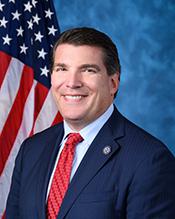
Jay Obernolte
RRepublicanCA-23 · Representative
50
/ 100
Average
Attendance98
Avg: 96
Independence4
Avg: 4
Bipartisan Tone15
Avg: 15
Ethics Record100
Avg: 99
Transparency11
Avg: 53
Accountability Score — composite of attendance, independence, bipartisan tone, ethics record & transparency.
Methodology27
Bills Sponsored
1
Enacted into Law
3
Passed a Chamber
22
In Committee
All Sponsored Bills
HR4464Reported
Preventive Health Savings Act
Preventive Health Savings Act This bill requires the Congressional Budget Office (CBO), upon receiving a request from Congress, to determine if proposed legislation would reduce spending outside of the 10-year budget window through the use of preventive health care. Under the bill, the term preventive health care generally refers to an action that focuses on the health of the public, individuals, and defined populations in order to protect, promote, and maintain health and wellness and prevent disease, disability, and premature death. If CBO determines that the proposed legislation would result in net reductions in budget outlays from the use of preventive health care, any CBO projection regarding the legislation must include (1) a description and estimate of the reductions in outlays, and (2) a description of the basis for these conclusions. Any estimate provided by CBO pursuant to this bill must be used as a supplementary estimate and may not be used to determine compliance with the Congressional Budget Act of 1974 or any other budgetary enforcement controls.
HR3925Passed House
Yuhaaviatam of San Manuel Nation Land Exchange Act
Yuhaaviatam of San Manuel Nation Land Exchange Act This bill authorizes a land exchange between the Yuhaaviatam of San Manuel Nation (also federally recognized as the San Manuel Band of Mission Indians) and the federal government. The tribe is located on the San Manuel Indian Reservation near the cities of Highland and San Bernardino in California. Specifically, if the tribe offers to convey to the federal government all right, title, and interest of the tribe in and to approximately 1,460 acres of land, then the Forest Service must accept the offer and convey all right, title, and interest of the federal government in and to approximately 1,475 acres of National Forest System land. The Forest Service must accept the offer and convey the land as soon as practicable within 120 days of receiving the offer. As a condition of the land exchange, within 120 days of the bill's enactment, the tribe must enter into an agreement with the Forest Service under which the tribe agrees to preserve the historical and cultural integrity of the Arrowhead landmark site. The site is located in the foothills of the San Bernardino Mountains directly above San Bernardino, California. Land acquired by the Forest Service shall become part of the San Bernardino National Forest.
HJRES214In Committee
Providing for congressional disapproval under chapter 8 of title 5, United States Code, of the rule submitted by the Environmental Protection Agency relating to "California State Nonroad Engine Pollution Control Standards; Small Off-Road Engines Regulations; Notice of Decision".
HR9925In Committee
FRONTIER Act
The federal government would establish new oversight rules for advanced artificial intelligence systems that are used in interstate commerce and international trade. Companies developing and deploying cutting-edge AI technology would need to follow federal guidelines and safety standards, with regulatory authority likely split between energy/commerce and science/technology committees. This would affect tech companies, AI developers, and potentially any business using advanced AI systems in their operations.
HR9363In Committee
AI Security and Innovation Act
The proposal would create a new government-funded research center dedicated to artificial intelligence to help keep the United States competitive in developing and testing AI technology. This center would focus on advancing AI research and making sure American scientists and companies stay at the forefront of this rapidly growing field. The bill is currently being reviewed by the House Committee on Science, Space, and Technology.
HR2385In Committee
CREATE AI Act of 2025
Creating Resources for Every American To Experiment with Artificial Intelligence Act of 2025 or the CREATE AI Act of 2025 This bill establishes a national program to provide U.S. researchers, educators, and students with access to artificial intelligence (AI) data, computational resources, educational tools and services, and testbeds. The program, to be known as the National Artificial Intelligence Research Resource (NAIRR), must be established by the National Science Foundation (NSF) to improve U.S. AI research capacity and spur the strategic development of AI capabilities. NAIRR may accept and use donated resources from the private sector and federal agencies. Those eligible to use NAIRR resources are (1) researchers, educators, and students based in the United States and affiliated with a U.S. institution of higher education, nonprofit, executive agency, or other specified entity; and (2) employees of U.S. executive agencies or federally funded research and development centers with a demonstrable mission need. NSF must select a nongovernmental organization to operate NAIRR (i.e., an operating entity ) through a competitive and transparent process. The operating entity must ensure that a significant percentage of the annual allotment of computational resources is provided to projects primarily focused on AI privacy, ethics, safety, security, risk mitigation, or trustworthiness. The operating entity must also establish minimum security requirements for all individuals interacting with NAIRR. The operating entity may establish a fee schedule for access to NAIRR, which must include a free tier of access and must ensure that the primary purpose of NAIRR is to support research.
HR9293In Committee
ReCement Act
The proposal would change federal waste laws to exclude certain recovered materials and resources from being classified as solid waste, which could affect how recycling companies, manufacturers, and waste management facilities operate and are regulated. By redefining what counts as waste, the bill could make it easier for businesses to reuse or resell materials without following the same strict disposal rules that currently apply to traditional garbage.
HR8345In Committee
Economy of the Future Commission Act of 2026
The bill would create a new commission to study how the U.S. economy is changing and prepare recommendations for how the government and businesses should adapt to future economic challenges and opportunities. The commission would likely examine emerging industries, workforce needs, and technological changes to help policymakers make informed decisions about economic policy. This affects workers, businesses, and government agencies that shape economic policy and job training programs.
HR8307In Committee
Responder and Recovery Safety in EV Fires Act
The federal government would create a team of experts to study how firefighters and emergency responders should handle electric vehicle fires, then publish guidelines and best practices for dealing with these incidents. This would help first responders across the country better prepare for and respond to EV fires, which can behave differently from traditional gasoline vehicle fires. The effort aims to improve public safety as more electric vehicles hit the roads.
HR8271In Committee
ICU Bed Act of 2026
Without specific subjects listed, this bill likely addresses the availability and management of intensive care unit beds in hospitals, possibly by establishing standards for ICU capacity, funding mechanisms, or requirements for hospitals to maintain adequate critical care resources. The bill has been sent to two committees—one focused on healthcare regulation and another on budget and tax matters—suggesting it may involve both operational changes to how hospitals manage ICUs and financial provisions to support these efforts. This would affect hospitals, patients needing critical care, and potentially insurance companies or government healthcare programs that pay for ICU services.
HR7963In Committee
No Lifeline for the Dead Act
This bill would prevent phone companies from continuing cellular service for deceased people, requiring them to shut down accounts and stop billing families after receiving proper notification of death. The measure aims to protect grieving families from unexpected charges and reduce confusion when dealing with a loved one's phone account during an already difficult time. It affects wireless carriers and their customers' families who may struggle with canceling service for the deceased.
HR7801In Committee
Cloud LAB Act of 2026
The Cloud LAB Act would likely establish or expand federal support for cloud computing research and development, helping universities and research institutions access advanced computing resources to conduct scientific experiments and innovation projects. This would make cutting-edge technology more available to researchers and students who might not otherwise afford expensive computing infrastructure, potentially speeding up discoveries in fields like medicine, climate science, and artificial intelligence.
HR7334In Committee
National Commission on Robotics Act
The bill would create a new government commission to study how robotics and automation are affecting American workers, businesses, and society, and to recommend policies on issues like job training, safety standards, and international competition in robotics technology. The commission would bring together experts from government, industry, and academia to assess both the benefits and challenges of increasing automation across different sectors of the economy. This would help Congress understand how to prepare workers for jobs in a more automated future and ensure the U.S. remains competitive in robotics development.
HR5332In Committee
Liquid Cooling for AI Act of 2025
This bill would likely establish policies or provide support to develop and deploy liquid cooling systems for artificial intelligence data centers, which use enormous amounts of electricity and generate significant heat. The measure aims to address the cooling and energy efficiency challenges that come with running large AI operations, potentially affecting tech companies, data center operators, and energy providers. By improving cooling efficiency, the bill could help reduce the environmental impact and operating costs of AI infrastructure while supporting the growth of the AI industry.
HR1766Passed House
NTIA Policy and Cybersecurity Coordination Act
NTIA Policy and Cybersecurity Coordination Act This bill establishes an Office of Policy Development and Cybersecurity within the National Telecommunications and Information Administration (NTIA) to analyze and develop policies related to internet and communications technologies. Specific activities of the office include, for example, developing policies that promote (1) innovation, competition, and other elements of the communications, media, and technology markets; (2) security and resilience to cybersecurity incidents while fostering innovation; and (3) commercialization of communications technologies. The existing Associate Administrator for Policy Analysis and Development within NTIA must be redesignated as Associate Administrator for Policy Development and Cybersecurity, and must serve as head of the office.
HJRES89Enacted
Providing congressional disapproval under chapter 8 of title 5, United States Code, of the rule submitted by the Environmental Protection Agency relating to "California State Motor Vehicle and Engine and Nonroad Engine Pollution Control Standards; The 'Omnibus' Low NOX Regulation; Waiver of Preemption; Notice of Decision".
This joint resolution revokes the waiver granted to the California Air Resources Board regarding new emissions standards for new 2024 and subsequent model year on-road heavy-duty vehicles and engines, off-road diesel engines, and off-road diesel-fueled auxiliary power units. (Under the Clean Air Act, California may seek waivers of the preemption prohibiting states from enacting certain emission standards.) Specifically, the joint resolution nullifies the Environmental Protection Agency notice titled California State Motor Vehicle and Engine and Nonroad Engine Pollution Control Standards; The ‘Omnibus’ Low NOX Regulation; Waiver of Preemption; Notice of Decision .
HR3460In Committee
AI Whistleblower Protection Act
Workers who report safety concerns, illegal activities, or unethical practices related to artificial intelligence systems would receive legal protections against retaliation from their employers, such as being fired, demoted, or harassed. The law would apply to employees across various industries who work with or around AI technology and want to speak up about potential harms without fear of losing their jobs. This protection aims to encourage workers to alert authorities, management, or the public about AI-related problems that could affect public safety or violate laws.
HR2879In Committee
Prison Staffing Reform Act of 2025
Prison Staffing Reform Act of 2025 This bill requires the Bureau of Prisons (BOP) to (1) complete (through an external entity) a comprehensive review of staffing across the BOP, and (2) implement a plan for filling vacancies.
HR913In Committee
Streamlining Aviation for Eligible Veterans Act of 2025
Streamlining Aviation for Eligible Veterans Act of 2025 or the SAFE Veterans Act of 2025 This bill authorizes the Department of Veterans Affairs (VA) to approve nondegree flight training courses for certain veterans with service-connected disabilities as part of the VA’s vocational rehabilitation programs under the Veteran Readiness and Employment (VR&E) program. Generally, the VR&E program provides job training and other employment-related services to veterans with service-connected disabilities, including long-term employment training courses.
HR2694In Committee
Election Results Accountability Act
Election Results Accountability Act This bill establishes deadlines for states to count ballots and certify results in federal elections. Specifically, the bill requires a state to count not less than 90% of the ballots cast in a federal election held in the state not later than 72 hours after polls close and make the result of the count publicly available. Further, the state must certify and make publicly available the complete election results not later than two weeks after the election. The bill provides exceptions to these deadlines, including for bona fide emergencies (e.g., major disasters) or technical difficulties (e.g., malfunctioning election equipment or software). The bill prohibits a state from receiving federal election administration funds for subsequent elections if the state does not comply with the deadlines established by the bill. However, a state may regain eligibility for these funds if (1) the state submits a compliance plan to the Election Assistance Commission (EAC) and the Department of Justice (DOJ), and (2) the EAC and DOJ each certify that the state has taken actions to comply with the plan.
HR359Passed House
Cost-Share Accountability Act of 2025
Cost-Share Accountability Act of 2025 This bill requires the Department of Energy (DOE) to report on the use of its authority to reduce or eliminate the nonfederal cost-sharing requirements for federally-funded projects regarding research, development, demonstration, and commercial application activities under the Energy Policy Act of 2005. DOE must submit a report within 120 days of the enactment of this bill and at least quarterly thereafter.
HR1836In Committee
GRANTED Act of 2025
Granting Remaining Applications Not Treated Efficiently or Delayed Act of 2025 or the GRANTED Act of 2025 This bill provides for the automatic approval of a complete application to place or maintain communications facilities (e.g., telecommunications antennas and equipment) on federal property after the application has been pending with a federal agency for 270 days. (Under current law, individuals and entities may apply for an easement, right-of-way, or lease to install, construct, modify, or maintain a communications facility in, on, or over federal property. The federal agency with control over the relevant property is required to act on such an application within 270 days.) The bill requires agencies to act on applications within 270 days of their receipt of a complete application, rather than within 270 days of an application’s filing. Under the bill, an application is considered complete when the applicant (1) has taken the first procedural step within their control to submit the application in accordance with procedures established by the agency, and (2) has not been notified of any deficiency in the application within 30 days of its submission. The bill also establishes criteria for determining when an application is considered received by an agency. Finally, the bill provides for the automatic grant of applications that remain pending with agencies after the 270-day deadline.
HR1539In Committee
Medical Device Electronic Labeling Act
Medical Device Electronic Labeling Act This bill expands the permitted use of electronic labeling of medical devices to allow directions for use and warning labels for all medical devices to be provided electronically, rather than physically (i.e., affixed to or accompanying the device or its container). (Under current law, direction and warning labels may be provided electronically only for (1) prescription devices intended for use in health care facilities or by health care professionals, and (2) in vitro diagnostic devices intended for use in blood establishments or by health care professionals.) Under the bill, direction and warning labels may be provided solely electronically for all medical devices so long as (1) the electronic label is readily accessible to the device’s intended users, (2) intended users may request a paper label at no additional cost, and (3) the label affixed to the device or its packaging contains all information required under current laws and regulations. The Food and Drug Administration may issue regulations establishing additional requirements or exceptions to these provisions.
HR912In Committee
9–8–8 Lifeline Cybersecurity Responsibility Act
9-8-8 Lifeline Cybersecurity Responsibility Act This bill requires the Substance Abuse and Mental Health Services Administration (SAMHSA) to undertake efforts to protect the 9-8-8 Suicide & Crisis Lifeline from cybersecurity threats. (The lifeline is a three-digit number that connects callers in suicidal crisis or mental health distress to a national network of crisis centers.) The bill also establishes related reporting requirements. Specifically, the network administrator for the lifeline must report identified cybersecurity incidents and vulnerabilities to SAMHSA, and local and regional crisis centers that participate in the lifeline must report identified cybersecurity incidents and vulnerabilities to the network administrator. Additionally, the Government Accountability Office must conduct a study that evaluates cybersecurity risks and vulnerabilities associated with the lifeline and report the findings to Congress.
HR628In Committee
Honor Our Living Donors Act
Honor Our Living Donors Act This bill modifies certain criteria used to determine eligibility under the Living Organ Donation Reimbursement Program, which reimburses organ donors for certain incidental expenses related to organ donation (e.g., travel expenses). The bill specifies that the organ recipient's income may not be considered in determining whether an organ donor may be reimbursed under the program. (Currently, an organ recipient's income may not be greater than 350% of the federal poverty guidelines.) Additionally, under the bill, organ donors may be reimbursed regardless of whether the organ recipient pays them (or could be expected to pay them) for their expenses. The Department of Health and Human Services must report on whether the program adequately covers the expenses of organ donors, and if not, the amount of necessary funding.
HJRES17In Committee
Proposing a balanced budget amendment to the Constitution of the United States.
This joint resolution proposes a constitutional amendment prohibiting total outlays for a fiscal year from exceeding total receipts for that fiscal year unless Congress authorizes the excess by a two-thirds roll call vote of each chamber. The prohibition excludes outlays for repayment of debt principal and receipts derived from borrowing. The amendment also requires the President to submit an annual budget in which total outlays do not exceed total receipts.
HRES36In Committee
Finding Federal Savings Committee Resolution
Finding Federal Savings Committee Resolution This resolution establishes the House Committee on the Elimination of Nonessential Federal Programs to analyze underperforming or nonessential federal programs and recommend actions to modify or eliminate those programs. The resolution also establishes expedited procedures for legislation reported by the committee to eliminate programs or rescind funding. The committee shall cease to exist at the end of the 120th Congress.