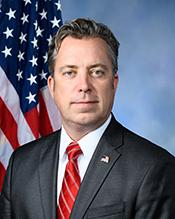
Andrew Ogles
RRepublicanTN-5 · Representative
42
/ 100
Below Average
Attendance91
Avg: 96
Independence9
Avg: 4
Bipartisan Tone0
Avg: 15
Ethics Record80
Avg: 99
Transparency12
Avg: 53
Accountability Score — composite of attendance, independence, bipartisan tone, ethics record & transparency.
Methodology34
Bills Sponsored
0
Enacted into Law
3
Passed a Chamber
31
In Committee
All Sponsored Bills
HR6808Passed House
To designate the facility of the United States Postal Service located at 417 West 7th Street in Columbia, Tennessee, as the "Pharmacist’s Mate First Class John Harlan Willis Post Office Building".
This bill designates the facility of the United States Postal Service located at 417 West 7th Street in Columbia, Tennessee, as the "Pharmacist's Mate First Class John Harlan Willis Post Office Building".
HRES1472In Committee
Impeaching Allison Dale Burroughs, a judge of the United States District Court for the District of Massachusetts, for high crimes and misdemeanors.
A federal judge in Massachusetts would face removal from office if the House of Representatives votes to impeach her based on allegations of serious misconduct or crimes. The House Judiciary Committee would investigate the charges against Judge Allison Dale Burroughs to determine whether to recommend impeachment to the full House. If impeached by the House, the case would then go to the Senate for trial to decide whether she should be permanently removed from her position.
HR9968In Committee
Opening Programs to Organic Farms Act
The Agriculture Department would be required to study and report back to Congress about what obstacles prevent organic farms and farms considering switching to organic production from participating in USDA assistance programs. The report would identify specific barriers these farmers face, helping lawmakers understand what changes might be needed to make it easier for organic and transitioning farms to access government support and resources.
HR9868In Committee
Preventing Forced Abortions Act of 2026
The proposal would establish legal rules for how surrogacy agreements—contracts where one woman agrees to carry and deliver a baby for another person or couple—can be enforced in court. It would set conditions and limitations on when courts can force someone to follow through on a surrogacy contract, affecting intended parents, surrogate mothers, and fertility clinics involved in these arrangements.
HR9562In Committee
Anchors Away Act
The proposal would change citizenship rules so that only children born in the U.S. to at least one citizen or permanent resident parent would automatically become U.S. citizens at birth, eliminating automatic citizenship for children born to non-citizen parents. It would also prevent pregnant women who are not married to U.S. citizens from entering the country on temporary visas. These changes would affect immigrants, their children, and the citizenship status of future generations born in America.
HR9479In Committee
Remigration Act
This bill would create new reasons for the government to take away someone's citizenship and would require a review of past decisions to grant asylum and refugee status to certain people. It would also require that people who lose their citizenship be sent back to their home countries, potentially along with their children. The changes would affect immigrants, naturalized citizens, and people seeking refuge in the United States.
HR9443In Committee
Saving FACE Act of 2026
The proposal would eliminate federal criminal penalties for blocking or interfering with people trying to access abortion services. Currently, federal law makes it a crime to use force, threats, or physical obstruction to prevent someone from obtaining an abortion, and this bill would remove those criminal penalties. The change would affect abortion providers, patients seeking abortion care, and anyone involved in protests or blockades at abortion clinics.
HR9156In Committee
Tiananmen Square Memorial Act of 2026
The proposal would create a new street or boulevard in Washington, D.C. named Tiananmen Square Memorial Boulevard to commemorate the 1989 events in Beijing's Tiananmen Square. This would primarily affect residents and visitors to the nation's capital by adding a named location to the city's geography, though the bill's specific details about where this boulevard would be located and what other provisions it contains are not detailed in the available information.
HR8827In Committee
ASSIMILATION Act
This bill would overhaul the U.S. immigration system by prioritizing employment and skills over family connections, eliminating the diversity visa lottery, making it harder for immigrants to sponsor relatives, tightening rules for who can become a citizen, and increasing penalties for people who overstay visas or live in the country illegally. It would also restrict work visas for foreign workers and require employers to verify that all employees are authorized to work in the United States. The changes would affect immigrants seeking to enter or stay in the country, employers who hire foreign workers, and families hoping to reunite with relatives abroad.
HR8587In Committee
Safeguarding Honest Speech Act of 2026
This bill would prevent federal agencies from using taxpayer money to enforce policies that require employees to use someone's preferred pronouns or chosen name instead of their legal name. The measure would apply to federal workplaces and agencies that receive federal funding. It affects federal employees and the agencies that employ them.
HR8150In Committee
Good Friday Act of 2026
Without access to the bill's specific text or legislative details, this appears to be a government operations bill likely related to federal holidays or administrative procedures, though the exact provisions cannot be determined from the title alone. The bill has been sent to the House Judiciary Committee for review, suggesting it may involve legal or constitutional matters affecting how government operates. More information about the bill's actual content would be needed to provide a concrete summary of what it would do and who it affects.
HR7964In Committee
Halt Immigration from Countries with Inadequate Verification Capabilities Act
This bill would allow the government to temporarily stop accepting immigrants and visitors from countries that don't have adequate systems to verify people's identities and backgrounds. The goal is to prevent people from entering the U.S. from nations where the government can't reliably confirm who someone is or whether they pose a security risk. The measure would affect travelers and immigrants from affected countries until those nations improve their identification and information-sharing capabilities.
HR7842In Committee
Alien Banking Act
The bill would establish rules for how banks and financial institutions handle accounts and services for non-citizens and immigrants, likely addressing issues like documentation requirements, access to banking services, and reporting obligations. This would affect both immigrants trying to open bank accounts and financial institutions determining who they can serve and what information they must collect.
HR7707In Committee
OLYMPICS Act
The OLYMPICS Act likely addresses tax treatment related to Olympic Games, though the specific provisions aren't clear from the title alone. Based on the taxation subject matter, it probably either provides tax breaks for Olympic host cities and organizing committees, adjusts how Olympic-related income is taxed, or creates special tax rules for athletes and Olympic workers. The bill would affect cities bidding to host the Olympics, athletes competing in the Games, and potentially taxpayers in host communities.
HR7663In Committee
Restoring Washington's Birthday Act of 2026
This bill would change the federal holiday currently called Presidents' Day back to its original name, Washington's Birthday, to specifically honor George Washington rather than all U.S. presidents. The change would affect federal employees, banks, and other institutions that observe federal holidays, though most Americans would still get the same day off work. The bill reflects a debate about how the nation commemorates its historical figures and whether holidays should focus on individual leaders or broader themes.
HR7512In Committee
Preserving Counterterrorism Capabilities Act of 2026
This bill would maintain and protect the government's ability to conduct counterterrorism operations and intelligence gathering activities, likely addressing tools, authorities, or programs used by military and security agencies to prevent terrorist attacks. The legislation affects national security agencies, military personnel, and potentially intelligence operations, though the specific provisions are not yet detailed. The bill is currently being reviewed by committees focused on homeland security and energy matters to determine which parts fall under their jurisdiction.
HR6695In Committee
Charlie Kirk Act
Based on the title and subject matter alone, this bill likely addresses international affairs policy, though the specific details are unclear without access to the bill's text. The bill has been referred to the House Committee on Foreign Affairs for review and consideration. To understand what concrete actions this bill would take and who it would affect, the full legislative text would need to be examined.
HR6278In Committee
Charlie Kirk Congressional Gold Medal Act
This bill would award the Congressional Gold Medal, one of the highest civilian honors in the United States, to Charlie Kirk, a political commentator and activist. The medal recognizes exceptional contributions to American society, and this proposal has been sent to congressional committees for review and consideration.
HR5078Passed House
PILLAR Act
Protecting Information by Local Leaders for Agency Resilience Act or the PILLAR Act This bill extends the State and Local Cybersecurity Grant Program through FY2035, expands the scope of the program, and imposes certain limits on the use of grant funds. (The program provides grants to states and Indian tribes to address cybersecurity risks to government information systems.) The bill expands the scope of systems that may be secured using grant funds to include operational technology systems and specifies that systems using artificial intelligence are included. Such systems must be maintained, owned, or operated by or on behalf of state, local, or tribal governments. The bill also specifies that grant funds may not be used to purchase software, hardware, or related products or services that do not align with relevant guidance provided by the Cybersecurity and Infrastructure Security Agency (CISA). Further, the bill increases the federal share of costs available to entities that implement or enable multifactor authentication and identity and access management tools for critical infrastructure by a specified date. The bill requires annual reports by grant recipients to include a description of recipients’ progress in assuming the cost of continuing cybersecurity programs after grant funds are fully expended. The Government Accountability Office must periodically review the program. This effort must include a review of artificial intelligence adoption across a sample of grants. Finally, CISA must implement an outreach plan to inform local governments, including governments in rural areas or areas with small populations, about CISA’s no-cost cybersecurity offerings.
HR2659Passed House
Strengthening Cyber Resilience Against State-Sponsored Threats Act
Strengthening Cyber Resilience Against State-Sponsored Threats Act The bill creates a joint interagency task force to facilitate agency collaboration on efforts to respond to Chinese state-sponsored cyber actors, including Volt Typhoon. The task force must be established and led by the Cybersecurity and Infrastructure Security Agency (CISA), an agency within the Department of Homeland Security (DHS). The task force must facilitate collaboration and coordination among the Sector Risk Management Agencies (SRMAs) specified in the President's National Security Memorandum- 22 (e.g., the Department of Defense, the Department of Energy, and the Department of Agriculture) to detect, analyze, and respond to Chinese state-sponsored cyber actors by ensuring that such agencies’ actions are aligned and mutually reinforcing. The bill directs DHS, CISA, the Department of Justice, the Federal Bureau of Investigation, and specified SRMAs to provide the task force with analysis, inspections, audits, and other relevant information necessary for the task force to carry out its responsibilities. The production and use of information must comply with all applicable statutes, regulations, and executive orders, and task force members must have appropriate security clearances to access classified information. The task force must provide annual reports and briefings to Congress detailing its assessment of cyber threats and recommendations to improve the detection and mitigation of the cybersecurity threat posed by Chinese state-sponsored cyber actors. The first report must be provided no later than 540 days after the establishment of the task force, and additional reports must be provided annually thereafter for six years.
HR5207In Committee
Capital Emergency Control Act of 2025
The legislation would give the President new powers to declare and manage financial emergencies affecting the nation's capital and federal government operations, potentially allowing rapid changes to spending, staffing, or other government functions during such crises. This would affect federal employees, government contractors, and potentially the broader public who depend on federal services. The bill is currently under review by the House Committee on Oversight and Government Reform.
HR3782In Committee
To prohibit the Federal Government from using facial recognition technology as a means of identity verification, and for other purposes.
This bill prohibits federal agencies from using facial recognition technology as a means of identity verification.
HR3461In Committee
Confronting CCP Human Rights Abusers Act
The legislation would impose sanctions and travel restrictions on Chinese government officials and entities believed to be responsible for human rights violations, particularly in regions like Xinjiang. It aims to hold accountable individuals involved in forced labor, surveillance, and persecution of ethnic and religious minorities by preventing them from entering the United States and freezing any assets they hold in the country. The bill affects Chinese officials, companies complicit in these practices, and potentially American businesses with ties to sanctioned entities.
HR2155In Committee
Saving Privacy Act
Saving Privacy Act This bill eliminates or restricts various financial reporting requirements and requires congressional approval for new and existing regulations issued by specified financial regulatory agencies. Specifically, the bill eliminates provisions that require financial institutions to report certain financial information to federal agencies. Currently, financial institutions are required to report certain financial transactions (e.g., transfers of over $10,000) for the purpose of detecting illicit activity, such as money laundering or the financing of terrorism. Under the bill, such records are only obtainable through a search warrant. Further, the bill generally prohibits the federal government from accessing an individual’s financial records without a warrant based on probable cause and establishes criminal penalties for violations. Additionally, the bill requires congressional approval for major rules issued by specified financial regulatory agencies, including rules currently in effect. The bill also eliminates or reduces reporting requirements applicable to (1) the beneficial ownership of certain corporate entities; (2) third-party settlement organizations (e.g., certain online platforms, apps, and card payment processors); and (3) the Consolidated Audit Trail (i.e., data collected by national securities exchanges to track securities market activity). The bill generally prohibits federal agencies from issuing or using a central bank digital currency. The bill prohibits federal agencies from restricting a person's use of convertible virtual currency for their own purposes or to conduct transactions through a self-hosted wallet.
HRES174In Committee
Impeaching Amir Hatem Mahdy Ali, a judge of the United States District Court for the District of Columbia, for high crimes and misdemeanors.
HR1730In Committee
No Alipay Act of 2025
No Alipay Act of 2025 This bill prohibits any financial transactions between a U.S. person and Alipay, a Chinese online payment platform.
HRES157In Committee
Impeaching John Deacon Bates, a judge of the United States District Court for the District of Columbia, for high crimes and misdemeanors.
HR1209In Committee
End of GSE Conservatorship Preparation Act of 2025
End of GSE Conservatorship Preparation Act of 2025 This bill requires the Department of the Treasury to report to Congress on the status of proposals to establish a timeline and process (1) to end the conservatorship of Fannie Mae and Freddie Mac by the Federal Housing Finance Agency, and (2) for Treasury to resolve its investment in Fannie Mae and Freddie Mac. (As a result of the financial crisis, Fannie Mae and Freddie Mac entered into a conservatorship in 2008 with the Federal Housing Finance Agency. As part of this agreement, Treasury provided funds to support the solvency of Fannie Mae and Freddie Mac.)
HR1136In Committee
Make Gaza Great Again Act
I can see this bill has been referred to committees, but I don't have access to the actual text or specific provisions of the bill, which would be necessary to write an accurate summary of what it would do. To provide you with a factual, nonpartisan explanation of the bill's concrete effects, I would need information about its actual contents and proposed actions. I'd recommend checking Congress.gov for the full bill text to understand its specific provisions.
HR1088In Committee
Restoring American Sovereignty Act
This bill would likely strengthen U.S. immigration enforcement and border control policies, though the specific details are still being developed in committee. The legislation appears aimed at giving the federal government more authority over immigration matters and reducing what supporters view as excessive foreign influence on American immigration decisions. It would primarily affect immigrants, border security agencies, and potentially employers who hire foreign workers.
HR629In Committee
Ending Chemical Abortions Act of 2025
This legislation would restrict access to mifepristone, a medication used in medication abortion, by limiting how it can be prescribed and distributed. The bill would affect women seeking abortion services, healthcare providers who offer medication abortion, and pharmaceutical companies that manufacture or distribute the drug. The measure has been referred to the House Judiciary Committee for consideration.
HR525In Committee
HONDURAS Act
Honduras Obstinately Neglects Defense and Risks Alienating Security Act or HONDURAS Act This bill authorizes the President to suspend all assistance to Honduras if U.S. military and civilian personnel redeploy from Soto Cano Air Base as the result of the Honduran government's refusal to host such personnel at the base.
HR361In Committee
Make Greenland Great Again Act
Make Greenland Great Again Act This bill authorizes the President to seek to enter into negotiations with Denmark to acquire Greenland. If such an agreement is reached, the President must transmit the agreement and related materials to Congress within five calendar days. The agreement shall go into effect 60 calendar days after such transmission unless Congress enacts a joint resolution of disapproval.
HRES19In Committee
Providing the sense of the House of Representatives that the House should not adjourn until the annual appropriation bills within the jurisdiction of all the subcommittees of the Committee on Appropriations for the current fiscal year are enacted into law.
This resolution expresses the sense of the House of Representatives that the House should not adjourn until all of the annual appropriations bills for the current fiscal year have been enacted.