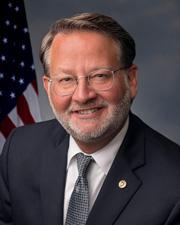
Gary C. Peters
DDemocratMI · Senator
56
/ 100
Average
Attendance98
Avg: 97
Independence18
Avg: 23
Bipartisan Tone8
Avg: 14
Ethics Record100
Avg: 100
Transparency40
Avg: 47
Accountability Score — composite of attendance, independence, bipartisan tone, ethics record & transparency.
Methodology69
Bills Sponsored
1
Enacted into Law
16
Passed a Chamber
46
In Committee
Bills That Became Law
All Sponsored Bills
S528Passed Senate
GLRI Act of 2026
Great Lakes Restoration Initiative Act of 2025 or the GLRI Act of 2025 This bill reauthorizes through FY2031 the Great Lakes Restoration Initiative, which carries out programs and projects to protect and restore the Great Lakes.
S5648In Committee
TAG Act
S5555In Committee
PFAS RAPID Response Act
S3404Passed Senate
Satellite Cybersecurity Act of 2025
This bill would establish new security requirements and standards for satellites and satellite systems to protect them from cyberattacks and hacking. It would likely require satellite operators and manufacturers to implement stronger security measures, report vulnerabilities, and follow government guidelines to prevent foreign adversaries or criminals from taking control of these systems. The rules would affect companies that operate satellites for communications, weather monitoring, GPS, and other services that millions of Americans rely on daily.
S5450In Committee
A bill to adjust the rail safety inspections General Schedule classification, and for other purposes.
S4573In Committee
Regional Great Lakes Partnership Act of 2026
The proposal would give the Great Lakes Commission an official designation as a Regional Great Lakes Partnership, which would likely enhance its authority and role in managing issues affecting the Great Lakes region. This change could affect states bordering the Great Lakes, businesses that rely on the lakes for commerce and resources, and communities dependent on the lakes for water and recreation. The bill is currently under review by the Senate Commerce Committee.
SRES849In Committee
A resolution expressing support for the designation of the week of September 11 through September 17, 2026, as "Patriot Week".
S2542Passed Senate
Federal Building Threat Notification Act
S434Passed Senate
Space Commerce Advisory Committee Act
Space Commerce Advisory Committee Act This bill requires the Office of Space Commerce to establish a Commercial Space Activity Advisory Committee to provide information and recommendations on nongovernmental space activities and promoting a robust and innovative commercial space sector. Among other duties, the committee is directed to identify challenges to the U.S. commercial space sector and to review best practices for commercial space entities with respect to avoiding harmful contamination of the Moon and other celestial bodies and adverse impacts to the Earth’s environment from extraterrestrial matter. The committee must be comprised of representatives from varying fields with significant experience in the commercial space industry. The committee must terminate ten years after it is established.
SRES820In Committee
A resolution designating August 7, 2026, as "National Lighthouse Day".
The resolution would officially recognize August 7, 2026, as "National Lighthouse Day" to honor these historic structures and their importance to American maritime history and navigation. The designation would encourage Americans to celebrate and learn about lighthouses and their role in protecting ships and coastal communities. This is a symbolic measure that does not create any new laws or programs, but rather establishes a national day of recognition.
S4885In Committee
Shandra Eisenga Human Cell and Tissue Product Safety Act
The federal government would launch a nationwide education campaign to inform the public and doctors about the risks and benefits of transplanting human cells and tissues, such as skin grafts or bone replacements. The campaign would be based on scientific evidence and aim to help patients and healthcare providers make informed decisions about these types of medical procedures. This would affect patients considering cell or tissue transplants, doctors who perform these procedures, and the general public learning about transplant options.
S4861In Committee
Housing Financial Literacy Act of 2026
The federal government would reduce mortgage insurance costs for first-time homebuyers who complete a financial literacy and housing counseling program. This discount would apply to FHA loans, which are popular among people buying their first home because they require smaller down payments than conventional mortgages. The goal is to help new homeowners save money while encouraging them to learn about budgeting and responsible homeownership.
S4811In Committee
Tribal Conservation Priorities Inclusion Act
The proposal would expand a federal farm conservation program to give Indian Tribes the same access and priority as states and other groups when addressing environmental concerns on their lands, such as soil health, water quality, and wildlife habitat. Currently, Tribes have limited ability to participate in certain conservation funding and planning decisions under existing farm law. This change would help Tribes better manage natural resources on tribal lands and compete for federal conservation resources.
S4679In Committee
A bill to amend title 49, United States Code, to allow the introduction of certain noncompliant motor vehicle equipment in interstate commerce for testing purposes, and for other purposes.
The bill would allow companies to temporarily bring vehicles or vehicle parts that don't meet federal safety and emissions standards into interstate commerce for testing and research purposes. This would let manufacturers and researchers test new technologies and equipment on public roads without having to fully comply with all current regulations during the development phase. The change primarily affects automotive companies, suppliers, and technology developers working on innovative vehicle improvements.
SRES755Introduced
A resolution honoring the life of the Honorable Donald W. Riegle, Jr., former Senator for the State of Michigan.
This resolution honors the life of Donald W. Riegle, Jr., former Senator for the state of Michigan, and expresses condolences to his family and loved ones.
S4631Passed Senate
Expanding Whistleblower Protections for Contractors Act of 2026
I don't have enough information to write an accurate summary. The bill has no title, no subjects listed, and minimal status information. To provide a meaningful plain-English explanation of what this bill would do and who it affects, I would need the actual bill text, its official title, and subject matter details.
S4563In Committee
Section 232 Public Transparency Act
The government would be required to publish the findings from national security investigations about imports within a specific deadline, making the results publicly available rather than keeping them secret. This affects companies that import goods and the public who want to know what the government discovers about whether foreign products pose security risks. The bill aims to increase transparency in how the government handles trade decisions based on national security concerns.
S4562In Committee
AVERT Future Violence Act of 2026
The Attorney General would be required to research and document patterns of animal cruelty across the country, examining how widespread the problem is and what factors contribute to it. This study would help lawmakers and law enforcement better understand animal abuse and potentially develop more effective strategies to prevent it and prosecute offenders.
SRES740Introduced
A resolution expressing support for the designation of May 2026 as "Motorcycle Safety Awareness Month".
This resolution expresses support for the designation of May 2026 as Motorcycle Safety Awareness Month. It also recognizes the contribution of motorcycles to transportation.
S272Passed Senate
Protect Infant Formula from Contamination Act
Protect Infant Formula from Contamination Act This bill imposes certain new requirements on infant formula manufacturers and the Food and Drug Administration (FDA) following the discovery of contaminated, adulterated, or misbranded infant formula. Specifically, the bill requires infant formula manufacturers to report to the FDA within one business day of learning that formula that was processed by the manufacturer but that is no longer within the manufacturer’s control may not provide required nutrients or may be otherwise adulterated or misbranded. Further, if any testing of finished infant formula reveals the presence of specified microorganisms (e.g., salmonella), the manufacturer must notify the FDA within one business day. (Under current law, manufacturers are only required to report contamination to the FDA if the affected formula has left the manufacturer’s control.) The manufacturer must also promptly provide the test results to the FDA and consult with the FDA on proper isolation and disposal of the affected product. The FDA must respond to such a notification and begin discussing proper investigative and corrective action with the manufacturer within one business day. Within 90 days of a report of adulterated, misbranded, or contaminated infant formula, the FDA must determine whether the manufacturer that reported the problem has performed, or is performing, appropriate investigative and corrective action. Finally, the FDA is required to periodically report on the infant formula supply chain and efforts to improve the safety and supply of infant formula, and must consult with other federal agencies and infant formula stakeholders on these issues.
S874Passed Senate
Expanding Whistleblower Protections for Contractors Act of 2025
Expanding Whistleblower Protections for Contractors Act of 2025 This bill expands whistleblower protections for employees of federal contractors and grant recipients to include the act of refusing to obey an unlawful order and to apply these protections to members of the intelligence community and other governmental employees. Current law protects employees of federal contractors or grant recipients from a reprisal (i.e., discharge, demotion, or discrimination) for disclosing evidence to Congress or another appropriate official of certain misconduct involving federal contracts, grants, or funds. The bill expands these protections to include an employee's refusal to obey an order that would require the employee to violate a law, rule, or regulation related to any contract, subcontract, grant, or subgrant. The bill also specifies that these protections apply to employees of federal contractors or grant recipients who are current or former members of the intelligence community or employees of state, local, or tribal governments. Further, the bill specifies that these protections may not be waived in a predispute arbitration agreement and renders any such agreement unenforceable. The bill specifies that an executive branch official may not request a federal contractor or grant recipient to engage in a reprisal against a protected employee, and it authorizes federal agencies to propose disciplinary action against officials that do so.
S3311In Committee
Veterans Affairs Peer Review Neutrality Act of 2025
The bill would require the Department of Veterans Affairs to use neutral, independent reviewers when evaluating complaints about VA medical care and decisions, rather than allowing VA staff members to review their own colleagues' work. This change aims to make the appeals process fairer for veterans who believe they received poor treatment or made incorrect benefit decisions. Veterans seeking to challenge VA decisions would benefit from having outside experts examine their cases instead of internal VA personnel.
S4264In Committee
NASA UAS Detection Act
This bill would require NASA to develop and test technology to detect unmanned aircraft systems (drones) in airspace, likely to help prevent collisions and improve air safety as drone use increases. The legislation aims to give NASA resources to research detection methods that could eventually be used by the Federal Aviation Administration and other agencies to track drones and keep them from interfering with manned aircraft and airport operations. This would affect drone operators, airlines, and airports by establishing better safety monitoring systems for increasingly crowded airspace.
S1784In Committee
MAPS Act
Mapping America’s Pharmaceutical Supply Act or the MAPS Act This bill requires the Food and Drug Administration (FDA) to continually update its essential medicines list and identify risks and vulnerabilities in the associated supply chains. In 2020, in response to an executive order, the FDA published a list of essential medicines deemed medically necessary to have available at all times. The bill requires the FDA to update and maintain this list to include drugs and ingredients (1) related to responding to public health threats and emergency incidents, (2) of greatest priority for providing health care and at high risk of shortage, (3) the shortage of which would adversely affect patients with chronic conditions, and (4) that the Department of Defense (DOD) determines to be critical for military preparedness. The FDA must update the list at least every two years. Also, the bill requires the FDA to conduct a risk assessment of the supply chains for drugs and ingredients on the list and annually report its findings to Congress. The assessment must include information about key manufacturing materials, drugs with primarily foreign suppliers, manufacturing capacity, relevant public health and national security risks, and risk mitigation strategies. Additionally, the Department of Health and Human Services, in coordination with other agencies, must map and monitor relevant supply chains to identify vulnerabilities and provide an annual status report to Congress. Finally, DOD must report to Congress every 180 days on the drugs DOD purchased that were manufactured in or sourced from China.
S4074In Committee
Fund CISA Personnel Act of 2026
Fund CISA Personnel Act of 2026 This bill provides continuing appropriations to provide pay and benefits to Cybersecurity and Infrastructure Security Agency (CISA) employees during the partial Department of Homeland Security (DHS) shutdown that began on February 14, 2026. (A partial government shutdown is currently in effect for CISA and other DHS agencies because the FY2026 DHS appropriations bill has not been enacted and continuing appropriations for DHS are not in effect.) Specifically, the bill provides FY2026 continuing appropriations to provide standard rates of pay, allowances, pay differentials, benefits, and other payments otherwise payable on a regular basis to CISA employees during the period in which interim or full-year FY2026 appropriations are not in effect. The bill provides the continuing appropriations until the earlier of (1) the enactment into law of the applicable appropriations legislation, or (2) September 30, 2026. The bill must take effect as if it had been enacted on February 13, 2026.
SRES623In Committee
A resolution commemorating the accomplishments of Team USA in ice hockey.
This resolution honors the achievements of the U.S. ice hockey team, recognizing their accomplishments in competition. It's a ceremonial measure that doesn't create new laws or policies, but rather expresses Congress's appreciation for the athletes and their contributions to American sports.
S3913In Committee
Self-Initiation Trade Enforcement Act of 2026
Self-Initiation Trade Enforcement Act of 2026 This bill establishes within the Department of Commerce a task force to identify and recommend actions related to potential countervailable subsidies, dumping, and circumvention. Dumping and countervailable subsidies are unfair trade practices that cause (or threaten to cause) material injury to U.S. industries by importing products (1) that are sold or are likely to be sold in the U.S market at less than fair value (dumping), or (2) with the assistance of subsidies from a foreign government or public entity (countervailable subsidies). Specifically, the task force shall identify (1) potential countervailable subsidies and dumping that may be causing (or threatening to cause) material injury to an industry in the United States, and (2) potential circumvention of existing antidumping or countervailing duty orders. The task force must make recommendations with respect to initiating antidumping or countervailing duty investigations and circumvention inquiries.
S3870In Committee
Lifelong Learning Act
The bill would likely create or expand programs to help workers gain new skills and credentials throughout their careers, rather than just early in life. This could include funding for job training, community college courses, or apprenticeships for people already in the workforce who want to switch careers or advance in their current jobs. The goal would be to make it easier and more affordable for American workers to keep learning as jobs and industries change.
S3810In Committee
SWAT Act of 2026
Spotted Wing Abatement Trust Act of 2026 or the SWAT Act of 2026 This bill directs the Animal and Plant Health Inspection Service to establish a fund for research relating to, and activities to mitigate the negative effects of, spotted wing drosophila. Spotted wing drosophila is an invasive species of insect from East Asia that has caused significant damage to unripe berry and stone fruit crops in the United States, including raspberries, blackberries, blueberries, strawberries, peaches, plums, and cherries.
S3709In Committee
Streamlining Federal Grants Act of 2026
The bill would simplify and speed up how federal agencies distribute grants to states, cities, and organizations by reducing paperwork requirements and consolidating overlapping grant programs. This would help state and local governments, nonprofits, and businesses access federal funding more quickly and with less administrative burden. The changes aim to make it easier for communities to get money for projects like infrastructure, education, and public services without getting lost in complex application processes.
S2878Enacted
Great Lakes Fishery Research Reauthorization Act
Great Lakes Fishery Research Reauthorization Act This act reauthorizes through FY2030 research and monitoring conducted by the U.S. Geological Survey in support of binational fisheries within the Great Lakes Basin. This research is completed through the Great Lakes Science Center and may involve invasive species science, studies on fishery resources, and the use of biological assessment tools and other capabilities to support fishery management decisions.
S865Passed Senate
Lobbying Disclosure Improvement Act
Lobbying Disclosure Improvement Act This bill requires registered lobbyists to disclose whether they are exempt from having to register as foreign agents due to their lobbying activities and status as registered lobbyists.
S861Passed Senate
Disaster Assistance Simplification Act
Disaster Assistance Simplification Act This bill directs the Federal Emergency Management Agency (FEMA) to develop and establish a unified intake process and system for applicants for assistance provided by a disaster assistance agency. The system must facilitate a consolidated application for any form of disaster assistance provided by a disaster assistance agency when appropriate to support the nature and purposes of the assistance; carry out the purposes of disaster assistance programs swiftly, efficiently, equitably, and in accordance with specified laws and privacy and data protections; and support the detection, prevention, and investigation of waste, fraud, abuse, or discrimination in the administration of disaster assistance programs. Further, the system must, among other things accept applications for disaster assistance programs; permit applicants to receive status updates on such applications; allow applicants to update disaster assistance information throughout their recovery journeys; permit the distribution of information on additional recovery resources to disaster survivors that may be available in a disaster-stricken jurisdiction in coordination with appropriate federal, state, local, and tribal partners; and permit disaster assistance agencies to communicate directly with disaster survivors. Not later than 30 days after receiving a request from a disaster assistance agency to update questions in the consolidated application needed to administer the disaster assistance programs of the agency, FEMA must make those updates. The bill requires reports and congressional briefings from FEMA, and a report from the Government Accountability Office, relating to the bill's implementation.
S594Passed Senate
HELP Response and Recovery Act
Helping Eliminate Limitations for Prompt Response and Recovery Act or the HELP Response and Recovery Act This bill extends the maximum duration of noncompetitive Department of Homeland Security (DHS) contracts for disaster response and recovery from 150 days to one year by repealing a current limitation on such DHS contracts so that standard procurement regulations apply regarding urgent needs. It also requires DHS to report to Congress annually for five years to review how this repeal has prevented waste and provide information on noncompetitive Federal Emergency Management Agency contracts.
S727Passed Senate
U.S. Customs and Border Protection Officer Retirement Technical Corrections Act
U.S. Customs and Border Protection Officer Retirement Technical Corrections Act This bill modifies the calculation of retirement benefits for certain U.S. Customs and Border Protection (CBP) officers. Under current law, effective July 6, 2008, CBP officers are entitled to an enhanced retirement benefit, subject to certain mandatory retirement requirements. CBP officers who were employed as of July 6, 2008, are entitled to a transitional enhanced retirement benefit without the corresponding mandatory retirement requirements (i.e., proportional annuity). The bill specifies that CBP officers who received a tentative offer of employment before July 6, 2008, and who started work on or after that date, are entitled to this proportional annuity. The Office of Personnel Management must correct annuity calculations for these officers, including retroactively, based on a list compiled by the Department of Homeland Security (DHS). DHS may also retroactively waive mandatory retirement requirements for these officers so that they may receive the proportional annuity. The Government Accountability Office must report on CBP's policies and procedures related to enhanced retirement benefits.
S3541In Committee
A bill to increase competition in Defense contracting, and for other purposes.
S642Passed Senate
Keweenaw Bay Indian Community Land Claim Settlement Act of 2025
Keweenaw Bay Indian Community Land Claim Settlement Act of 2025 This bill directs the Department of the Interior to transfer funds to the Keweenaw Bay Indian Community (KBIC) in Baraga County, Michigan, in order to settle the KBIC's land claims and clear title to those lands. The KBIC may use these funds for any lawful purpose except to acquire land for gaming.
S3481In Committee
SAFER SKIES Act
This bill would likely strengthen security measures and law enforcement procedures at airports and on aircraft to prevent crimes and terrorist threats. The legislation probably addresses issues like screening protocols, security personnel training, or penalties for crimes committed in aviation settings to make air travel safer for passengers and crew members.
S3469In Committee
BIOSECURE Act of 2025
This bill would restrict certain Chinese companies and entities from owning or investing in U.S. biotechnology and pharmaceutical businesses, aiming to protect American medical research and drug development from foreign control. It affects biotech startups, pharmaceutical companies, and research institutions that might otherwise receive funding or investment from Chinese sources. The measure reflects concerns about keeping sensitive health and medical technology development within U.S. hands.
S3450In Committee
Emergency Response Authority Act
This bill would likely expand or clarify the government's authority to respond to emergencies, possibly involving military or defense resources. The specific details aren't yet clear since the bill is still in early stages, but it probably addresses how federal agencies coordinate during crises like natural disasters or other urgent situations. The bill is currently being reviewed by the Armed Services Committee to determine whether military involvement in emergency response needs to be adjusted.
S3445In Committee
A bill to require the provision of alternative drinking water to households whose private drinking water is contaminated with perfluorooctanesulfonic acid and perfluorooctanoic acid substances from activities of the Department of Defense.
The military would be required to provide clean drinking water to households whose private wells have been contaminated with PFOS and PFOA chemicals—toxic substances that can leak from military bases and facilities. This would ensure families affected by Department of Defense activities don't have to pay for bottled water or water treatment systems on their own. The bill specifically targets contamination caused by military operations rather than other sources.
S3312In Committee
Quantum Readiness and Innovation Act of 2025
S3272In Committee
Motorcycle Safety Awareness Act of 2025
S99Passed Senate
Strengthening Support for American Manufacturing Act
Strengthening Support for American Manufacturing Act This bill requires the Department of Commerce to contract with the National Academy of Public Administration to study and report on the offices and bureaus of the department that are relevant to critical supply chain resilience and manufacturing and industrial innovation. The report must evaluate the purpose, statutory authority, effectiveness, efficiency, and limitations of each such office and bureau and provide recommendations to improve their effectiveness, efficiency, and impact.
S3043In Committee
Military and Federal Employee Protection Act
This bill would establish new protections for military service members and federal government employees, likely addressing workplace rights, benefits, or job security issues. The specific protections aren't detailed in the available information, but the bill is designed to safeguard these workers from unfair treatment or loss of benefits. The proposal is currently under review by the Senate Appropriations Committee.
S3006In Committee
Youth Prevention and Recovery Reauthorization Act of 2025
This bill would reauthorize federal programs that help young people avoid substance abuse and recover from addiction, likely extending funding and updating requirements for prevention education, treatment services, and support programs in schools and communities. The legislation affects teenagers and young adults struggling with drug or alcohol use, as well as schools, treatment centers, and public health organizations that provide these services.
SRES337In Committee
A resolution recognizing the 250th anniversary of the postal service of the United States.
This resolution honors the 250-year history of the U.S. Postal Service, which has been delivering mail and connecting Americans since its founding. The Senate passed this symbolic measure to recognize the postal service's role in American history and its continued importance to communities across the country. The resolution does not create new laws or change how the postal service operates, but instead serves as an official acknowledgment of this milestone anniversary.
S2983Introduced
Extending Expired Cybersecurity Authorities Act
Extending Expired Cybersecurity Authorities Act This bill extends the Cybersecurity Information Sharing Act of 2015 through FY2035. The act includes authorities and requirements that facilitate the voluntary sharing of cyber threat information between private sector entities and the federal government. The bill also renames the act as the Protecting America from Cyber Threats Act. For more information about the act, see CRS In Focus 12959 .
S2880In Committee
Great Lakes Mass Marking Program Act of 2025
Great Lakes Mass Marking Program Act of 2025 This bill provides statutory authority for a program of the U.S. Fish and Wildlife Service (FWS) for the mass marking of hatchery-produced fish in the Great Lakes basin. Mass marking is the practice of tagging large numbers of hatchery-produced fish in order to distinguish them from the wild fish population. The FWS initiated the program in 2010 on a limited scale. Under the existing program, the FWS (1) tags hatchery-produced fish stocked in the Great Lakes, and (2) produces data used by state and tribal fish management agencies to make management decisions regarding Great Lakes fisheries. This bill allows the FWS, in carrying out the program, to (1) purchase items to support and carry out tagging and tag recovery operations on a greater scale, and (2) hire additional personnel. The FWS must make the data collected under the program available to applicable federal, state, and tribal fish management agencies to increase the understanding of the outcomes of management action; assist in meeting the restoration objectives of the Great Lakes; assist in balancing predators and prey; support and improve the economic status of tribal, recreational, and commercial fisheries; and assist in evaluating the effectiveness of habitat restoration efforts in the Great Lakes.
SRES387Introduced
A resolution expressing support for the designation of the week of September 11 through September 17, 2025, as "Patriot Week".
Congress is officially recognizing the week of September 11-17, 2025, as "Patriot Week" to honor the memory of those affected by the September 11 attacks and to promote patriotism and national unity. This is a symbolic resolution that doesn't create new laws or spending, but rather expresses the Senate's support for dedicating that week to remembrance and civic engagement. The resolution passed unanimously without any changes.
S2765In Committee
Advisory Committee on the Records of Congress Sunset Act
The legislation would establish an end date for the Advisory Committee on the Records of Congress, which advises lawmakers and the Librarian of Congress on how to preserve and manage congressional documents and historical records. Without this sunset provision, the committee would continue indefinitely, but the bill would require Congress to actively decide whether to renew it or let it expire after a set period. This affects government employees, archivists, and the public's access to congressional historical records.
S580Reported
Combating CCP Labor Abuses Act of 2025
S433Passed Senate
National Manufacturing Advisory Council Act
This bill creates a National Manufacturing Advisory Council that would bring together business leaders, workers, and government officials to advise Congress and the President on policies affecting American manufacturing. The council would help identify challenges facing factories and manufacturers across the country and recommend solutions to keep manufacturing jobs and production competitive in the U.S. economy.
S2181In Committee
Securing Our Propane Supply Act
Securing Our Propane Supply Act This bill requires the Department of Energy (DOE) to study and evaluate methods of addressing disruptions to propane supplies, which are used to heat homes. Specifically, DOE must study the feasibility and effectiveness of establishing a national strategic propane reserve that is separate from the Strategic Petroleum Reserve. If the study recommends the establishment of a reserve, then DOE must develop an implementation plan. The plan must include the most practicable method for establishing the reserve.
S2160In Committee
Grand River Bands of Ottawa Indians Restoration Act of 2025
Grand River Bands of Ottawa Indians Restoration Act of 2025 This bill affirms federal recognition of the Grand River Bands of Ottawa Indians of Michigan. Specifically, the bill makes the tribe and its members eligible for services and benefits provided to federally recognized tribes, without regard to the existence of a reservation for the tribe or the location of the residence of any member on or near a reservation. The service area of the tribe shall be Newaygo, Oceana, Kent, Muskegon, and Ottawa Counties in Michigan. Further, the tribe must submit a membership roll to the Department of the Interior as a condition of receiving recognition, services, and benefits. The tribe must maintain the membership roll. The bill directs Interior to (1) acquire, for the benefit of the tribe, trust title to land within Muskegon, Newaygo, or Oceana Counties; and (2) accept into trust any real property located in those counties for the benefit of the tribe if the property is conveyed to Interior and, at the time of such acceptance, there are no adverse legal claims on such property (e.g., outstanding liens, mortgages, or taxes owed). Additionally, the bill allows Interior to (1) acquire additional land for the benefit of the tribe, and (2) take into trust land in specified counties for the benefit of the tribe. Any land taken into trust for the benefit of the tribe shall, upon request of the tribe, be considered part of the tribe's reservation.
S2123In Committee
Broadcast VOICES Act
Broadcast Varied Ownership Incentives for Community Expanded Service Act or the Broadcast VOICES Act This bill establishes tax incentives for certain transactions that facilitate the ownership and management of broadcast radio stations by socially disadvantaged individuals and imposes related reporting requirements. Under the bill, a socially disadvantaged individual is a woman or an individual who has been subjected to racial or ethnic prejudice or cultural bias because of their membership in a group. (A similar tax incentive, known as the Minority Tax Certificate Program, was in effect from 1978 to 1995.) Specifically, the bill permits individuals and entities engaged in the qualifying sale of a radio station to elect nonrecognition of the gain or loss resulting from the sale. A qualifying sale is (1) a sale of an interest in a station that results in or preserves ownership of the station by socially disadvantaged individuals, or (2) a sale of some or all of an interest in a station that is owned by socially disadvantaged individuals by an individual or entity that contributed capital in exchange for the interest (e.g., an investor that contributed startup capital). Such sales must also meet other requirements, including a cap on the value of the sale. The bill also establishes a tax credit for contributions of radio stations for the training of socially disadvantaged individuals in station management and operations. Finally, the bill requires the Federal Communications Commission to report to Congress with recommendations for increasing ownership of radio stations by socially disadvantaged individuals.
S1956In Committee
Strengthening Agency Management and Oversight of Software Assets Act
The federal government would be required to better track, manage, and maintain an inventory of all software it owns and uses across agencies, similar to how businesses keep track of their technology assets. This would help reduce waste, improve security by identifying outdated or vulnerable software, and give Congress better visibility into how much the government is spending on software licenses and tools. The measure aims to prevent agencies from buying duplicate software licenses or losing track of what programs they already have.
S97Passed Senate
Securing Semiconductor Supply Chains Act
Securing Semiconductor Supply Chains Act This bill requires the SelectUSA program to solicit comments from state economic development organizations regarding federal efforts to increase foreign direct investment in semiconductor-related manufacturing and production. SelectUSA must then report to Congress on such comments and the strategies that SelectUSA may employ to increase such investment and to secure the U.S. semiconductor supply chain. SelectUSA is a Department of Commerce program established to coordinate federal efforts to attract and retain business investment in the United States.
S1875In Committee
Streamlining Federal Cybersecurity Regulations Act of 2025
This bill would simplify and consolidate the various cybersecurity rules that federal agencies must follow, reducing overlapping requirements and making it easier for government to implement consistent security standards. The changes would likely affect federal employees, contractors who work with the government, and the agencies themselves by streamlining how they protect sensitive data and computer systems from hackers and cyberattacks.
S1316Reported
Strong Communities Act of 2025
Strong Communities Act of 2025 This bill allows funds under the Community Oriented Policing Services grant program to be used to make competitive grants for local law enforcement agencies to provide training to officers and recruits who agree to serve in law enforcement agencies in their communities.
S1762In Committee
NEDD Act of 2025
The legislation would establish new requirements for federal agencies to identify and eliminate outdated, duplicative, or ineffective programs and regulations. It aims to streamline government operations and reduce unnecessary spending by requiring agencies to regularly review their functions and report findings to Congress. The bill affects federal employees, taxpayers, and the public by potentially changing how government services are delivered and which programs continue to receive funding.
S1566In Committee
Preventing Power Outages Act
This bill aims to reduce widespread power outages by strengthening the reliability and resilience of the nation's electrical grid, likely through measures such as upgrading infrastructure, improving coordination between power companies, or requiring better preparation for extreme weather and other emergencies. The changes would affect both utility companies that operate the grid and the millions of Americans who depend on consistent electricity for their homes and businesses.
S1474In Committee
Vehicle Safety Research Act of 2025
Vehicle Safety Research Act of 2025 This bill provides statutory authority for the Partnership for Analytics Research in Traffic Safety (PARTS) program in the National Highway Traffic Safety Administration (NHTSA). PARTS is an accord among automakers and NHTSA, which enables participants to voluntarily share safety-related data, via an independent third party, for collaborative safety analysis. The bill specifies that NHTSA must develop a governing charter for the program; NHTSA must contract with an external organization (i.e., a qualified nonprofit organization or institution of higher education) to conduct research to gather, analyze, and share certain traffic safety data and information; and any report, data, communications, work product, or other information voluntarily submitted to NHTSA or an external organization under the program shall not be disclosed to the public. Further, the bill specifies that NHTSA is not required to promulgate any regulations to carry out the PARTS program.
S1290In Committee
Artificial Intelligence and Critical Technology Workforce Framework Act of 2025
This bill would create a national framework to develop and train workers for jobs in artificial intelligence and other critical technologies that are important to the U.S. economy and national security. It likely aims to increase the number of skilled workers available for tech companies and government agencies by supporting education programs, apprenticeships, and workforce development initiatives in these high-demand fields. The bill would affect students, job training programs, technology companies, and federal agencies that rely on AI and advanced tech expertise.
S1238In Committee
Securing Smart Investments in our Ports Act
S823In Committee
Intergovernmental Critical Minerals Task Force Act
The federal government would establish a task force bringing together officials from multiple agencies to coordinate efforts on securing and developing critical minerals needed for national defense, clean energy, and technology. The task force would work to reduce America's dependence on foreign sources for minerals like lithium, cobalt, and rare earths by identifying domestic supplies and improving mining and processing capabilities. This affects manufacturers, mining companies, energy producers, and consumers who rely on products containing these minerals.
S683In Committee
More Behavioral Health Providers Act of 2025
This bill aims to increase the number of mental health and substance abuse counselors available to patients by making it easier for behavioral health providers to get licensed and practice across state lines. The changes would likely reduce barriers that currently prevent psychologists, counselors, and therapists from working in multiple states, helping address shortages of mental health services in underserved areas. Patients seeking mental health treatment and healthcare systems struggling to find enough providers would be the main beneficiaries.
S444In Committee
Federal Emergency Mobilization Accountability (FEMA) Workforce Planning Act
Federal Emergency Mobilization Accountability (FEMA) Workforce Planning Act This bill requires the Federal Emergency Management Agency (FEMA) to develop and submit to Congress every three years a human capital operating plan to shape and improve FEMA’s workforce, and it requires the Government Accountability Office (GAO) to submit a report analyzing the plan. Specifically, the bill lists contents FEMA must include in the plan, such as performance measures to track staffing and training, strategies for increasing cost-efficiency, and a plan of action to address gaps in critical and emerging skills in FEMA’s workforce. The plan must discuss the membership and training of the Surge Capacity Force, through which federal employees deploy in response to a catastrophic disaster. FEMA must submit the first plan within one year after the bill’s enactment and subsequent plans at least once every three years. The bill also requires GAO to submit a report analyzing whether FEMA’s plan meets the requirements of the bill, including any recommendations to ensure subsequent plans meet the requirements.
HR3246Passed House
Advanced Vehicle Technology Act of 2009
Advanced Vehicle Technology Act of 2009 - (Sec. 5) Authorizes appropriations to the Secretary of Energy for research, development, demonstration, and commercial application of vehicles and related technologies for FY2010-FY2014. Title I: Vehicle Research and Development - (Sec. 101) Directs the Secretary to conduct a program of basic and applied research, development, demonstration, and commercial application activities on materials, technologies, and processes with the potential to substantially reduce or eliminate petroleum use and emissions of the nation's passenger and commercial vehicles, including activities in the areas of: (1) hybridization or full electrification of vehicle systems; (2) batteries and other energy storage devices, (3) power electronics; (4) engine efficiency and combustion optimization; (5) waste heat recovery; (6) hydrogen vehicle technologies; (7) reduction of vehicle weight, friction, and wear; (8) innovative propulsion systems; (9) hydraulic hybrid technologies; (10) engine compatibility with and optimization for a variety of transportation fuels; (11) infrastructure for alternative fueled and electric or plug-in electric hybrid vehicles; (12) gaseous fuels storage system integration and optimization; and (13) efficient use and recycling of rare earth materials and reduction of precious metals and other high-cost materials in vehicles. Directs the Secretary to ensure that the Department of Energy (DOE) continues to support activities and maintains competency in mid- to long-term transformational vehicle technologies with potential to achieve deep reductions in petroleum use and emissions, including activities in the areas of: (1) hydrogen vehicle technology; (2) multiple battery chemistries and novel energy storage devices; and (3) communication and connectivity amount vehicles, infrastructure, and the electrical grid. Requires activities under this Act to be carried out in collaboration with automotive manufacturers, heavy commercial and transit vehicle manufacturers, vehicle and engine equipment and component manufacturers, manufacturing equipment manufacturers, advanced vehicle service providers, fuel producers and energy suppliers, electric utilities, universities, national laboratories, and independent research laboratories. Requires the Secretary to: (1) determine whether a wide range of companies that manufacture or assemble vehicles or components in the United States are represented in ongoing public private partnership activities; (2) formalize partnerships with industry-led stakeholder organizations, nonprofit organizations, industry consortia, and trade associations with expertise in advanced automotive and commercial vehicle technologies; (3) develop more efficient processes for transferring research findings and technologies to industry; (4) give consideration to conversion of existing or former vehicle technology manufacturing facilities for researching and developing advanced vehicle technologies; (5) promote the domestic production of such technologies; (6) coordinate activities between relevant DOE programs and offices and other federal agencies; (7) inform other agencies of the potential for demonstrating technologies funded by this Act; and (8) support and utilize state and local government initiatives in advanced vehicle technology development. (Sec. 102) Requires the Secretary to conduct research, development, and demonstration activities on connectivity of vehicle and transportation systems, including technologies for: (1) onboard vehicle, engine, and component sensing and actuation; (2) vehicle-to-vehicle sensing and communication; (3) vehicle-to-infrastructure sensing and communication; and (4) vehicle integration with the electrical grid. (Sec. 103) Requires the Secretary to carry out a research, development, demonstration, and commercial application program of advanced vehicle manufacturing technologies and practices, including innovative processes to: (1) increase the production rate and decrease the cost of advanced battery manufacturing; (2) vary the capability of individual manufacturing facilities to accommodate different battery chemistries and configurations; (3) reduce waste streams, emissions, and energy-intensity of vehicle, engine, and component manufacturing processes; (4) recycle and remanufacture used batteries and other vehicle components for reuse in vehicles or stationary applications; (5) produce cost-effective lightweight materials such as advanced metal alloys, polymeric composites, and carbon fiber; (6) produce lightweight high pressure storage systems for gaseous fuels; (7) design and manufacture purpose-built hydrogen and fuel cell vehicles and components; and (8) produce permanent magnets for advanced vehicles. (Sec. 104) Authorizes activities under this Act to include construction, expansion, or modification of new and existing vehicle, engine, and component research and testing facilities for: (1) testing or simulating interoperability of a variety of vehicle components and systems; (2) subjecting vehicle platforms to fully representative duty cycles and operating conditions; and (3) developing and demonstrating a range of chemistries and configurations for advanced vehicle battery manufacturing and test cycles for new and alternative fuels and other advanced vehicle technologies. Title II: Medium and Heavy Duty Commercial and Transit Vehicles - (Sec. 201) Requires the Secretary, in partnership with relevant research and development programs in other federal agencies and industry stakeholders, to carry out a program of cooperative research, development, demonstration, and commercial application activities on advanced technologies for medium- to heavy-duty commercial and transit vehicles, including activities in the areas of: (1) engine efficiency and combustion research; (2) on board storage technologies for compressed and liquefied natural gas; (3) development and integration of engine technologies designed for natural gas operation of a variety of vehicle platforms; (4) waste heat recovery; (5) heavy hybrid, hybrid hydraulic, plug-in hybrid, and electric platforms and energy storage technologies; (6) reduction of friction, wear, and engine idle and parasitic energy loss; (7) advanced lightweighting materials and vehicle designs; (8) increasing load capacity per vehicle; (9) recharging infrastructure; (10) hydrogen vehicle technologies; and (11) retrofitting advanced technologies onto existing truck fleets and integration of advanced systems onto a single truck and trailer platform. Requires: (1) the Secretary to appoint a Director to coordinate such activities in such vehicles; and (2) the partnership to report annually to Congress on activities, active industry participants, efforts to recruit new participants, progress of the program in meeting goals and timelines, and a strategic plan for funding of activities across agencies. (Sec. 202) Requires the Secretary to: (1) conduct a competitive grant program to demonstrate the integration of multiple advanced technologies on Class 8 truck and trailer platforms with a goal of improving overall freight efficiency by 50%; (2) develop standard testing procedures and technologies for evaluating the performance of advanced heavy vehicle technologies under a range of representative duty cycles and operating conditions; (3) evaluate heavy vehicle performance; and (4) undertake a pilot program of research, development, demonstration, and commercial applications of technologies to improve total machine or system efficiency for heavy duty nonroad equipment and seek opportunities to transfer relevant research findings and technologies between the nonroad and on-highway equipment and vehicle sectors. Authorizes the Secretary to construct heavy duty truck and bus testing facilities.