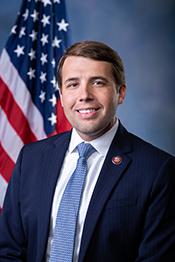
Chris Pappas
DDemocratNH-1 · Representative
54
/ 100
Average
Attendance100
Avg: 96
Independence7
Avg: 4
Bipartisan Tone17
Avg: 15
Ethics Record100
Avg: 99
Transparency30
Avg: 53
Accountability Score — composite of attendance, independence, bipartisan tone, ethics record & transparency.
Methodology43
Bills Sponsored
0
Enacted into Law
1
Passed a Chamber
41
In Committee
All Sponsored Bills
HR10589In Committee
Consumer Fuel Costs Relief Act
HR10587In Committee
American Homes First Act
HR10588In Committee
LIHEAP Act
HR9969In Committee
Baby Brent’s Bill
The Federal Trade Commission would be required to investigate whether companies are using misleading or unfair advertising when marketing specialized infant formula designed for premature babies, then report their findings to Congress. Based on what they find, the FTC would be authorized to create new rules to stop any deceptive marketing practices in this industry. This would protect parents and hospitals from being misled about the benefits or contents of these medical products.
HR9894In Committee
Investing in State Energy Act of 2026
The bill would speed up how quickly states and local communities receive federal money and information for energy efficiency and renewable energy projects through two existing federal programs. This would help states and communities more quickly implement projects that reduce energy costs and increase use of clean energy sources. The legislation affects state governments, local communities, and residents who benefit from lower energy bills and renewable energy development.
HR9759In Committee
Turn the Tide Act
This bill would allocate federal funding to support various programs created under the SUPPORT Act, which focuses on addressing the opioid crisis and substance abuse issues. The money would go toward treatment services, prevention efforts, and recovery support for individuals struggling with addiction, as well as programs helping communities affected by the opioid epidemic. The funding would impact patients seeking addiction treatment, healthcare providers, community organizations, and state and local governments working to combat drug abuse.
HR9563In Committee
No Cashing In Act
Former members of Congress would be required to file yearly financial disclosure reports showing their income, assets, and potential conflicts of interest, similar to requirements that currently apply to sitting members. This would increase transparency about what former lawmakers earn after leaving office and help the public track whether they benefit financially from their time in Congress. The requirement would apply to all former members and would be enforced by the House and Senate ethics committees.
HR9105In Committee
SAFEGUARD Veterans Act of 2026
The proposal would make it illegal for people to charge veterans unauthorized fees when helping them apply for Veterans Affairs benefits, with criminal penalties for those who break this rule. This protects veterans from being scammed or overcharged by people claiming to assist with benefit claims. The bill is currently being reviewed by congressional committees to determine if it should move forward.
HR2954Passed House
Veterans’ Transition to Trucking Act of 2025
Veterans' Transition to Trucking Act of 2025 This bill authorizes the Department of Veterans Affairs (VA) to act as a state approving agency to approve multi-state apprenticeship programs (i.e., non-federal apprenticeship programs operating in more than one state) for purposes of VA educational assistance benefits. (State approving agencies are designated by states to provide, among other duties, approval of courses of education for purposes of VA education benefits.)
HR8019In Committee
U.S.-Greece Defense Cooperation Advancement Act
This bill would strengthen military and defense partnerships between the United States and Greece, likely including increased joint training exercises, equipment sharing, and coordination on security issues in the Eastern Mediterranean region. The changes would affect military personnel, defense contractors, and foreign policy, while potentially increasing U.S. influence and presence in a strategically important area near Europe, the Middle East, and Asia.
HR8565In Committee
ATIIP Reauthorization and Improvement Act
The legislation would renew federal funding and support for projects that help people walk, bike, and use other non-motorized transportation methods to get around their communities. This affects city planners, transportation departments, and residents who want safer streets and alternatives to driving. The bill aims to improve public health and reduce traffic congestion by investing in sidewalks, bike lanes, and similar infrastructure improvements.
HR8468In Committee
Protecting American Railroad Workers’ Jobs Act of 2026
The legislation would establish rules to protect American railroad workers' jobs when trains cross the border between the United States and Mexico, likely by requiring certain staffing levels or preventing companies from replacing U.S. workers with cheaper labor from Mexico. This would affect railroad companies operating cross-border routes and their workers, as well as potentially impact shipping costs and trade between the two countries. The bill is currently under review by the House Committee on Transportation and Infrastructure.
HR8456In Committee
Rural Child Care Access Act
The legislation would help rural families access affordable child care by providing grants and funding to support child care providers in areas where options are limited. It aims to make it easier for parents in rural communities to find quality care for their children while working, and would help child care businesses in these areas stay open and expand their services.
HR8421In Committee
SERVE Act
The legislation would expand benefits and support services for military veterans, including improvements to healthcare access, mental health services, and job training programs. It aims to help veterans transition more smoothly to civilian life by providing additional resources for education, employment assistance, and housing support. Veterans and their families would be the primary beneficiaries of these enhanced services and programs.
HR8422In Committee
CLEAN Act
I don't have enough information to write an accurate summary. The bill's subjects are listed as "None," and the title "CLEAN Act" alone doesn't specify what the legislation actually does. To provide a factual, plain-English explanation of what the bill would do and who it affects, I would need access to the bill's actual text or a description of its provisions.
HR8348In Committee
To amend title 23, United States Code, with respect to the amounts States are guaranteed under the highway apportionment formula, and for other purposes.
This bill would change how federal highway funding is divided among states, likely guaranteeing each state a minimum amount of money for road and bridge projects regardless of population or other factors. The changes would affect state transportation departments and local governments that rely on federal highway dollars to maintain and improve roads. The bill is currently being reviewed by the House Committee on Transportation and Infrastructure.
HR8229In Committee
Lower Grocery Prices Act
This bill aims to address high grocery prices by giving the government tools to examine and potentially challenge business practices in the food industry that may be unfairly raising costs for consumers. The legislation would likely affect grocery stores, food manufacturers, and suppliers by increasing scrutiny of their pricing decisions and competitive practices. The bill has been sent to two congressional committees to review different aspects of how it would work.
HR8165In Committee
Protein for Every Plate Act of 2026
This bill would likely work to increase access to protein-rich foods for Americans, possibly through programs that subsidize or distribute meat, dairy, eggs, or plant-based proteins to low-income families, schools, or other institutions. It could involve funding for domestic agriculture to boost protein production or changes to existing food assistance programs to prioritize protein-containing foods. The measure would primarily affect food producers, agricultural workers, and families struggling to afford nutritious meals.
HR8120In Committee
Veterans Benefits Information Protection Act
This bill would protect the personal information of veterans by setting rules for how their benefits data can be collected, stored, and shared by government agencies and private companies. It likely aims to prevent identity theft and unauthorized access to sensitive details like Social Security numbers, medical records, and financial information that veterans provide when applying for or receiving benefits. The legislation would give veterans more control over their personal data and establish penalties for organizations that mishandle or improperly disclose this information.
HR1732In Committee
GUARD VA Benefits Act
Governing Unaccredited Representatives Defrauding VA Benefits Act or the GUARD VA Benefits Act This bill imposes fines on individuals for soliciting, contracting for, charging, or receiving any unauthorized fee or compensation with respect to the preparation, presentation, or prosecution of any claim for Department of Veterans Affairs benefits. The attempted commission of such offenses is also punishable by fine.
HR7919In Committee
Gas Prices Relief Act of 2026
This bill would temporarily eliminate the federal tax on gasoline, which currently adds about 18 cents per gallon at the pump, to provide relief to drivers and consumers who pay for goods transported by truck. The tax holiday would reduce the price of gas for everyone who fills up a car or truck, though it would also mean less money flowing to the federal government for road maintenance and infrastructure projects. The exact length of the tax break is not specified in the available information, but such holidays typically last for a limited period like a few months.
HR7802In Committee
DISCLOSE Act of 2026
Democracy Is Strengthened by Casting Light On Spending in Elections Act of 2026 or the DISCLOSE Act of 2026 This bill addresses campaign finance, including by expanding the prohibition on campaign spending by foreign nationals, requiring additional disclosures of campaign expenditures, and requiring additional disclosures regarding certain political advertisements. Specifically, the bill expands existing foreign money prohibitions to include disbursements for paid web-based or digital communications and federal judicial nomination communications. It also prohibits foreign nationals from contributing to campaigns related to ballot initiatives and referenda. The Government Accountability Office must, for each four-year election cycle, study and report on the incidence of illicit foreign money in federal elections. Next, the bill makes it unlawful to establish or use a corporation, company, or other entity with the intent to conceal an election contribution or donation by a foreign national. A violator is subject to criminal penalties—a fine, a prison term of up to five years, or both. Covered organizations (e.g., corporations, labor organizations, and political organizations) must, within 24 hours, file reports with the Federal Election Commission to disclose campaign expenditures of more than $10,000 during an election cycle. The bill also requires organizations to provide additional disclosures regarding political advertisements, including the donors who contributed the most money to that organization in the last year.
HR7652In Committee
Respect for Local Communities Act
This bill would give local governments more authority to enforce immigration laws and set their own immigration policies, rather than leaving these decisions solely to federal authorities. It would likely allow cities and counties to cooperate with federal immigration enforcement and potentially create their own immigration-related regulations. The bill affects local officials, immigrants, and communities trying to determine how immigration enforcement happens in their areas.
HR7444In Committee
Protecting Rural Telehealth Access Act
Protecting Rural Telehealth Access Act This bill expands coverage of telehealth services under Medicare. Specifically, the bill permanently (1) removes geographic restrictions on originating sites (i.e., the location of the beneficiary), (2) allows the home of the beneficiary to serve as the originating site for all services, (3) allows federally qualified health centers and rural health clinics to serve as the distant site (i.e., the location of the health care practitioner), and (4) expands coverage to include audio-only services for evaluation and management and behavioral health services.
HRES924In Committee
Recognizing December 2025 as "Impaired Driving Prevention Month" and promoting efforts to help prevent tragic and preventable crashes, deaths, and injuries caused by impaired driving.
This resolution supports the recognition of Impaired Driving Prevention Month. The resolution also supports the efforts of the Department of Transportation, state and local governments, and state and local law enforcement to prevent and stop impaired driving.
HR6812In Committee
Gulf War Survivor Benefits Update Act of 2025
This bill would update and improve benefits for veterans who served in the Gulf War and may be dealing with health problems related to their service. The changes would likely expand eligibility for disability payments, healthcare, or other support services for Gulf War veterans and their families. The bill is currently being reviewed by a congressional subcommittee that handles veteran disability benefits.
HR6814In Committee
Veterans’ Burial Improvement Act of 2025
This bill would improve burial benefits and services for veterans by making changes to how the Department of Veterans Affairs handles funeral expenses, cemetery operations, and memorial services. The legislation likely aims to expand burial options, increase financial assistance for veteran funerals, or improve conditions at VA cemeteries to better honor those who served in the military. Veterans and their families would be the primary beneficiaries of these improvements.
HR6813In Committee
VA Insurance Improvement Act
This bill would likely improve insurance coverage or benefits for veterans through the Department of Veterans Affairs, possibly by expanding eligibility, increasing coverage amounts, or streamlining how veterans access insurance programs. The changes would affect veterans and their families who rely on VA insurance options for health coverage or financial protection. The bill is currently being reviewed by the congressional subcommittee that handles veteran disability and benefits programs.
HR7163In Committee
PUBLIC SAFETY Act
Without seeing the bill's specific provisions, this legislation appears to address public safety funding and policy, likely involving budget allocations and law enforcement matters that fall under both the Appropriations and Judiciary committees' oversight. The bill's actual impact would depend on whether it increases or redirects funding to police, courts, or other safety programs, and which groups—such as law enforcement agencies, communities, or crime victims—would be affected by its provisions.
HR7044In Committee
Energy Burden Tax Credit Act
This bill would create a tax credit to help low- and moderate-income households reduce the cost of their energy bills, such as electricity and heating. Families who qualify would receive money back on their taxes to offset what they spend on keeping their homes powered and warm, making energy more affordable for struggling households.
HR6811In Committee
Postal Suspension Transparency Act
The proposal would require the U.S. Postal Service to publicly disclose information about mail delivery suspensions, including when they occur, where they happen, and the reasons behind them. This transparency would help customers and communities understand service disruptions and hold the postal service accountable for maintaining reliable mail delivery. The measure affects anyone who depends on mail service, from individual households to businesses that rely on postal delivery.
HR6723In Committee
Bring Our Heroes Home Act
Based on the vague title and government operations subject matter, this bill likely aims to address the return or repatriation of American military personnel, whether deceased service members, prisoners of war, or missing-in-action soldiers. The specific mechanics would depend on the bill's actual text, but the intent appears to be improving government processes or policies related to bringing service members home. This would primarily affect military families, the Department of Defense, and veterans' services.
HR6669In Committee
No Taxation on PFAS Remediation Act
HR4413Reported
End the Cyprus Embargo Act
This bill would lift the U.S. arms embargo on Cyprus, allowing American military equipment and weapons to be sold to the Cypriot government. The embargo has been in place for decades due to Cyprus's division and tensions with Turkey, so removing it would change U.S. foreign policy toward the Eastern Mediterranean region and affect defense contractors, Cyprus's military capabilities, and diplomatic relationships in the area.
HR5236In Committee
Critical Infrastructure Security Act
The proposal would strengthen protections for essential services like power grids, water systems, and financial networks that Americans depend on daily by establishing new security standards and oversight requirements. It would affect both government agencies and private companies that operate these critical systems, requiring them to better defend against cyberattacks and other threats. The bill is currently being reviewed by multiple congressional committees to determine which parts fall under each committee's area of responsibility.
HR5053In Committee
Protecting Public Naval Shipyards Act of 2025
This bill would protect the Navy's publicly owned shipyards from being privatized or having their work contracted out to private companies, keeping shipbuilding and repair operations under direct government control. The measure aims to preserve jobs at government shipyards and ensure the military maintains control over critical naval construction and maintenance work rather than relying on private contractors. It affects Navy workers, shipyard employees, and the defense industry's ability to bid on naval shipbuilding contracts.
HR4899In Committee
CANADA Act
Creating Access to Necessary American-Canadian Duty Adjustments Act or the CANADA Act This bill exempts goods imported by or for the use of small business concerns from duties (i.e., tariffs) imposed under Executive Order 14193 . This executive order, issued by President Donald J. Trump on February 1, 2025, imposed a 25% tariff on most imports from Canada (except for Canadian energy or energy resources, which have a 10% tariff).
HR4197In Committee
LGBTQ+ Panic Defense Prohibition Act of 2025
LGBTQ+ Panic Defense Prohibition Act of 2025 This bill generally prohibits a federal criminal defendant from asserting, as a defense, that the nonviolent sexual advance of an individual or a perception or belief of the gender, gender identity or expression, or sexual orientation of an individual excuses or justifies conduct or mitigates the severity of an offense.
HR3601In Committee
National ACERT Grant Program Authorization Act
The legislation would create a federal grant program to help state and local law enforcement agencies purchase and use advanced crime-fighting technology and equipment. Police departments and sheriffs' offices could apply for funding to improve their investigative capabilities and public safety operations. The program aims to modernize law enforcement tools across the country while giving communities more resources to address crime.
HR3366In Committee
EAGLE Act of 2025
Establishing Accreditation Grants for Law Enforcement Act of 2025 or the EAGLE Act of 2025 This bill requires the Department of Justice to provide grants to eligible local law enforcement agencies for activities related to obtaining qualified accreditation or recertification. Such accreditation or recertification shall be provided by a professional law enforcement organization involved in developing standards for law enforcement at the national, state, regional, or tribal level, such as the Commission on Accreditation for Law Enforcement Agencies.
HR2979In Committee
BUILD Act of 2025
The BUILD Act of 2025 would likely establish or modify federal programs related to infrastructure development, law enforcement facilities, or emergency management capabilities. Based on its referral to the subcommittee overseeing public buildings and economic development, the bill probably aims to fund or authorize construction of federal buildings, police facilities, or emergency response infrastructure. This would affect federal agencies, local law enforcement, and communities that rely on these facilities and services.
HR830In Committee
SAFE Act
Save Americans from the Fentanyl Emergency Act or the SAFE Act This bill permanently places fentanyl-related substances as a class into schedule I of the Controlled Substances Act. A schedule I controlled substance is a drug, substance, or chemical that has a high potential for abuse; has no currently accepted medical value; and is subject to regulatory controls and administrative, civil, and criminal penalties under the Controlled Substances Act. Fentanyl-related substances are currently regulated under schedule I through a temporary order issued by the Drug Enforcement Administration. The temporary order expires on March 31, 2025. It limits mandatory minimum penalties for certain offenses involving fentanyl-related substances, establishes a process to deschedule or remove certain fentanyl-related substances that have a low potential for abuse, and allows federal courts to vacate or reduce sentences for convictions involving a fentanyl-related substance that is descheduled or moved to a schedule other than schedule I or II. The bill establishes a new, alternative registration process for schedule I research. It also makes other changes to registration requirements for conducting research with controlled substances, including permitting a single registration for related research sites in certain circumstances, waiving the requirement for a new inspection in certain situations, and allowing a registered researcher to perform certain manufacturing activities with small quantities of a substance without obtaining a manufacturing registration. Finally, the bill requires the Government Accountability Office to analyze the implementation and impact of permanently placing fentanyl-related substances into schedule I of the Controlled Substances Act.
HR829In Committee
Fighting Budget Waste Act
Fighting Presidential Budget Waste Act This bill requires the President and the Office of Management and Budget (OMB) to consider the Government Accountability Office's (GAO's) annual report on ways to improve the efficiency and effectiveness of the federal government when preparing the President's annual budget. Specifically, the President and OMB must consider the information and recommendations contained in the most recent GAO report titled Additional Opportunities to Reduce Fragmentation, Overlap, and Duplication and Achieve Billions of Dollars in Financial Benefits.