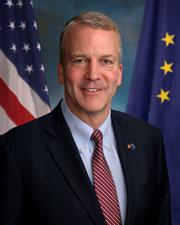
Dan Sullivan
RRepublicanAK · Senator
55
/ 100
Average
Attendance97
Avg: 97
Independence26
Avg: 23
Bipartisan Tone5
Avg: 14
Ethics Record100
Avg: 100
Transparency28
Avg: 47
Accountability Score — composite of attendance, independence, bipartisan tone, ethics record & transparency.
Methodology54
Bills Sponsored
4
Enacted into Law
4
Passed a Chamber
35
In Committee
Bills That Became Law
S254ARTIST ActS216Save Our Seas 2.0 Amendments ActSJRES80A joint resolution providing for congressional disapproval under chapter 8 of title 5, United States Code, of the rule submitted by the Bureau of Land Management relating to "National Petroleum Reserve in Alaska Integrated Activity Plan Record of Decision".S423PRO Veterans Act of 2025
All Sponsored Bills
S5649In Committee
Alaska Native Vietnam Era Veterans Land Allotment Fulfillment Act of 2026
S5479In Committee
No Chinese Seafood in Congress Act
S5438Introduced
Alaska’s Right to Produce Act 2.0
S5404In Committee
Jimmy Lai Hong Kong Political Prisoner Accountability Act of 2026
S4938In Committee
Bycatch Reduction Act
This bill would require fishing vessels in Alaska's waters to use equipment that reduces accidental catches of unwanted fish and protects the ocean floor from damage caused by fishing nets, while also setting up a fund to help fishermen transition to these new practices. It would modernize how fishing is monitored using cameras and technology, prevent imports of seafood caught using unsustainable methods, and give the public more say in fishing decisions made by regional councils. These changes would affect commercial fishing companies and workers in Alaska, seafood consumers, and marine ecosystems in the Bering Sea and Gulf of Alaska.
S3135Reported
Cold Weather Diesel Reliability Act of 2026
This bill would modify environmental rules for diesel fuel used in cold weather to make it more reliable and easier to use in freezing temperatures. The changes would affect fuel suppliers, trucking companies, and other businesses that rely on diesel engines in winter conditions, potentially making their operations more efficient while balancing air quality concerns. The bill is currently being reviewed by the Senate's environmental committee.
SRES836Introduced
A resolution designating August 16, 2026, as "National Airborne Day".
SJRES209In Committee
A joint resolution providing for congressional disapproval under chapter 8 of title 5, United States Code, of the rule submitted by the Environmental Protection Agency relating to "California State Nonroad Engine Pollution Control Standards; Ocean-Going Vessels At-Berth; Notice of Decision".
S5165In Committee
POLAR Act
The National Science Foundation's Office of Polar Programs would receive official authorization and funding to continue its research activities in Arctic and Antarctic regions, supporting scientists studying climate change, geology, biology, and other fields in these extreme environments. This funding helps universities and research institutions conduct expeditions and maintain research stations that advance American scientific knowledge about polar regions and their global impact. The bill also allows the agency to manage equipment, facilities, and partnerships needed to keep U.S. polar research competitive internationally.
S4858In Committee
Alaska National Guard Rural Community Revival Act
The legislation would create a plan to help revitalize and upgrade National Guard facilities and operations in rural areas across the country. This would affect rural communities that host National Guard units, as well as Guard members stationed in those areas, by potentially improving infrastructure, equipment, and services. The goal is to ensure that National Guard capabilities in less populated regions keep pace with those in urban areas.
S4856In Committee
Remote Waste Storage Act
The proposal would modify federal waste disposal rules to allow communities in remote areas to store certain solid waste on-site rather than requiring it to be transported elsewhere for disposal. This change would primarily affect rural residents and small communities that lack nearby landfills or waste management facilities, potentially reducing transportation costs and environmental impacts from long-distance waste hauling. The bill is currently under review by the Senate's environmental committee.
SRES777Introduced
A resolution designating May 1, 2026, as "United States Foreign Service Day" in recognition of the men and women who have served, or are presently serving, in the Foreign Service of the United States, and honoring the members of the Foreign Service who have given their lives in the line of duty.
The Senate has approved a resolution to officially recognize May 1, 2026, as "United States Foreign Service Day" to honor diplomats and other professionals who work for the U.S. government abroad. The day specifically celebrates both current and former Foreign Service members and remembers those who have died while serving their country overseas. This designation does not create any new laws or programs, but rather sets aside a day for the nation to acknowledge the contributions and sacrifices of these international representatives.
S254Enacted
ARTIST Act
Alaska’s Right to Ivory Sales and Tradition Act or the ARTIST Act This act prohibits states from imposing bans on marine mammal products produced by Alaska Natives. Specifically, states may not prohibit the interstate commerce, importation, sale, transfer, trade, barter, or possession of marine mammal ivory, marine mammal bone, or baleen legally produced by an Alaska Native as an authentic Alaska Native article of handicrafts and clothing.
SRES758Introduced
A resolution expressing support for the designation of the month of June 2026 as "National Post-Traumatic Stress Awareness Month" and June 27, 2026, as "National Post-Traumatic Stress Awareness Day".
This resolution designates June 2026 as National Post-Traumatic Stress Awareness Month and June 27, 2026, as National Post-Traumatic Stress Awareness Day. The resolution supports (1) the education of members of the Armed Forces, veterans, their families, and the public about post-traumatic stress; and (2) efforts by the Department of Veterans Affairs and the Department of Defense to foster cultural change around the issue of post-traumatic stress. The resolution also encourages the leadership of the Armed Forces to support treatment of members of the Armed Forces who suffer from post-traumatic stress.
S4334In Committee
Blind Americans Return to Work Act of 2026
The Social Security Administration would test a new program to help blind people who receive disability benefits keep more of their earnings without losing their benefits. The demonstration project would explore whether allowing blind individuals to work and earn income while maintaining their disability payments encourages employment and improves their financial situation. This pilot program would help determine if current rules that reduce benefits when people earn money should be changed for blind workers.
S4250In Committee
Sport Fish Restoration, Recreational Boating Safety, and Wildlife Restoration Act of 2026
This bill would fund programs that restore fish populations and wildlife habitats, improve boating safety on waterways, and support recreational fishing opportunities across the country. The money would come from existing excise taxes on fishing and boating equipment, and would be distributed to states for conservation projects, boat safety education, and public access to fishing areas. Anglers, boaters, wildlife enthusiasts, and state fish and wildlife agencies would be the main beneficiaries of these conservation and safety programs.
S4209In Committee
TIME for Overdose Justice Act
This bill would establish new criminal penalties and justice procedures related to overdose deaths, likely aiming to hold drug suppliers or manufacturers accountable when their products cause fatal overdoses. The legislation would affect drug dealers, manufacturers, and potentially others involved in the supply chain, as well as families of overdose victims seeking legal recourse. The specific mechanisms—whether through enhanced charges, civil liability, or other enforcement tools—would be determined as the bill moves through the judiciary committee.
S688Passed Senate
Fighting Foreign Illegal Seafood Harvests Act of 2025
This bill strengthens enforcement against illegal fishing operations in U.S. waters and cracks down on seafood imports that come from illegal or unregulated fishing activities abroad. It aims to protect American fish populations and the livelihoods of U.S. commercial fishermen by making it harder for foreign vessels to illegally harvest seafood and sell it in American markets. The measure gives federal agencies more tools to track and block seafood products that don't meet legal harvesting standards.
S3303In Committee
LINC VA Act
The LINC VA Act would establish or expand a program to help veterans transition from military service to civilian life by connecting them with job training, employment opportunities, and support services. The bill aims to improve outcomes for veterans entering the workforce by coordinating resources across government agencies and potentially partnering with employers and educational institutions. Veterans and their families would be the primary beneficiaries, along with employers seeking to hire skilled former military personnel.
S2357Reported
Young Fishermen’s Development Program Reauthorization Act
This bill extends and reauthorizes a federal program that helps young people enter the commercial fishing industry by providing training, education, and support services. The program aims to develop the next generation of fishermen and maintain fishing communities by making it easier for young adults to learn the trade and start fishing operations. The bill has been approved by a Senate committee and is ready for a full Senate vote.
S4065In Committee
STAND with Taiwan Act of 2026
This bill would strengthen U.S. support for Taiwan through measures that likely include increased diplomatic recognition, military assistance, or trade benefits for the self-governing island. The legislation signals congressional backing for Taiwan as it faces pressure from China, and would affect U.S. foreign policy, defense contractors, and American companies doing business in the region. The bill has been sent to the banking committee, suggesting it may include financial or trade-related provisions alongside diplomatic components.
SRES619Introduced
A resolution designating February 16, 2026, as "National Elizabeth Peratrovich Day".
This resolution designates February 16, 2026, as National Elizabeth Peratrovich Day. It also encourages the people of the United States and Members of Congress to commemorate the life and civil rights advocacy of Elizabeth Wanamaker Peratrovich by continuing the important work of ensuring equality for Alaska Natives and Native Americans.
S3688In Committee
RURAL Rate Act
The RURAL Rate Act would likely adjust federal benefit payments or tax rates for people living in rural areas to account for differences in cost of living or service availability compared to urban regions. The bill aims to ensure that rural residents receive fair treatment under federal social welfare programs, potentially affecting how much assistance farmers, seniors, low-income families, and other rural populations receive. By tailoring rates to rural circumstances, the legislation seeks to address economic disparities between rural and urban communities.
S216Enacted
Save Our Seas 2.0 Amendments Act
Save Our Seas 2.0 Amendments Act This bill reauthorizes and modifies administration of Marine Debris Program (MDP) activities and the Marine Debris Foundation. (The program and the foundation support efforts to assess, prevent, and otherwise address marine debris and its adverse impacts on the U.S. economy, the marine environment, and navigation safety.) First, the bill reauthorizes the National Oceanic and Atmospheric Administration's (NOAA's) Marine Debris Program through FY2029. The bill authorizes NOAA to provide contributions for MDP project costs on an in-kind basis in an amount that NOAA determines represents the value it derives from the project. The bill also authorizes NOAA to enter into agreements other than cooperative agreements, contracts, and grant agreements for projects. Next, the bill modifies requirements for the Marine Debris Foundation and reauthorizes it for FY2025. Among other changes, the bill designates the current Chief Operating Officer (i.e., the first officer or employee appointed by the board) as the Chief Executive Officer (CEO) and specifies that the board has the authority to appoint, review the performance of, and remove the CEO. The bill authorizes the CEO to appoint, supervise, and remove foundation employees and officers. Further, the bill directs the foundation to develop and implement best practices for conducting outreach to Indian tribes and tribal governments. The foundation must locate its principal office in the National Capital Region or a coastal shoreline community. Finally, the bill authorizes the foundation to match contributions from regional organizations, Indian tribes, tribal organizations, and foreign governments.
S3579In Committee
Bycatch Reduction and Research Act of 2025
The legislation would require the federal government to fund research and develop new technologies to reduce the accidental capture of non-target fish and marine animals in commercial fishing operations. It would establish programs to help fishing companies adopt these bycatch-reduction methods and would direct the National Oceanic and Atmospheric Administration to study which fishing practices cause the most unintended harm to marine life. This would affect commercial fishermen, seafood consumers, and marine conservation efforts by aiming to make fishing more selective and reduce waste of ocean resources.
S414Passed Senate
ADS for Mental Health Services Act
The legislation requires health insurance plans to ensure that mental health services are advertised and promoted with the same visibility and prominence as physical health services. This means insurance companies must make information about mental health coverage equally easy to find and understand as their other medical offerings, helping patients and consumers better access mental health care options.
SJRES80Enacted
A joint resolution providing for congressional disapproval under chapter 8 of title 5, United States Code, of the rule submitted by the Bureau of Land Management relating to "National Petroleum Reserve in Alaska Integrated Activity Plan Record of Decision".
This joint resolution reopens portions of the National Petroleum Reserve for oil and gas leasing. (The reserve is an approximately 23-million-acre area on Alaska’s North Slope.) Specifically, the joint resolution nullifies a plan submitted by the Bureau of Land Management in a rule titled National Petroleum Reserve in Alaska Integrated Activity Plan Record of Decision and issued on April 25, 2022. The 2022 plan replaced the 2020 plan and closed approximately 48% of the reserve to oil and gas leasing in order to protect certain surface resources and uses, such as protecting wildlife and providing subsistence for communities. Thus, the joint resolution removes the protections provided under the 2022 plan and reverts to the 2020 plan.
S1468In Committee
A bill to amend the Alaska Native Claims Settlement Act to provide that Alexander Creek, Incorporated, is recognized as a Village Corporation under that Act, and for other purposes.
This bill recognizes Alexander Creek, Incorporated, as an Alaska Native village corporation, subject to certain conditions, and Alexander Creek village as an Alaska Native village. Alexander Creek, Incorporated, must submit to the Department of the Interior any amendments to its state corporate charter that are necessary to convert from a group corporation to a village corporation. The bill requires Interior to offer to enter into negotiations with Alexander Creek, Incorporated, to settle aboriginal land claims and any other claims against the United States. As a condition of recognition as a village corporation, Alexander Creek, Incorporated must enter into such an agreement with Interior no later than 13 months after this bill's enactment. Alexander Creek, Incorporated, must notify its members that (1) they will cease to receive benefits from Cook Inlet Region, Incorporated, individually as at-large shareholders, and (2) all future resource payments shall be retained by Alexander Creek, Incorporated.
S3022Passed Senate
Save Our Seas 2.0 Marine Debris Infrastructure Programs Reauthorization Act
This bill reauthorizes and funds federal programs that help remove trash and other debris from oceans and coastal areas, supporting infrastructure projects that prevent pollution from entering waterways. It provides money for grants and initiatives that help states and communities clean up marine environments and reduce plastic waste that harms sea life and ecosystems. The legislation passed the Senate and is awaiting action in the House.
S3220In Committee
VISIT USA Act
The VISIT USA Act aims to make it easier for international visitors to travel to the United States by streamlining visa processes and promoting tourism. The bill would likely reduce barriers that discourage foreign tourists from visiting American cities, attractions, and businesses, which could boost spending at hotels, restaurants, and shops across the country. This affects both the travel and tourism industry looking to attract more visitors and international travelers seeking to visit the U.S.
S3029In Committee
DOE and NASA Interagency Research Coordination Act
S3020In Committee
Judicial Efficiency Improvement Act
S190Reported
North Pacific Research Board Enhancement Act
North Pacific Research Board Enhancement Act This bill makes certain changes to the North Pacific Research Board, including changes to the board’s composition and allocations for funding for administrative expenses. The board sets research priorities and administers grants to support research on fisheries and marine ecosystems in the waters surrounding Alaska. Specifically, this bill adds to the board one additional member to represent Alaska Natives. This board member must have personal knowledge of and direct experience with subsistence uses of resources (the practice of relying on the surrounding environment as a source of food and material). The bill also imposes a three-year term limit on those board members representing fishing interests and Alaska Natives, and permits such members to serve one additional term upon reappointment. With respect to funding, under current law the board may use up to 15% of grant program funding for administrative expenses (e.g., support for the board and grant administration). Under the bill, if the program's total funding in a given fiscal year is less than its total funding in the prior fiscal year, the National Oceanic and Atmospheric Administration may increase the 15% cap on administrative expenses for that fiscal year. Any such increase must prioritize supporting the board’s continued operation, maximizing funds directed to research, and maintaining high-quality grant administration. Further, the bill waives the 15% cap altogether for five years following the bill’s enactment.
SJRES63In Committee
A joint resolution providing for congressional disapproval under chapter 8 of title 5, United States Code, of the rule submitted by the Bureau of Land Management relating to "Central Yukon Record of Decision and Approved Resource Management Plan".
This joint resolution nullifies the rule submitted by the Bureau of Land Management (BLM) relating to the Record of Decision and Approved Resource Management Plan (RMP) for Alaska’s Central Yukon planning area and issued on November 12, 2024. The Central Yukon RMP modified the prior RMP for the area, including by designating 21 areas of critical environmental concern or research natural areas, encompassing approximately 3,611,000 acres.
S93Passed Senate
Harmful Algal Bloom and Hypoxia Research and Control Amendments Act of 2025
Harmful Algal Bloom and Hypoxia Research and Control Amendments Act of 2025 This bill extends through FY2030 and modifies the Harmful Algal Bloom and Hypoxia Research and Control Act to address algal blooms and hypoxia (deficiency of oxygen) in U.S. marine, estuarine, and freshwater systems. Harmful algal blooms are high concentrations of algae that may create nuisance or toxic conditions that are harmful to humans, animals, aquatic ecosystems, and the economy. The bill directs the Inter-Agency Task Force on Harmful Algal Blooms and Hypoxia to submit to Congress an action strategy for harmful algal blooms at least once every five years. The bill also expands the task force's membership to include the Department of Energy. The bill also expands the duties of the National Oceanic and Atmospheric Administration (NOAA) under the National Harmful Algal Bloom and Hypoxia program. NOAA must also carry out a variety of activities related to monitoring, predicting, preventing, mitigating, and responding to marine, coastal, and Great Lakes harmful algal bloom and hypoxia events. For example, NOAA must establish (1) a national network of observing systems for monitoring, detecting, and forecasting harmful algal blooms; and (2) a national-level incubator program to increase the number of strategies, technologies, and measures available to prevent, mitigate, and control harmful algal blooms. Additionally, the Environmental Protection Agency must develop and enhance operational freshwater harmful algal bloom monitoring, observing, and forecasting programs in lakes, rivers, and reservoirs and carry out other activities related to researching freshwater harmful algal blooms and hypoxia events.
S423Enacted
PRO Veterans Act of 2025
This bill requires the Department of Veterans Affairs (VA) to provide quarterly budget briefings to Congress, prohibits the VA from providing specified pay incentives to senior-level employees, and establishes an office to carry out customer service initiatives of the VA. Protecting Regular Order for Veterans Act of 2025 or the PRO Veterans Act of 2025 (Sec. 1) This section requires the VA to provide quarterly budget briefings to Congress, which must include information on any budget shortfalls the VA may be experiencing. The VA must present its plans to address or mitigate shortfalls during such briefings. Next, the section prohibits the VA from providing certain senior-level employees with a critical skill incentive, which is generally a payment bonus for employees possessing a high-demand skill or skill that is at a shortage. Specifically, the VA may not provide such an incentive to an employee in a Senior Executive Service position or other comparable position in the VA Central Office, regardless of the actual location where the employee performs the functions of the position. Senior-level employees whose positions are primarily in the VA Central Office but perform some portion of their job function based out of non-Central Office VA facilities are eligible for an incentive for their non-Central Office work. The section also provides that an incentive may only be provided to senior-level employees on an individual basis and upon approval by specified officers (e.g., the Under Secretary for Health). The VA must report to Congress annually regarding senior-level employees who were provided a critical skill incentive. Improving Veterans’ Experience Act of 2025 (Sec. 2) This section establishes the Veterans Experience Office through FY2028 to carry out the key customer experience initiatives of the VA relating to veteran and beneficiary satisfaction with and usage of VA benefits and services. The Government Accountability Office must complete an analysis of and report on the methodology, effectiveness, and implementation of findings and feedback of veterans and beneficiaries used by the VA, including the Veterans Experience Office, to improve customer experience and satisfaction.
S831In Committee
REP VA Act
Representing VA with Accuracy Act or the REP VA Act This bill requires the Department of Veterans Affairs (VA) to ensure that any call made to a veteran by a VA employee or contractor regarding VA services or benefits is made from a single, well-known telephone number and uses caller identification that indicates the call is from or on behalf of the VA. The VA must also ensure the Veterans Health Administration has at least one call center in each time zone in the United States to address concerns regarding appointments and referrals for health care.
S2560In Committee
Uyghur Genocide Accountability and Sanctions Act of 2025
This bill would impose economic sanctions and travel restrictions on Chinese officials and entities that the U.S. government determines are responsible for human rights abuses against Uyghurs and other ethnic minorities in Xinjiang. The measure aims to hold accountable those involved in what supporters describe as genocide and forced labor, affecting Chinese government officials, security forces, and companies involved in these activities. It would also require the State Department to document and report on the situation in Xinjiang.
S2505In Committee
Primacy Certainty Act of 2025
Primacy Certainty Act of 2025 This bill modifies provisions of the underground injection control program established under the Safe Drinking Water Act related to the review of state applications to obtain responsibility for regulating Class VI wells, which are used to store captured carbon. The bill sets forth a process to give states primary enforcement responsibility for such wells if the Environmental Protection Agency (EPA) fails to meet specified deadlines. In addition, the bill prohibits the EPA from conditioning the approval of state applications on the inclusion of provisions that are not included in the applications or not explicitly required by the Safe Drinking Water Act.
S2504In Committee
American Grown Act
The proposal would require the federal government to prioritize buying American-made products and materials for government operations and construction projects. This would affect federal agencies, contractors who supply goods to the government, and domestic manufacturers by potentially increasing demand for products made in the United States rather than imported from other countries.
SRES322Introduced
A resolution expressing support for the designation of the month of June 2025 as "National Post-Traumatic Stress Awareness Month" and June 27, 2025, as "National Post-Traumatic Stress Awareness Day".
This resolution designates June 2025 as National Post-Traumatic Stress Awareness Month and June 27, 2025, as National Post-Traumatic Stress Awareness Day. The resolution also supports the efforts of the Department of Veterans Affairs (VA), Department of Defense (DOD), and the medical community to educate people about the causes, symptoms, and treatment of post-traumatic stress. Additionally, it supports efforts by the VA and DOD to foster cultural change around post-traumatic stress.
S2229In Committee
United States Foreign Service Commemorative Coin Act
The government would create and sell special commemorative coins honoring the United States Foreign Service, the diplomatic corps that represents America abroad. Revenue from coin sales would go toward supporting Foreign Service organizations and programs. This is a way to celebrate the work of diplomats and generate funding for their institutions.
S2142In Committee
GOLDEN DOME Act of 2025
The bill would establish new security protocols and oversight measures for military installations and defense facilities to protect against unauthorized access and potential threats. It affects military personnel, defense contractors, and federal agencies responsible for national security by requiring enhanced screening procedures and updated security infrastructure at armed forces locations. The legislation aims to strengthen the physical security of sensitive defense sites across the country.
SRES234Introduced
A resolution designating May 2, 2025, as "United States Foreign Service Day" in recognition of the men and women who have served, or are presently serving, in the Foreign Service of the United States, and honoring the members of the Foreign Service who have given their lives in the line of duty.
This resolution designates May 2, 2025, as United States Foreign Service Day and honors the men and women who serve in the Foreign Service.
S1766In Committee
Protect Our Heroes Act of 2025
Protect Our Heroes Act of 2025 This bill establishes new criminal offenses for killing or assaulting (or attempting to kill or assault or conspiring to kill) a current or former judicial officer or public safety officer in circumstances that affect interstate commerce while the officer is engaged in official duties or on account of past performance of official duties. A violation is subject to criminal penalties—a prison term, a fine, or both.
S1670In Committee
INDEX Act
INvestor Democracy is EXpected Act or the INDEX Act This bill establishes guidelines for passively managed funds (e.g., index funds) that vote shares on behalf of fund investors in proxy shareholder votes. Under the bill, these funds generally must vote shares on a proportional basis according to instructions from fund investors. The bill establishes an exemption for routine matters and matters requiring approval of a majority of outstanding securities. Additionally, the bill establishes a safe harbor from these requirements for investment advisers.
S1035In Committee
A bill to prohibit certain exports of natural gas produced or refined in the United States, and for other purposes.
The bill would block or limit the ability of U.S. companies to export natural gas to other countries, keeping more of the nation's energy supply available for domestic use and potentially keeping prices lower for American consumers and businesses. This would affect energy companies that produce or process natural gas, as well as international trading partners who currently buy American natural gas. The measure is intended to prioritize American energy needs over foreign sales.
S991In Committee
A bill to amend the Small Business Act to eliminate certain requirements relating to the award of construction subcontracts within the county or State of performance.
This bill eliminates a requirement that, to the maximum extent practicable, certain construction subcontracts awarded by the Small Business Administration must be awarded within the county or state where the work is to be performed.
S990In Committee
Freedom to Haul Act of 2025
S785In Committee
Alaska Native Vietnam Era Veterans Land Allotment Extension Act
Alaska Native Vietnam Era Veterans Land Allotment Extension Act This bill extends for an additional five years the time period during which an eligible Alaska Native veteran may apply for a land allotment under the Alaska Native Vietnam Era Veterans Land Allotment Program. The program makes Alaska Native veterans who served in the Armed Forces in Vietnam between August 5, 1964, and December 31, 1971, or their heirs eligible to receive up to 160 acres of federal land in Alaska. Under the current program, the Department of the Interior's Bureau of Land Management may accept applications through December 29, 2025. This bill extends this time period for an additional five years to December 29, 2030.
SRES92Introduced
A resolution designating February 16, 2025, as "National Elizabeth Peratrovich Day".
This resolution officially recognizes February 16, 2025, as a national day honoring Elizabeth Peratrovich, a Native Alaskan civil rights pioneer who fought against racial discrimination in the 1940s. The designation celebrates her legacy and contributions to the Native American civil rights movement, encouraging Americans to reflect on her advocacy work and the ongoing importance of equality and justice for Indigenous peoples.
S556In Committee
Enhanced Iran Sanctions Act of 2025
This bill would impose additional economic penalties and restrictions on Iran, likely including sanctions on Iranian banks, oil exports, and companies that do business with Iran. The measures are intended to pressure Iran's government on issues like its nuclear program and support for militant groups. American companies and their foreign partners could face penalties for violating these sanctions, while the restrictions may affect global oil prices and international trade.
S435In Committee
IRONDOME Act of 2025
Increasing Response Options and Deterrence of Missile Engagements Act of 2025 or the IRONDOME Act of 2025 This bill requires the Department of Defense (DOD) and other entities to take specified actions to support U.S. missile defense capabilities, particularly with respect to the U.S. homeland. DOD must submit to Congress a multi-year phased plan to transfer operations and sustainment responsibility for missile defense from the Missile Defense Agency to the appropriate military departments to allow the Missile Defense Agency to focus on research, development, and prototyping and testing. Additionally, among other elements, the bill requires the United States Northern Command and the Space Development Agency within DOD to use a specified acquisition process to conduct rapid testing and development of certain drone and satellite systems; each commander of a combatant command to include the missile defense interceptor and sensor requirements of the command in annual budget requests; DOD to use all authorities available to accelerate the development, production, and modernization of various defense systems and technology, including certain space-based interceptors; and the Department of the Army to procure and field airships in support of the missile defense of the U.S. homeland from drones and ballistic, hypersonic, and cruise missiles. On January 27, 2025, President Trump signed an executive order titled The Iron Dome for America. The order directs DOD to develop plans for a next-generation missile defense shield to protect the U.S. homeland from ballistic, hypersonic, and advanced cruise missiles, and other next-generation aerial attacks.
S255In Committee
Archie Cavanaugh Migratory Bird Treaty Amendment Act
Archie Cavanaugh Migratory Bird Treaty Amendment Act This bill states that nothing in the Migratory Bird Treaty Act of 1918 (MBTA) prohibits possessing, selling, bartering, purchasing, shipping, or transporting any authentic Alaska Native handicraft, clothing, or art on the basis that it contains a nonedible migratory bird part, so long as the bird was not taken in a wasteful or illegal manner. (The MBTA implements four international treaties that the United States entered into with Canada, Mexico, Japan, and Russia. The MBTA prohibits the taking of protected migratory bird species without prior authorization.) The bill directs the Department of State to work with the Department of the Interior to enter into appropriate bilateral procedures with countries that are parties to the treaties under the MBTA to clarify the treatment of Alaska Native handicraft containing nonedible migratory bird parts from the species of migratory birds listed in those treaties. Further, Interior must modify any regulations implementing the MBTA to implement this bill.