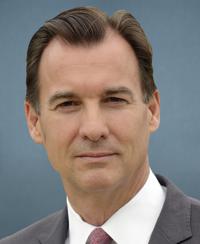
Thomas R. Suozzi
DDemocratNY-3 · Representative
58
/ 100
Average
Attendance97
Avg: 96
Independence11
Avg: 4
Bipartisan Tone31
Avg: 15
Ethics Record100
Avg: 99
Transparency34
Avg: 53
Accountability Score — composite of attendance, independence, bipartisan tone, ethics record & transparency.
Methodology20
Bills Sponsored
0
Enacted into Law
1
Passed a Chamber
18
In Committee
All Sponsored Bills
HR10348In Committee
Health Care Fraud Prevention and Enforcement Act
HR9485In Committee
Supporting Older Foster Youth Act
The bill would update the federal foster care program to better support teenagers and young adults who have been in the foster care system, helping them transition to independent living as they age out of the system. The changes would likely improve services like housing assistance, education support, and job training for youth in foster care, with the goal of reducing homelessness and improving outcomes for this vulnerable population. The proposal is currently being reviewed by the House Committee on Ways and Means.
HR8867In Committee
PLAN Act of 2026
The federal government would create a public education campaign to help Americans understand why they need to plan ahead for long-term care costs, such as nursing homes or in-home assistance when they get older. The Department of Health and Human Services would run this campaign through an existing information clearinghouse to reach people of all ages with information about their options and financial planning strategies. This affects anyone who might eventually need long-term care services and their families who help make these decisions.
HRES64Reported
Affirming the alliance between the United States and the Republic of Korea.
This resolution reaffirms the importance of the alliance between the United States and South Korea, particularly with regard to security in the Indo-Pacific. The resolution also celebrates the important contributions of Korean Americans to American society and supports the goals of Korean Culture-Kimchi Day.
HR8638In Committee
Washington Spy Ring National Historic Trail Designation Act
The proposal would create a new national historic trail that follows the route of the Washington Spy Ring, a network of spies who gathered intelligence for George Washington during the American Revolution. This designation would allow the National Park Service to develop and maintain the trail, making it easier for visitors to learn about this important part of American history and visit sites connected to the spy network. The trail would likely include educational markers and resources at historically significant locations where the spies operated.
HR8280In Committee
SEPTIC Act
This bill would allow certain businesses and organizations to exclude money they receive from the government for wastewater management projects from their taxable income, potentially reducing their tax bills. The change would apply to subsidies or grants specifically designated to help pay for treating and managing wastewater, which could benefit municipalities, water utilities, and companies involved in environmental cleanup efforts.
HR8279In Committee
To expand the definition of institution of higher education in the Higher Education Act of 1965 with respect to certain graduate medical schools located outside of the United States.
This bill would allow certain graduate medical schools located outside the United States to be treated the same as American medical schools under federal higher education law, potentially making their students eligible for federal student loans and other education benefits. The change would primarily affect international medical students and the foreign institutions that train them, as well as the federal student loan programs that fund education. The bill is currently under review by the House Committee on Education and Workforce.
HR8239In Committee
SACRED Act
I don't have enough information to write an accurate summary. The title "SACRED Act" is too vague without knowing what the acronym stands for or what specific crime and law enforcement policies it addresses. To provide a meaningful summary for a general audience, I would need details about what the bill actually proposes—such as whether it creates new crimes, changes sentencing rules, affects police procedures, or addresses a specific type of criminal activity.
HR8208In Committee
Taxpayer Advocate Continuity Act
This bill would establish rules to ensure the National Taxpayer Advocate office continues operating smoothly during transitions, likely by protecting the position's independence and clarifying how leadership changes are handled. The Taxpayer Advocate helps individual taxpayers resolve disputes with the IRS and identifies systemic problems in tax administration, so this legislation would help maintain that service for people dealing with tax issues.
HRES1153In Committee
Providing for consideration of the bill (H.R. 5827) to advance bipartisan, common sense solutions.
This resolution provides for the consideration of the bill (H.R. 5827) to advance bipartisan, common sense solutions.
HRES989In Committee
Providing for consideration of the bill (H.R. 5827) to advance bipartisan, common sense solutions.
This resolution provides for the consideration of the bill (H.R. 5827) to advance bipartisan, common sense solutions.
HRES910In Committee
Providing for consideration of the bill (H.R. 185) to advance responsible policies.
This resolution provides for the consideration of the bill (H.R. 185) to advance responsible policies.
HRES902In Committee
Providing for consideration of the bill (H.R. 185) to advance responsible policies.
This resolution provides for the consideration of the bill (H.R. 185) to advance responsible policies.
HR6232In Committee
HOPE Act
I don't have enough information to write an accurate summary. The title "HOPE Act" and subject area "Health" are too broad, and the status only shows the bill was referred to committees without revealing what the bill actually proposes to do. To write a meaningful summary, I would need details about the bill's specific provisions—such as whether it addresses insurance coverage, drug pricing, hospital regulations, or another health-related topic.
HR5827In Committee
To advance bipartisan, common sense solutions.
I cannot provide an accurate summary because the bill title "To advance bipartisan, common sense solutions" is too generic and doesn't describe what the legislation actually does, and the subject line "Taxation" conflicts with the referral to a Cybersecurity and Infrastructure Protection subcommittee. To write a factual summary, I would need the actual bill text or a more specific description of its provisions.
HRES819In Committee
Recognizing the contributions made to the United States by the Indian American diaspora and condemning recent acts of racism against Indian Americans.
HCONRES39Passed House
Authorizing the use of Emancipation Hall in the Capitol Visitor Center for a ceremony to present the Congressional Gold Medals awarded under the Harlem Hellfighters Congressional Gold Medal Act.
Congress is authorizing the use of a specific room in the Capitol Visitor Center to hold a ceremony where the Congressional Gold Medals will be presented to recipients under the Harlem Hellfighters Congressional Gold Medal Act. This allows for an official public event to honor the Harlem Hellfighters, an African American military unit from World War I, by presenting them with the nation's highest civilian honor. The ceremony will take place in a designated space within the Capitol building where visitors can witness this recognition.
HR4739In Committee
SHARE Plan Act
The legislation would allow workers to set aside a portion of their wages in special savings accounts with tax advantages, similar to retirement accounts, to help them build emergency savings and financial security. These accounts would let employees contribute pre-tax dollars that grow without being taxed until withdrawn, giving lower and middle-income workers a new tool to save money alongside their regular paychecks. The proposal aims to help families build financial cushions without the strict withdrawal rules that apply to traditional retirement savings.
HR4466In Committee
CIRCLE Act
The proposal would change how the federal government taxes businesses that operate across multiple states and countries, potentially allowing them to allocate income differently for tax purposes. This could affect how much tax large corporations owe to the federal government and might influence where companies choose to locate their operations. Small business owners and workers could see indirect effects depending on how companies respond to these tax changes.
HR322In Committee
Import Security and Fairness Act
Import Security and Fairness Act This bill excludes imported articles from nonmarket economy countries or countries on the Priority Watch List from receiving de minimis treatment. (Current law allows for imports under a de minimis threshold to enter the United States free of tariffs and taxes with minimal inspection. In 2016, Congress raised this threshold from $200 to $800.) Under current law, a nonmarket economy country is any foreign country that the Department of Commerce determines does not operate on market principles of cost or pricing structures, so that sales of merchandise in such country do not reflect the fair value of the merchandise. There are currently 12 countries (e.g., China and Russia) that Commerce has designated as nonmarket economy countries. This bill prohibits imports from receiving de minimis treatment if those imports are from nonmarket economy countries. Additionally, under current law, the Office of the U.S. Trade Representative must annually review and report on foreign countries that deny adequate and effective protection of intellectual property rights or deny fair and equitable market access to U.S. persons who rely on intellectual property protection. There are currently seven counties (e.g., Argentina and Indonesia) on this list, known as the Priority Watch List. This bill prohibits imports from receiving de minimis treatment if those imports are from countries on the Priority Watch List. The bill also directs U.S. Customs and Border Protection to collect additional information on merchandise that may qualify for de minimis treatment and establishes requirements related to detained merchandise.