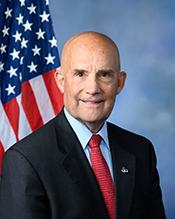
Keith Self
RRepublicanTX-3 · Representative
57
/ 100
Average
Attendance98
Avg: 96
Independence17
Avg: 4
Bipartisan Tone31
Avg: 15
Ethics Record100
Avg: 99
Transparency22
Avg: 53
Accountability Score — composite of attendance, independence, bipartisan tone, ethics record & transparency.
Methodology41
Bills Sponsored
0
Enacted into Law
2
Passed a Chamber
36
In Committee
All Sponsored Bills
HR10766In Committee
To direct the Secretary of Defense to update the Critical Asset List of the Department of Defense to incorporate assets critical to the development, deployment, and operation of the Golden Dome missile defense system.
HR6698In Committee
Board of Veterans Appeals Annual Report Transparency Act of 2025
The bill would require the Board of Veterans Appeals to publish detailed annual reports showing how many cases it handles, how long decisions take, and other performance metrics so the public and Congress can see how well the agency is serving veterans. This transparency would help identify bottlenecks in the appeals process and hold the board accountable for timely decisions on veterans' benefits claims. Veterans and their families would benefit from knowing whether the system is working efficiently and where improvements are needed.
HCONRES116In Committee
Denouncing Sharia law in the United States.
HR9879In Committee
Super Pay-As-You-Go Act of 2026
The proposal would strengthen federal budget rules by creating "super PAYGO" reductions, which are automatic spending cuts that trigger when Congress passes laws that increase the deficit beyond certain thresholds. This would make it harder for lawmakers to approve new spending or tax cuts without offsetting the costs elsewhere in the budget, potentially affecting federal programs and taxpayers. The measure aims to force Congress to be more fiscally disciplined when making budget decisions.
HR9716In Committee
PRIVACY Act
Federal law enforcement agencies would be prohibited from using surveillance equipment or data collected by state and local police—such as cameras, license plate readers, or facial recognition systems—without getting a warrant first. The bill would create a list of covered surveillance technologies to clarify which tools fall under this restriction, preventing federal agencies from bypassing warrant requirements by accessing information that local authorities have already gathered. This would limit how federal agencies like the FBI can access surveillance data without judicial approval.
HR9567In Committee
Preserving Our Constitution Act of 2026
I cannot provide a meaningful summary for this bill because the title is extremely broad and generic, with no specific subjects listed and no actual legislative text describing what protections or changes it would make. Without knowing which constitutional rights or laws the bill addresses, or what specific actions it would take, I cannot explain what it would actually do or who it would affect.
HJRES198In Committee
Proposing an amendment to the Constitution of the United States to repeal the seventeenth article of amendment.
This proposal would change how U.S. senators are elected by repealing the 17th Amendment, which currently allows voters to directly elect their senators. Instead, state legislatures would choose senators, returning to the system used before 1913. This would affect every American by removing their direct voting power in selecting half of Congress.
HR8767In Committee
Compensation Fund Recrediting Act
The proposal would close down a fund that was created to provide financial compensation to Filipino veterans who served in World War II and other conflicts. This change would affect Filipino veterans and their families who may have been receiving or expecting payments from this program. The bill has been sent to the House Committee on Veterans' Affairs for review.
HR9135In Committee
TDIU Reform Act of 2026
The Department of Veterans Affairs would be given official legal authority to pay disability benefits to veterans who cannot work due to service-connected injuries or illnesses, even if their disability rating might not normally qualify them for such payments. This change would formalize a practice the VA has already been using and ensure veterans with severe disabilities that prevent employment have a clearer path to receiving financial support.
HR9366In Committee
Eastern Frontier Defense Infrastructure Readiness Act
The federal government would be required to assess and report on the current state of infrastructure along the eastern border and frontier regions, evaluating their readiness to support national security, trade, and emergency response needs. This report would help Congress and policymakers understand what improvements might be necessary for roads, ports, bridges, and other critical infrastructure in these areas. The House Committee on Foreign Affairs would review the proposal.
HR6230Passed House
Tehran Incitement to Violence Act
Tehran Incitement to Violence Act This bill requires the Department of State to periodically determine if individuals and entities specified by the bill are subject to existing sanctions, such as those with the purpose of preventing terrorist activity, human rights abuses, and corruption, as well as sanctions aimed specifically at activity in Iran. The State Department must submit such determinations not later than 90 days after enactment of this bill and every 180 days thereafter for a period not to exceed six years.
HR6916Passed House
Federal Program Integrity and Fraud Prevention Act of 2026
Federal Program Integrity and Fraud Prevention Act of 2025 This bill prohibits federal agencies, including the military, from awarding contracts, grants, cooperative agreements, or other types of financial assistance for three years to individuals who are convicted of specified fraud-related felonies related to the use of federal financial assistance. Specifically, the bill requires individuals who are convicted of specified felonies arising out of agency contracts, grants, cooperative agreements, loans, or other financial assistance to be included on the exclusion list for the government’s e-procurement and data and award management system (i.e., the System for Award Management). Federal agencies, including the Departments of the Army, Navy, and Air Force, may not award any form of financial assistance to these individuals for three years. The prohibition generally applies to fraud-related felonies, such as aggravated identity theft, mail or computer fraud, and embezzlement of funds. The Department of Justice (DOJ) must notify the General Services Administration (GSA) in a timely manner when individuals are convicted of such felonies so that GSA may add these individuals to the exclusion list. Agencies may exempt individuals from the prohibition but must notify Congress of any such exemptions. DOJ must issue guidance on the bill's implementation.
HR9001In Committee
Veterans Hearing Aid Improvement Act of 2026
The Department of Veterans Affairs would test a program to cover over-the-counter hearing aids for eligible veterans, allowing them to purchase these devices without a prescription and potentially reducing costs compared to traditional prescription hearing aids. This demonstration project would help determine whether providing easier access to affordable hearing aids improves veterans' quality of life and whether it's a cost-effective option for the VA to offer. The results would inform whether the VA should expand this coverage more broadly to all veterans who need hearing assistance.
HR9158In Committee
Hong Kong Equal Treatment Act
The legislation would end special trade and economic privileges that Hong Kong currently receives separately from mainland China, and would impose financial sanctions and travel restrictions on officials and individuals responsible for undermining democratic freedoms and human rights in Hong Kong. This would affect Hong Kong's access to U.S. markets, technology exports, and financial systems, while targeting specific people involved in suppressing protests or limiting civil liberties. The bill aims to pressure the Chinese and Hong Kong governments to respect democratic institutions and individual freedoms in the territory.
HR6764In Committee
Veterans Affairs Advisory Committee Oversight Act of 2025
This bill would strengthen oversight of the advisory committees that help the Department of Veterans Affairs make decisions about veteran benefits and services. It likely aims to ensure these committees operate transparently, follow proper procedures, and actually represent veterans' interests by establishing clearer rules for how they function and report their activities. Veterans, VA staff, and the public would benefit from better accountability in how these advisory groups influence policies affecting millions of veterans.
HR8836In Committee
Know Your American Customer Act
Banks and other financial institutions would be required to verify that customers are U.S. citizens or have legal status to be in the country before opening accounts or conducting certain financial transactions. This would affect millions of Americans and immigrants who use banking services, potentially making it harder or slower to open accounts. The requirement aims to prevent undocumented immigrants from accessing the financial system, though it could also create delays for all customers during the verification process.
HR7950In Committee
To amend title 38, United States Code, to establish the Office of Congressional and Legislative Affairs in the Department of Veterans Affairs, and for other purposes.
The Department of Veterans Affairs would create a new office dedicated to handling communication and coordination with Congress and lawmakers, helping ensure veterans' concerns are properly represented in legislative discussions. This office would serve as a central point of contact between the VA and Congress, potentially improving how the department responds to congressional requests and how veterans' issues are addressed in legislation. The change aims to strengthen the relationship between the VA and elected officials who oversee veterans' programs and benefits.
HR8668In Committee
State Department Recurring Reports Repeal and Sunset Act of 2026
The legislation would eliminate or end various recurring reports that the State Department is currently required to submit to Congress on a regular basis, reducing the department's reporting obligations. This would affect Congress's ability to receive ongoing updates on foreign policy matters, diplomatic activities, and international affairs that these reports currently cover. The change would streamline State Department operations by removing administrative requirements, though it could limit congressional oversight of certain international issues.
HR8769In Committee
Military Chaplains Modernization Act of 2026
The proposal would establish clear rules about what military chaplains do, what qualifications they need, and how their role fits within the Armed Forces. It would define their responsibilities and set professional standards that chaplains must meet to serve in the military. This affects military personnel who rely on chaplains for spiritual and counseling support, as well as the chaplains themselves and military leadership.
HR8768In Committee
CHARGE Act
The bill would prevent electric vehicles and related equipment made by foreign companies considered a threat to U.S. national security from being sold in America, similar to existing restrictions on other noncomplying vehicles. This would primarily affect car manufacturers and consumers looking to buy electric vehicles, potentially limiting options and raising prices for buyers while protecting domestic EV makers from foreign competition. The measure targets countries like China that the government views as security concerns.
HR8634In Committee
Consanguineous Marriage Prohibition Act of 2026
The proposal would establish federal laws preventing people who are closely related by blood from getting married, setting standards for which family relationships would make a marriage illegal. This would affect couples across the country by potentially overriding or standardizing state laws on incest and consanguinity (blood relation restrictions). The measure is currently under review by the House Judiciary Committee.
HRES1246In Committee
Expressing the sense of the House of Representatives in support of the integration of Kosovo into the North Atlantic Treaty Organization.
The House would express its official support for Kosovo becoming a member of NATO, the military alliance of North American and European countries. This is a non-binding statement of the House's position rather than a law that would directly change policy, but it signals congressional backing for Kosovo's membership in the alliance. The measure reflects support for Kosovo's integration into Western security structures.
HR5853Reported
To amend the Export Control Reform Act of 2018 to increase the civil penalties that may be imposed under such Act.
This bill increases civil penalties for violations of U.S. export control laws. Specifically, the bill increases the maximum statutory civil penalty for each violation of any regulation, order, or license issued under the Export Control Reform Act of 2018 (ECRA) to $1.2 million or four times the value of the transaction, whichever is greater. (Currently, the maximum statutory civil penalty for each violation of ECRA is $300,000 or twice the value of the transaction, whichever is greater. The Department of Commerce's Bureau of Industry and Security adjusts this maximum amount annually for inflation.)
HR8353In Committee
FAITH Act
This bill would ban organizations from charging fees or requiring payments as a condition for people to participate in religious activities or services. The law would apply to churches, religious nonprofits, and other faith-based organizations, protecting individuals from being denied access to worship, prayer, or other religious practices because they cannot afford to pay.
HR8187In Committee
To amend title 51, United States Code, to direct the Administrator of the National Aeronautics and Space Administration to seek to establish the initial elements of a lunar outpost, and for other purposes.
The bill would direct NASA to work toward building the first permanent structures and facilities on the Moon that could support human presence and scientific research. This would involve developing the initial infrastructure needed for a lunar outpost, such as habitats, power systems, and equipment for astronauts and scientists to use. The effort would advance American space exploration capabilities and potentially support future missions to the Moon and beyond.
HR8166In Committee
GUARD Act
Without access to the specific legislative text, the GUARD Act appears to address taxation policy, though the exact provisions are unclear from the title alone. Based on its referral to the House Ways and Means Committee, it likely proposes changes to federal tax law that could affect individuals, businesses, or both. To provide an accurate summary of what the bill would actually do, the specific language and provisions would need to be reviewed.
HR7632In Committee
SHADOW Act
The SHADOW Act would establish new measures to counter malign foreign influence operations and disinformation campaigns targeting the United States, likely by improving coordination between government agencies and enhancing transparency about foreign interference efforts. The bill aims to protect American citizens, election integrity, and national security by making it easier to identify and respond to covert foreign activities. It affects federal agencies responsible for national security and intelligence, as well as the general public who could benefit from better protection against foreign manipulation.
HR7653Reported
Biodefense Diplomacy Enhancement Act
This bill would strengthen international cooperation and diplomacy efforts related to biological threats and disease prevention by enhancing how the U.S. government coordinates with other countries on biodefense issues. It likely aims to improve information sharing, joint research initiatives, and coordinated responses to biological risks between American officials and their international counterparts. The measure would affect diplomats, public health agencies, and international partners working together on disease surveillance and pandemic preparedness.
HR7319In Committee
VA Bonus and Relocation Recovery Act
This bill would address situations where the Department of Veterans Affairs has incorrectly paid bonuses or relocation assistance to veterans and needs to recover those overpayments. The legislation likely aims to establish clearer rules for how the VA can collect money back from veterans who received benefits they weren't entitled to, while potentially protecting veterans from aggressive collection tactics or providing them with options to repay without hardship.
HR6411Reported
Preshevo Valley Discrimination Assessment Act
The legislation directs the U.S. State Department to conduct a comprehensive assessment of discrimination and human rights conditions affecting ethnic minorities in the Preshevo Valley region of Serbia, and to report its findings to Congress within a year. The assessment would examine issues like access to education, employment, and government services for affected communities. This would help inform U.S. foreign policy decisions regarding the region and potentially influence diplomatic engagement with Serbia on human rights matters.
HRES670In Committee
Expressing support for the designation of September 22 as "National Military and Veterans Suicide Awareness Day".
This resolution supports the designation of a National Military and Veterans Suicide Awareness Day.
HR4728In Committee
To codify Executive Order 14280 relating to reinstating commonsense school discipline policies.
This bill would turn an executive order into permanent law that changes how schools handle student discipline, aiming to restore what supporters call "commonsense" approaches to school safety and behavior management. The specific changes would affect how schools discipline students and could impact school administrators, teachers, and students across the country. The bill is currently being reviewed by multiple congressional committees to determine which parts fall under their areas of responsibility.
HR4730In Committee
Restoring Truth and Sanity to American History Act
This bill would restrict how federal funding and resources are used to teach or promote certain interpretations of American history, particularly regarding topics related to race, religion, and cultural identity. The legislation would affect schools, museums, and other institutions that receive federal money, potentially limiting what historical narratives and educational materials they can present. The bill has been referred to committees for review but has not yet been voted on.
HR4729In Committee
To codify Executive Order 14292 relating to improving the safety and security of biological research.
This legislation would turn an existing executive order into permanent law, establishing safety and security standards for laboratories and research facilities that work with dangerous biological materials. The rules would apply to universities, government agencies, and private research companies conducting biological research, requiring them to follow specific protocols to prevent accidents and reduce risks of disease outbreaks or misuse of pathogens. The bill aims to make sure these safety requirements stay in place regardless of which administration is in power.
HR4727In Committee
To codify Executive Order 14235 relating to restoring public service loan forgiveness.
This bill would make permanent a temporary program that forgives federal student loans for people who work in public service jobs like teaching, nursing, and government work. Currently, borrowers can have their remaining loan balance erased after making 120 qualifying monthly payments while employed full-time in eligible public service positions, but this bill would codify and protect that program in law rather than leaving it dependent on executive orders that could change with future administrations. The change would primarily benefit teachers, social workers, military members, and other public servants who are pursuing loan forgiveness.
HR4380In Committee
To rename the portion of United States Highway 75 between President George Bush Turnpike and United States Highway 380 as the "U.S. Congressman and Prisoner of War Sam Johnson Memorial Highway".
This bill renames the portion of U.S. Highway 75 between President George Bush Turnpike and U.S. Highway 380 as the U.S. Congressman and Prisoner of War Sam Johnson Memorial Highway. Currently, this portion of the highway is designated as the Sam Johnson Highway.
HR4263In Committee
123 GO Act
The bill's title is too vague to determine its specific policy goals from the name alone. Based on its referral to multiple committees including Foreign Affairs, Armed Services, and Energy, the legislation likely addresses international trade, defense partnerships, technology cooperation, or energy agreements with other countries, though the exact provisions and affected parties cannot be determined without reviewing the full bill text.
HR1741In Committee
Veteran Appeals Transparency Act of 2025
Veteran Appeals Transparency Act of 2025 This bill requires the Board of Veterans Appeals to publish a weekly notice of the docket dates of the cases assigned to a board member for a decision that week. The requirement does not apply to cases that have been advanced or remanded. The notice must include a statement that a case assignment appearing on the notice does not require the board to issue a decision regarding the case during that week.
HR2012In Committee
Iran Sanctions Relief Review Act of 2025
Iran Sanctions Relief Review Act of 2025 This bill restricts the President's authority to unilaterally undertake certain actions with respect to Iran and increases congressional oversight of those actions. Specifically, the President must report to Congress before terminating or waiving sanctions related to Iran or taking a licensing action that significantly alters U.S. foreign policy with respect to Iran. Each report must (1) describe the proposed action and its rationale, and (2) indicate whether or not the action is intended to significantly alter foreign policy concerning Iran. If the intention is to alter that policy, the report must provide additional information including the policy objectives for which the affected sanctions were initially imposed and the anticipated effects of the action on U.S. national security interests. After the President submits a report, the bill provides Congress with a 30-day period to review it; this period is extended to 60 days for reports submitted between July 10 and September 7. During this period, Congress may enact a joint resolution approving or disapproving the action. During the review period, the President may not take the action unless Congress passes a joint resolution of approval; if Congress enacts a joint resolution of disapproval, the bill prohibits the President from taking the action. The bill also outlines procedures for the introduction and consideration of these types of joint resolutions.
HR813In Committee
Funding is Zero for Zero Nutrition Options (FIZZ-NO) Act of 2025
Funding is Zero for Zero Nutrition Options (FIZZ-NO) Act of 2025 This bill revises the Supplemental Nutrition Assistance Program (SNAP) to prohibit the use of SNAP benefits to purchase soda. Under the bill, soda means a carbonated beverage that contains more than 1 gram of added sugar, artificial sweetener, or flavoring per serving.
HR1214In Committee
To require the name of military installation under jurisdiction of Secretary of the Army located in Fayetteville, North Carolina, to be known and designated as Fort Bragg, and for other purposes.
This bill provides statutory authority for the designation of the military installation under the jurisdiction of the Department of the Army in Fayetteville, North Carolina, as Fort Bragg. The installation was originally designated as Fort Bragg for Confederate general Braxton Bragg, and was changed to Fort Liberty in 2023. On February 10, 2025, the Department of Defense issued a memorandum to rename it to Fort Bragg, in honor of Army PFC Roland Bragg, who served during World War II.