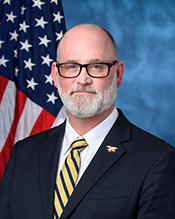
Derrick Van Orden
RRepublicanWI-3 · Representative
55
/ 100
Average
Attendance92
Avg: 96
Independence4
Avg: 4
Bipartisan Tone—
Avg: 15
Ethics Record100
Avg: 99
Transparency0
Avg: 53
Accountability Score — composite of attendance, independence, bipartisan tone, ethics record & transparency. Limited data available — score will improve as voting and statement records accumulate.
Methodology19
Bills Sponsored
2
Enacted into Law
2
Passed a Chamber
15
In Committee
All Sponsored Bills
HR10067In Committee
Ride in Freedom Act
HR9942In Committee
House Our Heroes Act
The Department of Veterans Affairs would gain new authority to take specific actions on home loans it guarantees when borrowers fall behind on payments or face foreclosure. This would give the VA more tools to help veterans who are struggling with their mortgages, potentially allowing the department to work out payment plans or other solutions before homes are lost. The change affects veterans who have used VA-backed home loans and could face financial hardship.
HR9665In Committee
VA Police Security Enhancement Act
The proposal would give Department of Veterans Affairs police officers broader authority to enforce laws and maintain order at VA facilities and surrounding areas. Currently, these officers have limited jurisdiction, but the expansion would allow them to respond to a wider range of situations and protect veterans, staff, and property more effectively across VA grounds.
HR9664In Committee
K–9 Hero Act of 2026
The federal government would create a grant program to help pay for veterinary care costs for retired dogs that previously worked for federal agencies, such as military or law enforcement dogs. This would assist the owners or caretakers of these animals in covering medical expenses as the dogs age after their service ends. The program aims to support people caring for these working dogs during their retirement years.
HR6904In Committee
Veterans Readiness and Employment Improvement and Accountability Act
This bill would improve rehabilitation and job training programs for veterans who have disabilities related to their military service, helping them develop skills and find employment. It would also create new rules about who can receive certain veterans benefits administered by the Department of Veterans Affairs. The changes aim to better support disabled veterans in returning to work and independent living.
HR8532In Committee
VA Home Loan Affordability Act
The Department of Veterans Affairs would update its home loan program to match standards used by the Federal Housing Administration, making it easier for veterans to get mortgages and potentially lowering barriers to homeownership. This change would align VA loan rules with federal housing standards that most lenders already follow, reducing confusion and streamlining the process for veterans buying homes.
HR982In Committee
Warriors to Workforce Act
This bill aims to help military veterans transition into civilian jobs by improving job training programs, credential recognition, and employment support services. The legislation would make it easier for veterans to use their military experience and skills when applying for civilian positions and would connect them with employers actively seeking to hire former service members. Veterans and employers looking to fill skilled positions would be the main groups affected by these changes.
HR3385In Committee
To direct the Secretary of Transportation to issue certain regulations to update the definition of motorcycle, and for other purposes.
The federal government would update its official definition of what counts as a motorcycle to reflect modern vehicle designs and technology. This change could affect how motorcycles are regulated, taxed, and classified for safety and licensing purposes, potentially impacting motorcycle manufacturers, riders, and state transportation agencies that enforce these rules.
HR980Passed House
Veterans Readiness and Employment Improvement Act of 2025
Modernizing the Veterans On-Campus Experience Act of 2025 This bill removes the requirement that educational and vocational counseling services provided by the Department of Veterans Affairs (VA) on campus at institutions of higher learning must be provided by VA counselors.
HR1230In Committee
AG VETS Act
Agriculture Grants for Veterans Education and Training Services Act or the AG VETS Act This bill directs the Department of Agriculture to provide competitive grants to eligible entities for the purpose of establishing and enhancing farming and ranching opportunities for veterans through education and training services. Entities eligible for the grants include cooperative extension services, land-grant colleges and universities, non-land-grant colleges of agriculture, state departments of agriculture, and nonprofit organizations.
HR983Enacted
Montgomery GI Bill Selected Reserves Tuition Fairness Act of 2025
Montgomery GI Bill Selected Reserves Tuition Fairness Act of 2025 This act requires that the Department of Veterans Affairs disapprove courses of education provided by educational institutions that charge higher than in-state tuition for individuals utilizing the Montgomery GI Bill-Selected Reserve education benefits while living in the state where the education is located, regardless of the individual’s state of residence.
HR5866In Committee
To require the Secretary of Agriculture to release a reversionary interest in certain land in the Black River State Forest in Millston, Wisconsin, and for other purposes.
The federal government would give up its claim to certain land in Wisconsin's Black River State Forest that it currently has the right to reclaim, allowing the state or local owners to have full control of the property. This affects how the Black River State Forest is managed and who has authority over that specific parcel of land in Millston, Wisconsin.
HR1815Enacted
VA Home Loan Program Reform Act
VA Home Loan Program Reform Act This act authorizes the Department of Veterans Affairs (VA) to take certain actions in cases of default on home loans under the VA home loan program, establishes a partial claim program, and temporarily increases amounts authorized for transitional housing and supportive services for veterans who are experiencing homelessness. First, the act authorizes the VA to pay the holder of a loan guaranteed by the VA an amount necessary to avoid the foreclosure of the loan, provided that the holder of the loan and the veteran obligated on the loan execute documents to ensure the VA obtains a secured interest in the property covered by the loan. The VA must prescribe loss mitigation procedures to help prevent the foreclosure of such a home loan. The VA may not take specified administrative actions (e.g., consent to the modification of loan terms) until the sequence of mitigation options has been completed. Next, the act establishes a five-year Partial Claim Program under which the VA may make a partial claim (purchase a portion of the indebtedness) on VA loans for primary residences that are in default or at imminent risk of default. Individuals who default on loans for which the VA has made a partial claim under this program must be liable to the VA for any loss resulting from the default. Further, the VA must report to Congress on its strategy to ensure that veterans who purchase homes under the VA home loan program are not at a disadvantage when attempting to secure representation by a real estate agent or broker. Finally, the act temporarily increases the amounts authorized for the VA’s Grant and Per Diem program for FY2025 and FY2026. (The program provides funding to public or nonprofit private entities that provide housing and supportive services to veterans experiencing homelessness.)
HR4748In Committee
Agriculture Workforce Reform Act of 2025
The legislation would reform immigration policies affecting agricultural workers, likely making it easier for farms to hire foreign laborers through updated visa programs or streamlined hiring processes. This would impact farmers and agricultural companies seeking seasonal or permanent workers, as well as immigrant workers looking to work in farming. The bill is currently being reviewed by the House Judiciary Committee.
HR3387In Committee
ETS Act
Enhancing the Transitioning Servicemember’s Experience Act or the ETS Act This bill expands the provision of pre-separation counseling under the Transition Assistance Program (TAP) and other services for members of the Armed Forces who are transitioning to civilian life. Regarding pre-separation counseling under TAP, the bill sets a minimum duration of counseling depending on a member's post-service employment, education, or training status; prohibits individuals who are responsible for the retention of members in any of the Armed Forces from providing counseling; removes restrictions on the types of counseling for which a spouse of a member may be included; expands financial planning counseling to include information about debt and investing; requires that financial planning counseling be provided by an individual who has significant experience in financial planning; and requires the Department of Veterans Affairs (VA) and Department of Labor to audit counseling annually. If a military department determines an individual is at risk for a difficult transition to civilian life, that department must provide the individual's information to the VA and Labor. The VA and Labor must timely contact the individual, as specified. Additionally, the bill extends transitional health care for members separating from service to 270 days (currently 180). The bill also expands eligibility for certain Labor job counseling, training, and placement services for veterans to members of the Armed Forces who are eligible for TAP; and expands the Solid Start program by requiring the VA to provide TAP materials to veterans and analyze data assessing the effectiveness of TAP.
HR981Passed House
VETT Act
Veterans Education Transparency and Training Act or the VETT Act This bill modifies the approval process for certain courses of education for purposes of Department of Veterans Affairs (VA) educational assistance benefits. Under current law, educational institutions must provide a personalized form to an individual with certain information (e.g., cost, financial aid, and graduation and job placement rates) prior to enrollment in a course, otherwise such institutions may be subject to certain disciplinary action from the VA or state approving agency. The bill provides that if an educational institution cannot provide the required personalized form to an individual prior to enrollment, the institution must provide notice that specifies which information in the form may be inaccurate or incomplete and the best estimate available for such information. The bill requires the VA to establish and regularly update a website to serve as a central location for information about training for school certifying officials regarding VA educational benefits.
HR1845In Committee
TAP Promotion Act
TAP Promotion Act This bill requires that pre-separation counseling under the Transition Assistance Program include a presentation that promotes the benefits available to veterans from the Department of Veterans Affairs (VA). The bill also requires the VA to annually report on the presentation to (1) identify veterans service organizations that participate, (2) provide the number of members of the Armed Forces who attend, and (3) provide any recommendations for changes to the presentation.
HR1813In Committee
To amend the Child Nutrition Act of 1966 to set maximum monthly allowances for milk under the special supplemental nutrition program for women, infants, and children.
The bill would limit how much money the federal government spends on milk benefits for low-income pregnant women, new mothers, and young children through the WIC nutrition program. This change would cap monthly milk allowances, potentially affecting millions of families who rely on this assistance to afford dairy products for their children's nutrition and development.
HRES143In Committee
Impeaching Paul Engelmayer, judge of the United States District Court for the Southern District of New York, for high crimes and misdemeanors.
This resolution impeaches Paul Engelmayer, a U.S. District Judge for the Southern District of New York, for high crimes and misdemeanors.