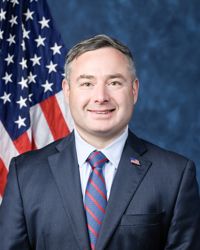
Eugene Simon Vindman
DDemocratVA-7 · Representative
64
/ 100
Average
Attendance99
Avg: 96
Independence9
Avg: 4
Bipartisan Tone11
Avg: 15
Ethics Record100
Avg: 99
Transparency100
Avg: 53
Accountability Score — composite of attendance, independence, bipartisan tone, ethics record & transparency.
Methodology55
Bills Sponsored
0
Enacted into Law
0
Passed a Chamber
55
In Committee
All Sponsored Bills
HR10838In Committee
To extend the statute of limitations for making false statements to Congress, and for other purposes.
HR10836In Committee
To amend the Uniform Code of Military Justice to prohibit the live broadcast of military executions, and for other purposes.
HR10837In Committee
To prohibit individuals convicted of bribery, ethics violations, or violations of the Foreign Agents Registration Act from serving in the executive branch of the Federal Government, and for other purposes.
HR10809In Committee
Make Data Centers Pay Act
HR10717In Committee
Wigs for Warriors Act
HR10614In Committee
Providing Child Care for Firefighters and EMS Act
HR10472In Committee
Mail Integrity and Inspector General Act
HRES1556In Committee
To honor and recognize Mr. Ahmad Shah Massoud, the former military leader of Afghanistan's Northern Alliance who was tragically assassinated by Al-Qaeda and the Taliban 25 years ago on September 9, 2001.
HR10403In Committee
Back to School Tax Credit Act
HR10297In Committee
El Salvador TPS Act of 2026
HR10198In Committee
Federal Worker Protection Act
HR10199In Committee
Sell Your Stocks or Step Down Act
HR10081In Committee
No Utility Junk Fees Act
HR10080In Committee
Energy Utility Lobbying Ban Act
HR10041In Committee
Smart Data Center Policy Act
The Commerce Department would study whether placing data centers near military bases, transportation hubs like airports and rail yards, and industrial areas could be beneficial, examining factors like infrastructure, security, and economic impacts. The research would help policymakers understand if these locations offer advantages for companies that operate data centers, which are the large facilities that store and process information for the internet and cloud services. The findings could inform future decisions about where the government and private companies should invest in data center development.
HR9533In Committee
Veterans Health Administration Personnel Transparency and Accountability Act
The bill would require the Department of Veterans Affairs to publicly share detailed information about staffing levels and job openings across its health care system, making it easier for veterans and the public to see which medical positions are filled and which are vacant. This transparency measure aims to help veterans understand potential wait times and service availability at VA hospitals and clinics, while also allowing Congress and oversight groups to better monitor the VA's ability to hire and retain medical staff.
HR9379In Committee
Affordable Homes for Veterans Act of 2026
The bill would establish clear deadlines for how quickly the Department of Veterans Affairs must process applications when veterans want to take over loans that the VA has guaranteed. It would also require the VA's Inspector General to check whether loan companies are following these processing timelines. This affects veterans who are trying to assume VA-guaranteed loans and want faster, more predictable processing of their applications.
HR9378In Committee
Grocery Affordability Act
Grocery stores operating in areas without adequate food access would receive a tax credit to help offset their operating costs, making it more financially feasible for them to serve communities that otherwise lack nearby places to buy fresh food. The credit would reduce the amount of taxes these stores owe to the federal government, potentially encouraging more grocery retailers to open or stay in underserved neighborhoods. This would primarily benefit low-income communities and rural areas where residents currently struggle to find affordable fresh groceries nearby.
HR9082In Committee
Honesty and Trust in Service Act
The proposal would ban Department of Defense employees and military personnel from participating in prediction markets, which are betting platforms where people wager money on the outcomes of future events like elections or policy decisions. The restriction aims to prevent potential conflicts of interest and protect national security by ensuring that military and defense staff don't have financial incentives tied to specific geopolitical outcomes or policy decisions.
HR9042In Committee
Blue Skies for Taiwan Act of 2026
The bill would support the development and use of advanced drone technology to strengthen U.S. national security and help Taiwan defend itself in the Indo-Pacific region. It aims to boost American companies' ability to produce secure drones while also providing Taiwan with the equipment and technology it needs to protect itself. The measure affects defense contractors, technology companies, and U.S. military and diplomatic efforts in Asia.
HR8948In Committee
Home Energy Affordability Act
The proposal would require states to consider rules that prevent electric utility companies from requesting rate increases more than once per year, giving consumers more predictability about their electricity bills. This would affect both utility companies and the households and businesses that depend on them for power. The measure is currently being reviewed by the House Committee on Energy and Commerce.
HR8947In Committee
Utility Hikes Transparency Act
The Federal Energy Regulatory Commission would be required to create and maintain a public database that tracks changes in utility rates across the country, allowing consumers and policymakers to see how electricity and gas prices are changing over time. This tracker would help people understand trends in their energy costs and make it easier for lawmakers to monitor whether utility companies are raising rates significantly. The tool would primarily affect utility companies, regulators, and consumers who want transparent information about energy pricing.
HR8838In Committee
Congressional Prediction Market Ban Act of 2026
Members of Congress would be banned from trading in prediction markets—online platforms where people bet money on the outcomes of future events like elections or policy decisions. The ban aims to prevent lawmakers from profiting off their own political decisions or using insider knowledge to make trades. This restriction would apply to Congress members and potentially their families to avoid conflicts of interest.
HR8772In Committee
Diesel Prices Relief Act of 2026
The proposal would temporarily eliminate the federal tax on diesel fuel, which currently adds about 24 cents per gallon at the pump. This would lower costs for trucking companies, farmers, construction businesses, and other industries that rely heavily on diesel fuel, as well as reduce prices for consumers who buy diesel-powered vehicles. The tax break would remain in effect for a set period before the normal tax rate returns.
HR8667In Committee
MISSION Rx Act
This bill would cap how much military families and veterans have to pay out of pocket for certain prescription drugs covered by TRICARE (the military health insurance program) and VA benefits, and would also limit the prices the federal government pays for those same drugs. The goal is to make medications more affordable for active-duty service members, retirees, their families, and veterans while reducing what taxpayers spend on drug costs. The bill is currently being reviewed by committees in Congress that handle military and veterans' affairs.
HR8644In Committee
Stop Subsidizing Private Jets of 2026
The proposal would prevent wealthy individuals and businesses from deducting certain expenses related to owning and operating private planes on their taxes. Currently, people can reduce their taxable income by claiming these plane-related costs as business expenses, but this change would eliminate that tax break for at least some of those expenses. This would primarily affect high-income earners and corporations that use private aviation.
HR8243In Committee
Virtual Readiness Act of 2026
This bill would likely expand the military's use of virtual and simulation-based training technologies to prepare soldiers, sailors, and airmen for combat and operations without requiring as much physical deployment or real-world exercises. The changes would affect active-duty personnel, reservists, and military training programs by potentially reducing costs and increasing training frequency through digital platforms. The goal appears to be keeping the armed forces combat-ready while modernizing how troops prepare for their missions.
HR8244In Committee
Neighborhood Skies Act of 2026
The bill would likely establish rules or restrictions on military aircraft operations over residential neighborhoods, balancing national security needs with quality of life for people living near military bases or flight paths. It may address noise complaints, flight schedules, or safety protocols that affect civilians in areas surrounding military installations. The measure would impact both military operations and the communities adjacent to armed forces facilities.
HR8067In Committee
Candis King Hope for Sickle Cell Families Act
This bill would expand access to sickle cell disease treatments and support services for patients and families affected by the condition. It likely aims to increase funding for research, improve screening and care programs, and help reduce the financial burden on families dealing with this serious inherited blood disorder. The legislation would affect sickle cell patients, their families, healthcare providers, and medical research institutions.
HR7587In Committee
United States-Israel Agriculture Cooperation Improvement and Expansion Act
This bill would strengthen agricultural partnerships between the United States and Israel by expanding research collaborations, trade opportunities, and technology sharing between the two countries' farming sectors. The legislation would likely benefit American and Israeli farmers, agricultural businesses, and researchers by making it easier to work together on crop development, water conservation, and other farming innovations. The bill is currently under review by the House Agriculture Committee.
HR6369In Committee
Cutting COSTS Act of 2025
The legislation aims to reduce costs in agricultural and food programs, likely by streamlining operations or adjusting how federal nutrition and agriculture assistance is delivered. The changes would affect farmers, food producers, and people who rely on federal nutrition programs like SNAP (food stamps) and school meal programs. The bill is currently being reviewed by a congressional subcommittee focused on nutrition and international agricultural issues.
HR6287In Committee
REAP Modernization Act of 2025
The legislation would update the Rural Economic Area Partnership (REAP) program, which provides grants and loans to help develop businesses and infrastructure in rural communities. The changes aim to modernize how the program operates and potentially expand its reach to help more rural areas access funding for projects like broadband expansion, small business development, and community facilities. Farmers, rural business owners, and communities in less populated regions would be the primary beneficiaries of these updates.
HR5010In Committee
Farm Credit Adjustment Act
Farm Credit Adjustment Act This bill allows the Farm Credit Administration (FCA) to examine low-risk Farm Credit System institutions every 24 months. Specifically, FCA has the sole discretion to extend the currently mandated 18-month examination period for all institutions to 24 months for low-risk institutions. FCA regulates the Farm Credit System, which is a network of borrower-owned lending institutions that operates as a government-sponsored enterprise and makes loans to creditworthy farmers.
HR6907In Committee
Enhancing Southbound Inspections to Combat Cartels Act
This bill would increase inspections and enforcement efforts at the U.S.-Mexico border to target drug cartels and criminal organizations smuggling contraband into the country. It would likely give border agents and customs officials more resources, personnel, or authority to search vehicles and cargo moving southbound (toward Mexico) to prevent weapons, money, and other materials from reaching criminal groups. The changes would affect border security agencies, travelers crossing the border, and potentially businesses involved in cross-border trade.
HR6908In Committee
Blue Envelope Awareness Act
The Blue Envelope Awareness Act would likely establish programs or requirements to inform the public about a specific law enforcement practice or issue related to "blue envelopes," though the exact nature of this practice is not clear from the title alone. Based on its focus on crime and law enforcement, the bill probably aims to increase transparency or awareness among citizens, law enforcement agencies, or both about how this practice works and its implications. The measure would affect how police departments communicate with the public and potentially impact people's understanding of their rights during law enforcement interactions.
HR6826In Committee
Critical Minerals Independence Act
This bill likely aims to reduce America's dependence on foreign sources of critical minerals—materials essential for electronics, batteries, and defense—by using tax incentives or other tax-based policies to encourage domestic mining and processing. The measure would probably affect mining companies, manufacturers who use these materials, and potentially consumers through changes in how these industries are taxed. By making it more profitable to extract and refine these minerals at home rather than import them, the bill seeks to strengthen U.S. supply chains and economic security.
HR6827In Committee
All American Metal Act
The bill likely aims to provide tax benefits or incentives for American metal production and manufacturing companies, possibly through tax credits, deductions, or other favorable tax treatment for domestic metal producers. This would affect metal manufacturers, mining companies, and related industries by potentially lowering their tax burden and making American-made metals more competitive compared to imports. The goal appears to be encouraging domestic metal production and jobs in the U.S. metal industry.
HR6729In Committee
Auto Reenroll Act of 2025
HR5703In Committee
Organic Science and Research Investment Act of 2025
Organic Science and Research Investment Act of 2025 This bill expands Department of Agriculture (USDA) support for organic agricultural research. USDA must establish the Coordinating and Expanding Organic Research Initiative for USDA resources dedicated to organic agricultural research. Every five years, the initiative must survey USDA's organic agricultural research and produce a report, including findings and recommendations on expanding research and increasing project coordination and effectiveness. USDA must take the findings and recommendations into consideration when preparing USDA's annual budget recommendations. In carrying out its work, the initiative must consult with the National Organic Standards Board and land-grant colleges and universities. In preparing each report, the initiative must consult organic and conventional farmers, ranchers, handlers and the organizations that serve them. The bill also reauthorizes the National Institute of Food and Agriculture’s Organic Agriculture Research and Extension Initiative through FY2030 and increases funding for the initiative. Further, eligible grant projects are expanded to include (1) facilitating the identification and adoption of traditional ecological knowledge and cultural practices, and (2) identifying how organic agriculture can adapt to and mitigate climate change. The bill also reauthorizes, and extends funding for, USDA's organic production and market data initiatives through FY2030. The Economic Research Service must conduct an economic impact analysis of organic agricultural management conducted in accordance with the National Organic Program. USDA may make competitive grants to support research, education, and extension activities relating to the transition from nonorganic production systems into organic agricultural production systems.
HR6417In Committee
Emergency Savings Enhancement Act of 2025
Emergency Savings Enhancement Act of 2025 This bill expands eligibility and increases the maximum contribution limit for pension-linked emergency savings accounts (PLESAs). As background, PLESAs are savings accounts that are established and maintained in connection with a defined contribution retirement plan, such as a 401(k). Contributions to such accounts are subject to federal income tax, and withdrawals are allowed for any reason. The bill expands eligibility for PLESAs by eliminating the exclusion of highly compensated employees. Thus, under the bill, individuals who meet the age, service, and other eligibility requirements of the plan, regardless of compensation, are eligible to participate in such a plan. The bill also increases the maximum limit on the portion of a PLESA balance attributable to participant contributions to $5,000 (from $2,600 in 2026). This limit continues to be adjusted for inflation.
HR6416In Committee
Digital Skills for Today’s Workforce Act
The legislation would create new federal programs to help workers learn digital and technology skills needed for modern jobs, including training in areas like coding, data analysis, and cybersecurity. Workers of all ages—particularly those in declining industries or without college degrees—would gain access to these training opportunities, often through partnerships between government, schools, and employers. The goal is to prepare Americans for better-paying tech jobs and help fill the growing shortage of skilled workers that many companies face.
HR5341In Committee
LOCAL Foods Act of 2025
Livestock Owned by Communities to Advance Local Foods Act of 2025 or the LOCAL Foods Act of 2025 This bill provides statutory authority for expanding the personal use exemption from inspection requirements for livestock that are slaughtered and prepared by the owner or at custom animal slaughter facilities for meat products intended for personal consumption. Under current law, the personal use exemption from certain Food Safety and Inspection Service meat inspection requirements applies to a person who raises an animal and slaughters the animal exclusively for personal, household, guest, or employee uses. The bill applies the exemption to any person who meets these requirements and is the owner of an animal, in whole or in part. This allows for an animal to have multiple owners (e.g., a community or a group of people buying shares in livestock). Further, the owner may designate an agent to assist in the slaughter, preparation, or transportation of the carcasses (or parts thereof) or meat and meat food products. If the owner designates an agent, the owner must maintain custody and specific identification of the carcasses or meat.
HR6327In Committee
Rural Housing Regulatory Relief Act
This bill would reduce regulations and requirements that apply to housing development and financing in rural areas, making it easier and cheaper for developers and lenders to build homes and provide mortgages in less populated regions. The changes would likely affect rural homebuyers, developers, banks, and government agencies that oversee housing programs. By streamlining rules, the bill aims to address housing shortages in rural communities where development is often more difficult and expensive than in cities.
HR6240In Committee
Rural Hospital Closure Relief Act of 2025
Rural Hospital Closure Relief Act of 2025 This bill temporarily allows additional hospitals to qualify as critical access hospitals (CAHs) that receive special payment under Medicare. Currently, in order to qualify as a CAH under Medicare, a hospital must either (1) be located more than 35 miles (or 15 miles in mountainous regions or areas with only secondary roads) from another hospital, or (2) have been certified prior to January 1, 2006, by the state as a necessary provider of services in the area. The bill allows a hospital to also qualify if the hospital is a small, rural hospital that (1) serves a health professional shortage area, or a high number of low-income individuals or Medicare beneficiaries; (2) has experienced financial losses for two consecutive years; and (3) attests to having a strategic plan to address financial solvency and to committing to provide a service that is in high demand in the hospital's service area. This authority expires nine years after the bill's enactment. The Government Accountability Office must study the effects of the bill's implementation. In addition, the Medicare Payment Advisory Commission must study and recommend payment systems for rural hospitals under Medicare. The Centers for Medicare & Medicaid Services must subsequently establish a mechanism and issue guidance on how newly designated CAHs may transition to different payment models under Medicare, including any new payment models recommended by the commission.
HR5987In Committee
Total Force Family Education Act
HR5828In Committee
Dads Matter Act of 2025
The legislation would expand health insurance coverage and paid leave benefits for fathers and non-birthing parents during and after childbirth, similar to protections already available to mothers. It aims to help new fathers and non-birthing parents bond with their children while recovering from the physical and emotional demands of becoming a parent, and would affect both private employers and federal employees. The bill recognizes that parental leave and healthcare access should support all parents, not just those who give birth.
HR5829In Committee
Leveraging Aerial Systems for Stewardship Operations (LASSO) Act
This bill would allow federal land managers to use drones and other aerial systems to monitor and manage wildlife and natural resources on public lands more efficiently. The technology could help with tasks like counting animal populations, detecting wildfires, removing invasive species, and protecting endangered animals without disturbing sensitive ecosystems. The bill affects federal agencies, conservation groups, and the public lands they manage.
HR5614In Committee
If You See It, Squish It Act of 2025
If You See It, Squish It Act of 2025 This bill directs the Department of Agriculture to carry out a national campaign to increase public awareness and knowledge of the spotted lanternfly. This invasive plant hopper feeds on a wide range of plants, including grapevines, hops, stone fruit trees, and hardwood trees.
HR5415In Committee
Nitazene Control Act of 2025
The bill would classify nitazene, a synthetic opioid, as a controlled substance under federal law, making it illegal to manufacture, distribute, or possess without authorization. This would give law enforcement tools to prosecute people involved in nitazene trafficking and production, similar to how they handle other dangerous drugs like fentanyl. The change aims to address the growing public health threat from nitazene, which has been increasingly found in illicit drug supplies and linked to overdose deaths.
HR5032In Committee
Nitazene Control Act
This bill would make nitazene, a synthetic opioid drug, illegal to manufacture, distribute, or possess without a prescription, similar to how other controlled substances are regulated. The legislation aims to address the growing public health threat from nitazene, which has been found in illicit drug supplies and is linked to overdose deaths. Law enforcement agencies would gain authority to prosecute people involved in nitazene trafficking, while medical professionals could still prescribe it for legitimate pain management purposes.
HR5011In Committee
Violent Antisemitism Threat Assessment Act
This bill would require the Department of Defense to assess and report on antisemitic threats and violence affecting military personnel and communities near military installations. The legislation aims to help military leaders understand the scope of antisemitic incidents and develop strategies to protect service members and their families from hate-motivated attacks.
HR4750In Committee
Patawomeck Indian Tribe of Virginia Federal Recognition Act
Patawomeck Indian Tribe of Virginia Federal Recognition Act This bill extends federal recognition to the Patawomeck Indian Tribe. Specifically, the bill makes the tribe and its members eligible for services and benefits provided to federally recognized tribes, without regard to the existence of a reservation for the tribe. The service area of the tribe is considered to be Stafford, Spotsylvania, and King George Counties, Virginia. Next, the bill sets forth requirements for the tribe regarding its membership roll, governing documents, and governing body. Interior, upon the request of the tribe, may take certain land into trust for the benefit of the tribe. Further, the bill prohibits the tribe from conducting gaming activities.
HR4005In Committee
UNPLUGGED Schools Grant Act of 2025
HR2700In Committee
UNPLUGGED Act of 2025
HR1973In Committee
No Pay for Congress During Default or Shutdown Act
No Pay for Congress During Default or Shutdown Act This bill withholds or eliminates the pay of Members of Congress for any day that the public debt limit is reached or there is a government shutdown. During the 119th Congress, any salary earned by Members during these events must be held in escrow and released on the last day of that Congress. For subsequent Congresses, a Member shall not be paid for any day that these events occur. (Some exceptions apply.)