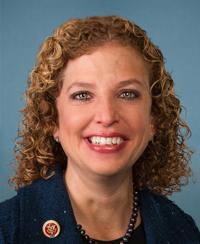
Debbie Wasserman Schultz
DDemocratFL-25 · Representative
62
/ 100
Average
Attendance98
Avg: 96
Independence3
Avg: 4
Bipartisan Tone22
Avg: 15
Ethics Record100
Avg: 99
Transparency86
Avg: 53
Accountability Score — composite of attendance, independence, bipartisan tone, ethics record & transparency.
Methodology26
Bills Sponsored
0
Enacted into Law
4
Passed a Chamber
22
In Committee
All Sponsored Bills
HR10749In Committee
RAISE Act of 2026
HR10068In Committee
PROTECT Act
Preventing Opportunities for Teen E-Cigarette and Tobacco Addiction Act or the PROTECT Act This bill requires the Centers for Disease Control and Prevention (CDC) to develop a strategy and carry out a specific initiative to prevent and reduce the use of electronic cigarettes and emerging tobacco products among youth and young adults. As part of the initiative, the CDC must conduct research and surveillance on types of products, patterns of use, health impacts, and other aspects of the use of such products by youth and young adults; evaluate prevention and intervention strategies and develop guidance for intervening and treating youth and young adults who use such products; identify effective messaging and communication efforts and implement a national public education campaign concerning the use of such products; and continue to fund grants for tobacco control programs in health departments, including efforts to prevent and reduce the use of such products by youth and young adults.
HR10011In Committee
No PREJUDICE Act
The proposal would ban the Department of Homeland Security from using federal money to conduct profiling based on characteristics like race, religion, ethnicity, or national origin when enforcing immigration and security laws. This would affect how DHS agents conduct investigations, searches, and enforcement actions, requiring them to base decisions on individual behavior and evidence rather than demographic characteristics. The measure is currently under review by congressional committees to determine its final form.
HR10010In Committee
Build Homes, Not Hate Act of 2026
FEMA would create a new grant program to give money to organizations that build housing and provide services for homeless people and those at risk of becoming homeless, including emergency assistance, longer-term supportive housing, and transitional services. The grants would help fund both the construction of new housing units and the direct services needed to help people transition out of homelessness. This would affect homeless individuals and families, nonprofit organizations, local governments, and housing providers who could apply for the federal funding.
HR4541Passed House
To reauthorize the Young Women’s Breast Health Education and Awareness Requires Learning Young Act of 2009.
This bill reauthorizes and revises programs of the Centers for Disease Control and Prevention (CDC) that support services and education addressing breast and cervical cancer. The bill reauthorizes through FY2030 and makes changes to the CDC’s National Breast and Cervical Cancer Early Detection Program. This program provides grants to states for breast and cervical cancer screening, diagnostic, and treatment services for individuals who have low incomes, are uninsured, or otherwise lack access to such services. The bill increases flexibility in how states may spend grant funds under the program. The Government Accountability Office must report to Congress on the work of the National Breast and Cervical Cancer Early Detection Program, including the number of individuals served and barriers to accessing screenings. Also, the bill reauthorizes through FY2031 CDC programs relating to young women’s awareness of breast health and breast cancer. These programs include campaigns to educate young women and health care professionals, research on preventing breast cancer in younger women, and grants for resources and services to young women diagnosed with breast cancer and precancerous conditions.
HR9944In Committee
TPS Review Act
This bill would allow people whose temporary protected status is being taken away to challenge that decision in court, rather than having no legal recourse. Temporary protected status is a program that lets foreign nationals from countries experiencing war, natural disasters, or other crises to live and work in the United States temporarily, and this change would give them a way to fight if the government tries to end their status. The bill affects immigrants currently living in the U.S. under this protection and would give them more legal options to stay in the country.
HRES1445In Committee
Condemning the attack on the Argentine Jewish Mutual Association Jewish Community Center in Buenos Aires, Argentina, in July 1994, and encouraging accountability for the attack.
This resolution expresses disapproval of a 1994 bombing at a Jewish community center in Buenos Aires, Argentina, and calls for those responsible to be held accountable for the attack. The measure is a statement of the House's position on this historical terrorist incident rather than a law that would create new policies or programs.
HR9569In Committee
Making Condos Safer and Affordable Act of 2026
The proposal would allow the Federal Housing Administration to insure mortgages that help condo building owners pay for repairs and improvements to their properties. This would make it easier and cheaper for condo associations to borrow money for necessary maintenance work like fixing roofs, updating electrical systems, or improving common areas. Condo residents and building owners would benefit from having more affordable financing options for keeping their buildings in good condition.
HRES1397In Committee
Expressing support for the designation of June 28, 2026, as "Community is Stronger than Cancer Day".
The proposal would officially recognize June 28, 2026, as "Community is Stronger than Cancer Day" to raise awareness about cancer and highlight the importance of community support for people affected by the disease. This symbolic designation aims to encourage people to come together and support cancer patients, survivors, and their families. The measure has been sent to the House Committee on Energy and Commerce for consideration.
HR9169In Committee
PKD Cures Act
The federal government would increase funding and support for research into polycystic kidney disease, a genetic disorder that causes cysts to form in the kidneys and can lead to kidney failure. This would help scientists better understand the disease, develop new treatments, and improve outcomes for the roughly 600,000 Americans living with this condition. The funding would support both basic research and clinical studies aimed at finding better ways to slow or stop the disease's progression.
HR9007In Committee
Constance C. McDaniel Medically Necessary Infant Formula and Donor Milk Act
The federal government would create a test program to help certain low-income families afford infant formula by providing them with financial assistance to purchase it. This pilot program would be run by the Department of Health and Human Services and would help determine whether direct financial aid is an effective way to ensure babies have access to necessary nutrition. The program would affect families struggling to afford formula and could inform future policies about supporting infant nutrition assistance.
HR8839In Committee
Lainie Jones Comprehensive Cancer Survivorship Act of 2026
This bill would establish national standards for how cancer survivors are cared for after their treatment ends, addressing gaps in support for managing side effects, mental health, and long-term health problems. It would apply to all types of cancer and all survivors regardless of their background, and would improve access to services like rehabilitation, counseling, and follow-up care throughout the recovery process. The goal is to ensure every cancer survivor receives consistent, quality care that helps them return to normal life and maintain their health for years to come.
HRES1251Passed House
Calling on elected officials and civil society leaders to counter antisemitism and educate the public on the contributions of the Jewish-American community.
This resolution calls on elected officials, faith leaders, and civil society leaders to condemn and counter acts of anti-Semitism. The resolution also honors the contributions of Jewish-American servicemembers and commits to ensuring all Americans, including Jewish Americans, can worship without fear of violence or persecution.
HR7856In Committee
Fair Housing for Survivors Act of 2026
This bill would protect domestic violence survivors and other abuse victims from housing discrimination by ensuring they cannot be denied rental housing or evicted based on their history of being victimized. The law would apply to landlords and housing providers across the country, preventing them from using a person's status as a survivor against them in housing decisions. The bill aims to help survivors find safe, stable housing without fear of being turned away because of their past experiences with abuse.
HR7857In Committee
No Escaping Justice Act of 2026
This bill would likely create new legal tools or international agreements to prevent people accused of serious crimes from fleeing the United States to avoid prosecution, possibly by strengthening extradition treaties or making it harder for fugitives to hide abroad. It would affect both the criminal justice system and international relations, potentially giving law enforcement agencies more power to track down and bring back suspects who try to escape to other countries. The bill has been sent to committees that handle foreign policy and criminal law to determine exactly how it would work.
HR7564In Committee
Jaime’s Law
Without access to the specific provisions of this bill, I can note that bills named after individuals typically address a particular crime, victim protection issue, or law enforcement concern that affected that person. Based on the crime and law enforcement subject matter, this legislation likely proposes new criminal penalties, victim protections, or law enforcement procedures, though the exact details would need to be reviewed in the bill's text to provide a concrete summary of who it affects and what changes it would make.
HCONRES69In Committee
Recognizing the 15th Anniversary of the January 8, 2011, Tucson, Arizona, shooting and honoring the survivors, victims, and former Congresswoman Gabby Giffords, a gun violence survivor, and one of the Nation's most influential voices of courage in the fight to end gun violence.
This resolution commemorates the 15th anniversary of the 2011 shooting in Tucson, Arizona that killed six people and wounded 13 others, including then-Congresswoman Gabby Giffords, and honors the survivors and victims of that tragedy. The measure recognizes Giffords' recovery and her subsequent advocacy work promoting gun violence prevention. As a commemorative resolution, it does not create new laws or policies but rather expresses Congress's acknowledgment of this significant event and its impact.
HR2657In Committee
Sammy’s Law
Sammy’s Law This bill requires large social media platforms to permit certain providers of safety software to monitor and manage the activity of children under the age of 17 on such platforms. Specifically, large social media platforms must make available a mechanism by which a child or their parent or guardian may permit a provider of safety software to (1) manage the child’s interactions, content, and account settings on the platform; and (2) regularly access the child’s user data. A software provider may only disclose a child’s data under limited circumstances, including to the child’s parent or guardian if the child is experiencing or is at foreseeable risk of experiencing specified harms. Such harms include suicide, eating disorders, sexual abuse, harassment, and academic dishonesty. The provider may only share data necessary for a reasonable parent or caregiver to understand that the child is experiencing or is at risk of harm. To participate, a software provider must register with the Federal Trade Commission, undergo a security review, and demonstrate that, among other requirements, the provider is based in the United States and will use a child's data solely to protect them from harm. Under the bill, a large social media platform is generally a service that enables a child to share content through the internet with other users that the child has become aware of solely through the platform, and which has more than 100 million monthly global active users or generates more than $1 billion in gross annual revenue.
HR2701Passed House
Fallen Servicemembers Religious Heritage Restoration Act
Fallen Servicemembers Religious Heritage Restoration Act This bill requires the American Battle Monuments Commission (ABMC) to establish the Fallen Servicemembers Religious Heritage Restoration Program to identify deceased members of the Armed Forces who were Jewish and buried in a U.S. military cemetery located outside of the United States under a marker indicating the member was not Jewish. The program must contact survivors and descendants of such members. The ABMC must seek to enter into a contract with a nonprofit organization to carry out the program during the first 10 fiscal years beginning after the date of enactment of the bill.
HR5506In Committee
Courtney Wild Reinforcing Crime Victims’ Rights Act
The legislation would strengthen protections and rights for crime victims throughout the legal process, ensuring they have better access to information about their cases and can participate more fully in court proceedings. It would apply to victims of various crimes and would require law enforcement and prosecutors to keep victims informed about case developments, court dates, and case outcomes. The changes aim to give victims a stronger voice in the criminal justice system and better support during what can be a difficult experience.
HR4751In Committee
To amend the Virginia Graeme Baker Pool and Spa Safety Act to reauthorize certain programs, and for other purposes.
This bill would extend and update federal safety programs that protect swimmers from dangerous drain suction hazards in pools and spas, which can cause serious injuries or drowning. The legislation reauthorizes funding and oversight for these safety standards that apply to public pools, water parks, and residential spas across the country. Pool operators and facility owners would need to continue following these drain safety requirements to protect their visitors.
HR4752In Committee
Reducing Hereditary Cancer Act
Reducing Hereditary Cancer Act This bill provides for Medicare coverage of germline mutation testing for individuals with a personal or family history of a hereditary cancer gene mutation or suspected history of hereditary cancer, as well as for associated coverage of risk-reducing surgeries and screenings.
HR4542In Committee
No Cages in the Everglades Act
The legislation would prohibit the construction or operation of immigration detention facilities in the Everglades National Park and surrounding protected areas in Florida. It affects immigration enforcement agencies and would limit where the federal government can house people detained during immigration proceedings in that region. The bill has been sent to a congressional subcommittee for review.
HRES597In Committee
Condemning the attack on the Argentine Jewish Mutual Association Jewish Community Center in Buenos Aires, Argentina, in July 1994, and encouraging accountability for the attack.
The resolution expresses disapproval of a 1994 bombing at a Jewish community center in Buenos Aires, Argentina, that killed dozens of people, and calls for those responsible to be held accountable for the attack. It aims to draw international attention to this unsolved terrorist attack and encourage efforts to bring the perpetrators to justice. The measure affects diplomatic relations and signals U.S. support for investigating terrorism and protecting religious communities worldwide.
HRES352Passed House
Calling on elected officials and civil society leaders to counter antisemitism and educate the public on the contributions of the Jewish American community.
This resolution calls on elected officials, faith leaders, and civil society leaders to condemn and counter acts of anti-Semitism.
HR1274In Committee
PROTECT Our Children Reauthorization Act of 2025
PROTECT Our Children Reauthorization Act of 2025 This bill reauthorizes through FY2028 and updates (1) the National Strategy for Child Exploitation Prevention and Interdiction (National Strategy), and (2) the National Internet Crimes Against Children (ICAC) Task Force Program. With respect to the National Strategy, current law requires the Department of Justice (DOJ) to update the strategy every two years and include 19 specific elements in the strategy (e.g., long-range goals, annual measurable objectives, and future trends). This bill requires DOJ to update the National Strategy every four years. The bill also revises and consolidates the 19 required elements into 9 required elements, including an analysis of current trends and challenges as well as the overall magnitude of the threat of child exploitation. The ICAC Task Force Program is a national network of task forces that support state and local efforts to investigate and prosecute the online sexual exploitation of children. This bill requires ICAC task forces to increase the investigative capacity of law enforcement to identify child victims and report the number of child victims identified in their annual reports. The bill also limits the liability of ICAC task forces for civil claims or criminal charges in federal or state court arising from decisions with respect to leads related to internet crimes against children. Finally, the bill requires the National Center for Missing & Exploited Children to provide additional information to law enforcement agencies when it refers a report of online sexual exploitation of children for investigation.