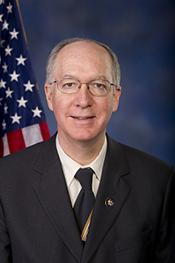
Bill Foster
DDemocratIL-11 · Representative
54
/ 100
Average
Attendance99
Avg: 96
Independence2
Avg: 4
Bipartisan Tone17
Avg: 15
Ethics Record100
Avg: 99
Transparency36
Avg: 53
Accountability Score — composite of attendance, independence, bipartisan tone, ethics record & transparency.
Methodology30
Bills Sponsored
0
Enacted into Law
1
Passed a Chamber
29
In Committee
All Sponsored Bills
HR10298In Committee
Public Service Loan Forgiveness Inclusion Act of 2026
HR10230In Committee
Strengthening Oversight for the Financial Sector Act of 2026
HR9902In Committee
Federal Naming Standards Act
The proposal would prevent the federal government from naming buildings, facilities, or programs after elected officials or political appointees for a set period of time, and would also block naming them after anyone who is commercially using their name. The restriction aims to keep federal infrastructure from being used to promote politicians or their business interests while they're still in office or actively profiting from their name.
HR9803In Committee
Protecting Immigrants From Legal Exploitation Act of 2026
The legislation would establish or increase criminal penalties for people who commit fraud related to immigration matters, such as falsifying documents, making false statements in immigration applications, or helping others do so illegally. This would affect immigrants, immigration attorneys, document forgers, and anyone involved in immigration fraud schemes. The bill aims to deter fraudulent immigration practices by making the legal consequences more severe.
HR9740In Committee
Critical Materials Processing Technology Testbed Act
The federal government would create a testing facility where companies and researchers can develop and improve technology for processing critical materials like rare earth elements and minerals needed for batteries, electronics, and defense equipment. This testbed would help American manufacturers reduce their dependence on foreign sources for these essential materials by making it easier and cheaper to test new processing methods before building full-scale production facilities. The facility would benefit manufacturers, researchers, and workers in industries ranging from clean energy to national defense.
HR9676In Committee
Examining Opioid Treatment Infrastructure Act of 2026
The federal government would study how many treatment facilities exist across the country for people struggling with opioid addiction, whether they have enough capacity to help everyone who needs it, and what gaps exist in available services. A government official called the Comptroller General would investigate both hospital-based and outpatient treatment options and report back to Congress with findings and recommendations. This would help lawmakers understand the current state of addiction treatment resources and identify where more help is needed.
HR9675In Committee
Expanding Opportunities for Recovery Act of 2026
The federal government would give money to states to help more people get treatment for opioid addiction and abuse, allowing them to expand clinically appropriate services in their communities. This funding would be distributed through the Center for Substance Abuse Treatment and would help states provide services like medication-assisted treatment, counseling, and other evidence-based approaches to address the opioid crisis. The bill would primarily benefit people struggling with opioid addiction and the states working to expand their treatment capacity.
HR9462In Committee
Investor Choice Act of 2026
The proposal would ban companies from forcing customers and employees to sign agreements that require them to settle disputes through private arbitration instead of going to court. This change would affect investors, workers, and consumers who currently have limited options when they disagree with financial firms, employers, or other businesses over issues like fraud, wage theft, or unfair treatment. The measure aims to give people the right to pursue lawsuits in the public court system rather than being locked into private arbitration processes.
HR9463In Committee
National Fab Lab Network Act of 2026
The proposal would create a national network of local digital fabrication facilities (called "fab labs") that give people free or low-cost access to advanced manufacturing equipment like 3D printers and laser cutters for learning, inventing, and starting businesses. These facilities would support workforce training, science education, and help people develop new products and ideas in their communities. The bill is currently being reviewed by congressional committees to determine whether it should move forward.
HR9272In Committee
Parent PLUS Loan Fairness and Responsibility Act of 2026
The proposal would let parents transfer their federal student loans to their adult children, allowing families to shift debt responsibility between generations. This could help parents reduce their loan burden while giving children the option to take on parent loans instead of borrowing additional money themselves. The change would affect families managing federal student debt and could reshape how households approach education financing.
HR9144In Committee
Closing the Digital Divide for Students Act of 2026
Families living in public housing would be allowed to count the cost of high-speed internet service as part of their utility allowances, similar to how they currently account for electricity and water bills. This change would help low-income residents afford broadband access, which has become increasingly important for school, work, and accessing services. The proposal is currently being reviewed by the House Committee on Financial Services.
HR9124In Committee
Know Your Rights Act
The legislation would establish new standards and protections for people held in government custody, including those in federal detention facilities and immigration centers. It aims to improve conditions, medical care, and legal rights for detainees while potentially affecting how federal agencies manage their facilities and interact with detained individuals.
HR8969In Committee
Nuclear Forensics Authority Realignment Act
The federal government would move its nuclear forensics and attribution work—the scientific analysis used to identify the source and origin of nuclear materials—from the Department of Homeland Security to the National Nuclear Security Administration, which is part of the Energy Department. This reorganization would consolidate nuclear expertise and investigation capabilities in one agency rather than splitting them between two departments. The change would primarily affect how federal agencies coordinate on nuclear security matters and investigate potential nuclear threats.
HJRES177In Committee
Providing for congressional disapproval under chapter 8 of title 5, United States Code, of the rule submitted by the Bureau of Consumer Financial Protection relating to the withdrawal of the rule relating to "Fair Credit Reporting; Name-Only Matching Procedures".
Congress is considering blocking a decision by the Consumer Financial Protection Bureau to withdraw a rule that required credit reporting companies to use stricter procedures when matching consumers' names to their credit files. If approved, this would prevent the agency from rolling back the name-matching rule, which was designed to reduce cases where people's credit information gets mixed up with someone else's. The measure affects credit reporting companies and consumers who rely on accurate credit reports for loans and other financial services.
HRES1238In Committee
Encouraging greater public-private sector collaboration to promote financial literacy for students and young adults.
The proposal would encourage partnerships between government agencies and private companies to teach students and young adults about managing money, budgeting, saving, and investing. By bringing together public institutions and businesses, the effort aims to make financial education more accessible and practical for younger people who are entering the workforce or making their first major financial decisions. Schools, nonprofits, and financial companies would work together to develop and deliver these educational programs.
HRES1210In Committee
Expressing the sense of the House of Representatives in support of the International Atomic Energy Agency's (IAEA) nuclear security role.
This resolution expresses that the International Atomic Energy Agency plays an indispensable role in strengthening nuclear security and safety around the globe. The resolution also reaffirms that the United States has a vital interest in preventing the spread of nuclear weapons and securing nuclear materials.
HR8299In Committee
Autofill Act of 2026
The bill would require the IRS to create downloadable tax forms that automatically fill in your personal information, so taxpayers wouldn't have to manually enter details like their name, address, and income that the government already has on file. This would make filing taxes faster and easier for individuals and families, though it would likely affect tax preparation companies that currently profit from helping people complete forms. The proposal aims to simplify the tax filing process for ordinary Americans while potentially reducing errors caused by manual data entry.
HR7790In Committee
Medical Records Access Fairness Act of 2026
This bill would make it easier for patients to get copies of their medical records from doctors and hospitals, likely by setting clearer rules about how quickly providers must respond to requests and what fees they can charge. The law would apply to healthcare facilities across the country and aims to give patients more control over their own health information. It could also reduce delays that currently frustrate patients trying to access their records for second opinions, insurance claims, or personal health tracking.
HRES1066In Committee
Expressing the condolences of the House of Representatives and honoring the memory of the victims of the mass shooting in Aurora, Illinois, on February 15, 2019.
This resolution expresses condolences to the families, friends, and loved ones of the individuals who were killed in the shooting in Aurora, Illinois, on February 15, 2019.
HR3682Passed House
Financial Stability Oversight Council Improvement Act of 2025
Financial Stability Oversight Council Improvement Act of 2025 This bill requires the Financial Stability Oversight Council, prior to determining that a U.S. nonbank financial company shall be supervised by the Federal Reserve Board and therefore subject to certain prudential standards, to first determine that certain alternative actions would not mitigate the threat the company may pose to U.S. financial stability.
HR7326In Committee
ABODE Act
The ABODE Act addresses housing and community development policy, likely aiming to improve access to affordable housing or strengthen support for community development programs. Based on its referral to the House Financial Services Committee, the bill probably involves changes to housing finance, lending practices, or federal housing assistance programs that affect renters, homebuyers, and communities seeking to develop affordable housing.
HR7132In Committee
Enhancing Financial Stability Research and Oversight Act
This bill would likely strengthen how the government studies and monitors risks in the financial system to prevent another major crisis. It probably gives federal financial regulators more tools and funding to research emerging threats like new types of investments or banking practices that could destabilize the economy. Banks, investment firms, and everyday people who depend on a stable financial system would be affected by these enhanced oversight measures.
HRES994In Committee
Expressing the sense of the House of Representatives that the Secretary of Defense should review section 504 of title 10, United States Code, for purposes related to enlisting certain aliens in the Armed Forces.
The House is calling on the Defense Secretary to examine current military enlistment rules for non-citizens to determine if changes should be made to allow certain foreign nationals to join the Armed Forces. This is a non-binding expression of opinion rather than a law, and it asks the Pentagon to study whether relaxing restrictions on alien enlistment would be beneficial for military recruitment and national security. The proposal has been sent to the House Armed Services Committee for consideration.
HR6686In Committee
No Cost Educational Resources Act of 2025
No Cost Educational Resources Act of 2025 This bill authorizes the Institute of Museum and Library Services to award grants to institutions of higher education (IHEs) for facilitating the adoption, adaption, and creation of open educational reading materials and establishing more open educational reading material courses. Open educational reading material refers to a free digital text that is publicly available to be downloaded and redistributed. Open educational reading material course refers to a science, technology, engineering, or math course offered by an IHE that uses only open educational reading materials as the form of the required readings for the course.
HRES922In Committee
Expressing support for the designation of December 3, 2025, as the "National Day of 3D Printing".
This resolution supports the designation of a National Day of 3D Printing and encourages the promotion and celebration of 3D printing technology. The resolution also recognizes the economic impact of 3D printing and its positive implications for the U.S. advanced manufacturing sector.
HR3536In Committee
CRISIS Act of 2025
Countering Russian Innovation and Safeguarding Individual Scientists Act of 2025 or the CRISIS Act of 2025 This bill makes certain Russian nationals with degrees in science, technology, engineering, and mathematics (STEM) eligible to become permanent residents of the United States. Under the bill, special immigrant status may be given to Russian nationals (and their spouse and children) who have a U.S. doctoral degree or a foreign equivalent in a STEM field and are seeking work in a STEM field in the United States. Candidates must satisfy vetting and interview requirements set by the Department of Homeland Security. Up to 3,000 individuals may be admitted under this bill each fiscal year FY2026 through FY2029. Individuals admitted under this bill do not count towards other statutory numerical limitations for immigration.
HR2628In Committee
American Innovation Act
HR2627In Committee
Keep STEM Talent Act of 2025
Keep STEM Talent Act of 2025 This bill addresses issues relating to non-U.S. nationals ( aliens under federal law) with advanced degrees in a science, technology, engineering, or mathematics (STEM) field, including exempting certain such individuals from direct limitations on the number of immigrant visas granted per year. To be exempt from the annual numerical limitations on immigrant visas, the individual must (1) have earned a master's level or higher degree in certain STEM fields while in the United States attending an accredited higher education institution, (2) be employed (or have an offer) to perform work directly related to the degree and earn higher than the median wage for that occupation, and (3) meet certain labor certification requirements. The bill also allows an individual seeking a nonimmigrant F-1 (student) visa for an advanced STEM degree to obtain the nonimmigrant visa even if the individual seeks lawful permanent resident status. (Generally, an individual may be denied a nonimmigrant visa if the individual actually intends to seek immigrant status, unless dual intent is allowed for that visa.) Under this bill, to be approved for an F-1 visa for an advanced STEM degree, the applicant must apply for the visa before beginning the advanced degree program. The bill also requires an individual who is inside the United States and applying for an F-1 visa for an advanced STEM degree to undergo the same vetting (e.g., verifying academic credentials and undergoing background checks) as an individual applying from outside the United States.
HRES147In Committee
Expressing support for designation of the third Friday of every March, as "National FIRST Robotics Day".
This resolution supports the designation of a National For the Inspiration and Recognition of Science and Technology (FIRST) Robotics Day and its celebration around the United States.
HRES100In Committee
Expressing support for the continued value of arms control agreements and negotiated constraints on Russian and Chinese strategic nuclear forces.
This resolution condemns Russia's nuclear escalatory rhetoric and implied threats on the potential use of nuclear weapons in the context of its invasion of Ukraine. The resolution also (1) condemns Russia's purported suspension of participation in the New START Treaty, (2) emphasizes the value of arms control agreements between the United States and Russia, and (3) calls on the administration to continue pursuing nuclear arms control and risk reduction with Russia and China.