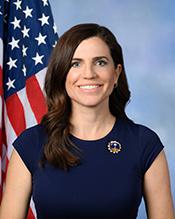
Nancy Mace
RRepublicanSC-1 · Representative
42
/ 100
Below Average
Attendance82
Avg: 96
Independence7
Avg: 4
Bipartisan Tone11
Avg: 15
Ethics Record80
Avg: 99
Transparency16
Avg: 53
Accountability Score — composite of attendance, independence, bipartisan tone, ethics record & transparency.
Methodology63
Bills Sponsored
0
Enacted into Law
3
Passed a Chamber
60
In Committee
All Sponsored Bills
HR5235Passed House
Skills-Based Federal Contracting Act of 2025
Skills-Based Federal Contracting Act This bill prohibits federal contract bid solicitations for contractor personnel from including minimum educational requirements unless the contracting officer justifies the requirements. The prohibition applies to educational requirements that may be met through education alone, education or experience, or a combination of education and experience. The bill also requires the Office of Management and Budget to issue implementing guidance to federal agencies, including instructions for contracting officers that encourage using alternatives to education requirements.
HR10801In Committee
School Freedom Act of 2026
HR10783In Committee
Speak Your Truth Act
HR10630In Committee
Pesticide Transparency on Federal Land Act
HR10629In Committee
Pesticide Data Transparency Act
HR10523In Committee
PUPPS Act
HR10447In Committee
American Citizenship Integrity Act
HR10212In Committee
PEPTIDES for Veterans Act
HR10319In Committee
Gender Delusion Disqualification Act
Gender Delusion Disqualification Act This bill prohibits individuals with a gender dysphoria diagnosis from occupying certain positions in executive agencies or obtaining or renewing certain federal credentials. ( Gender dysphori a refers to the distress that may accompany the incongruence between one's experienced or expressed gender and one's assigned gender.) Under the bill, an individual with gender dysphoria may not occupy a position for which the employing agency has established mental health standards. Such standards are criteria the agency uses to determine whether an individual's diagnosed mental health condition renders them unable to safely or effectively perform the duties of a position. The criteria may be established through agency regulation, medical evaluation protocols, or government-wide personnel suitability standards. The bill also prohibits individuals with gender dysphoria from obtaining or renewing any license, certificate, or other credential that is issued by an executive agency and is conditioned on the individual satisfying specified mental health standards. For example, the Federal Aviation Administration prohibits airline pilot licenses from being issued to individuals with certain mental health diagnoses (e.g., bipolar disorder). Executive agencies must issue regulations necessary to establish these requirements for covered positions and credentials within 180 days after the bill's enactment.
HR10278In Committee
REAL Sugar Act
HR10144In Committee
Pesticide Harm Accountability Act
HR10145In Committee
SOUND Pesticide Research Act
HR10127In Committee
TRANS Government Research Act
HR10098In Committee
Restoring the Death Penalty in DC Act
HRES1466In Committee
Amending the Rules of the House of Representatives to prohibit a Member, Delegate, or Resident Commissioner from cohabitating with any employee of the House of Representatives.
The proposal would change House rules to prevent members of Congress from living together with people who work for the House, such as staff members or administrative employees. This rule would apply to all representatives, delegates, and resident commissioners. The measure is currently being reviewed by the House Ethics Committee.
HRES1465In Committee
Amending the Rules of the House of Representatives to prohibit a Member, Delegate, or Resident Commissioner from engaging in a sexual relationship with any employee of the House.
The proposal would create a new rule preventing members of Congress and House staff from having romantic or sexual relationships with each other. This would apply to all House employees and aim to prevent conflicts of interest and power imbalances in the workplace. The rule change is currently being reviewed by the House Committee on Ethics.
HRES1454In Committee
Directing the Committee on House Administration to revoke and prevent the registration of certain Congressional Member Organizations and Congressional Staff Organizations.
The proposal would direct the House Administration Committee to cancel the official registration of certain groups run by members of Congress and their staff, and prevent those same groups from registering in the future. These Congressional Member Organizations and Congressional Staff Organizations are internal groups that operate within the House of Representatives, and this measure would essentially shut down whichever ones the committee determines should be revoked. The specific organizations targeted are not detailed in the bill's title, leaving the committee to decide which groups lose their registration status.
HR9710In Committee
Third World Immigration Moratorium Act
The proposal would ban people from certain countries that the government identifies as security concerns from entering the United States. This would affect foreign nationals trying to visit, work, or immigrate to the country, as well as potentially impact travel, business, and family connections between the U.S. and those nations. The bill is currently under review by the House Judiciary Committee.
HR9154In Committee
SHRIMP Act of 2026
The federal government would develop a standard way to identify and label where shrimp comes from so consumers and businesses know whether it was caught or farmed domestically or imported from other countries. This affects seafood companies, restaurants, grocery stores, and shoppers who want to know the origin of the shrimp they're buying or selling. The Commerce Department would be responsible for creating this labeling system.
HJRES194In Committee
Proposing an amendment to the Constitution of the United States to prohibit any person who has citizenship or nationality of, or otherwise owes allegiance to, a country other than the United States from serving as a Representative or Senator in Congress, a Judge of the Supreme Court or any inferior court, an Ambassador, public Minister or Consul, or any other officer of the United States which requires the advice and consent of the Senate, or the President or Vice President unless the person formally and permanently relinquishes such citizenship, nationality, or allegiance.
This proposed constitutional amendment would require anyone seeking high-level government positions—including Congress members, federal judges, ambassadors, and the President or Vice President—to give up any citizenship or allegiance to other countries before taking office. The change would apply to any role that requires Senate approval or the presidency itself, and would prevent dual citizens from serving in these positions unless they formally renounce their other citizenship. The amendment is currently being reviewed by the House Judiciary Committee.
HJRES190In Committee
Proposing an amendment to the Constitution of the United States to clarify the 14th amendment does not provide for automatic citizenship for the children of aliens.
This proposed constitutional amendment would change the rules for who automatically becomes a U.S. citizen at birth, specifically targeting children born to non-citizens or undocumented immigrants. Currently, the 14th Amendment grants automatic citizenship to almost anyone born on U.S. soil, but this amendment would eliminate that automatic right for children whose parents are not citizens or legal residents. The change would affect millions of people and would require approval from Congress and three-fourths of state legislatures to become part of the Constitution.
HR9063In Committee
Hire American Act
The proposal would change federal hiring rules to require that people working for the U.S. government be American citizens or nationals, restricting jobs that are currently available to some non-citizens. This would affect federal employees across all government agencies and could impact hiring practices for positions ranging from administrative roles to specialized jobs. The measure is currently being reviewed by the House Committee on Oversight and Government Reform.
HR9030In Committee
No Immigration Without Assimilation Act of 2026
The proposal would require immigration officials to assess whether people applying to enter or stay in the United States are likely to assimilate into American society, adding a new screening step to the immigration process. Immigration applicants could potentially be denied entry or residency based on how officials evaluate their likelihood of adopting American values, language, and customs. This would affect immigrants seeking visas, green cards, or citizenship, as well as the government agencies responsible for processing their applications.
HJRES188In Committee
Proposing an amendment to the Constitution of the United States to require that certain individuals are natural born citizens.
This proposed constitutional amendment would establish a requirement that certain federal officials, likely including the President, must be natural born U.S. citizens rather than naturalized citizens who became citizens later in life. The change would affect anyone seeking these high-level government positions by making citizenship-at-birth a mandatory qualification. The amendment would need approval from two-thirds of both the House and Senate, plus ratification by three-fourths of state legislatures to become part of the Constitution.
HR8821In Committee
No Bailouts for Cashless Bail Jurisdictions Act
The proposal would cut off federal funding to cities and states that eliminate or significantly reduce cash bail requirements for people accused of crimes. This would affect local governments, courts, and law enforcement agencies that have moved toward bail reform systems, potentially forcing them to choose between maintaining their bail policies or losing federal money. The bill reflects a debate over whether cash bail is necessary for public safety or whether it unfairly punishes poor defendants who cannot afford to pay.
HR8617In Committee
American Family Cost-of-Living Relief Act of 2026
Before federal agencies can issue new regulations, they would have to analyze and publish how those rules would affect household costs and family budgets. This requirement would apply to both proposed rules and final rules, giving the public and Congress a clear picture of the financial impact before regulations take effect. The analysis would help families, businesses, and policymakers understand what new rules will cost them in practical terms.
HR8452In Committee
Restoring Law and Order on America’s Streets Act
I don't have enough information to write an accurate summary. The bill's subjects are listed as "None," and without knowing the specific provisions of this legislation, I cannot describe what it would actually do or who it would affect. To provide a factual, nonpartisan summary, I would need details about the bill's actual content and proposed changes to law enforcement or criminal justice policy.
HRES1193In Committee
Providing for the expulsion of Representative Cory Mills from the United States House of Representatives.
This resolution would remove Representative Cory Mills from the House of Representatives through an expulsion vote, which requires a two-thirds majority of voting members. The measure has been sent to the House Ethics Committee for review, which typically investigates allegations of misconduct before such a drastic action is considered. If approved by the full House, Mills would lose his seat immediately and could no longer serve in Congress.
HR6654In Committee
VAMOSA Act of 2025
The bill would establish a new program to help veterans transition out of the military and into civilian careers by providing job training, employment placement services, and support resources. Veterans and military service members would gain access to enhanced career counseling and skills development to improve their chances of finding stable civilian employment after leaving the armed forces.
HR8221In Committee
First-Time Homebuyer Savings Act of 2026
This bill would allow first-time homebuyers to set aside money in special savings accounts with tax advantages, meaning they wouldn't pay federal taxes on the money they save or the interest it earns as long as they use it toward buying their first home. The goal is to make it easier for young people and others buying a home for the first time to accumulate the down payment and closing costs they need without being penalized by taxes.
HR8179In Committee
FETCH Act of 2026
The FETCH Act would establish new federal law enforcement tools and procedures related to crime investigation and prosecution, though the specific provisions aren't detailed in the available information. Based on its referral to the House Judiciary Committee, the bill likely addresses how federal agencies investigate, prosecute, or prevent certain types of crimes. Without access to the bill's full text, the exact impact on law enforcement agencies, criminal defendants, or the public cannot be determined.
HR8112In Committee
Preserving Social Security and Medicare for Citizens Act of 2026
This bill would restrict access to Social Security and Medicare benefits based on immigration status, likely limiting eligibility for immigrants or requiring stricter citizenship verification to receive these government benefits. The proposal affects both current beneficiaries and future applicants seeking retirement, disability, or health insurance through these programs. The bill has been sent to two congressional committees to review how it would change eligibility rules and implementation procedures.
HR8015In Committee
Incentivizing Cooperation in Immigration Enforcement Act
This bill would likely create financial rewards or other incentives for state and local governments to cooperate with federal immigration enforcement efforts. The measure would probably affect immigration enforcement agencies, state and local law enforcement, and immigrants in communities where such cooperation increases. The bill's goal appears to be encouraging more collaboration between different levels of government on immigration-related activities.
HR6755In Committee
Accountable Leadership for Veterans Act of 2025
This bill would establish new accountability measures for military leaders and Department of Veterans Affairs officials, likely requiring them to meet specific performance standards or face consequences for mismanagement. The legislation aims to improve how the military and VA operate by holding top officials responsible for problems affecting service members and veterans, such as delays in benefits or poor facility conditions. The bill is currently being reviewed by congressional committees to determine what specific accountability requirements should be included.
HRES1100In Committee
Directing the Committee on Ethics to preserve and publicly release records of the Committee's review of violations or alleged violations of clause 9 (as it pertains to acts of sexual harassment) and clause 18 of rule XXIII of the Rules of the House of Representatives.
This resolution directs the House Committee on Ethics to preserve and publicly disclose records related to violations or alleged violations of the Code of Official Conduct involving acts of sexual harassment, unwelcome sexual advance, or sexual assault by a Member, Delegate, or Resident Commissioner. (The Code of Official Conduct is Rule XXIII of the Rules of the House of Representatives.) Under the resolution, the committee must preserve all records (including investigative materials) of such a violation or alleged violation. Further, within 60 days after the resolution is adopted, the committee must publicly release available reports, conclusions, recommendations, exhibits, and attachments related to such investigations. The personally identifiable information of victims, alleged victims, and witnesses must be redacted.
HR7702In Committee
Death Penalty for Child Rapists Act
This bill would allow the federal government to impose the death penalty on people convicted of raping children, expanding the crimes eligible for capital punishment. Currently, federal law permits execution only for crimes like murder and treason, so this would add a new category of offense that could result in a death sentence. The proposal would affect how federal courts handle the most serious child sexual abuse cases.
HRES1072In Committee
Directing the Committee on Ethics to preserve and publicly release records of the Committee's review of violations or alleged violations of clause 9 (as it pertains to acts of sexual harassment) and clause 18 of rule XXIII of the Rules of the House of Representatives.
The proposal would require the House Ethics Committee to keep and make public its records about investigations into sexual harassment complaints and other violations of House rules. This would increase transparency by allowing the public to see what the Ethics Committee has reviewed and decided regarding misconduct allegations against members of Congress. The measure affects how Congress handles internal discipline and accountability for sexual harassment.
HR7624In Committee
Safe Shelters for Survivors Act of 2026
This bill would likely provide federal funding and support for shelters that house people fleeing domestic violence, human trafficking, or other crimes. It would help these facilities improve safety measures, expand capacity, and offer services like counseling and legal assistance to survivors. The funding would come through the federal government and be distributed to shelter organizations across the country.
HR7544In Committee
Illegal Alien Animal Abuser Removal Act of 2026
This bill would make it easier to deport immigrants who are convicted of animal cruelty crimes, treating such convictions as grounds for removal from the country. The measure would affect both documented and undocumented immigrants found guilty of animal abuse offenses, potentially expanding the list of crimes that trigger deportation proceedings.
HR7400In Committee
Making Homeownership Affordable Again Act
This bill would likely change tax rules to make buying a home more affordable for regular Americans, possibly through tax credits, deductions, or other financial incentives. The specific changes would affect homebuyers, current homeowners, and potentially real estate companies, though the exact details depend on what the House Committee on Ways and Means decides as they review it.
HR2985In Committee
Modernizing Government Technology Reform Act
Modernizing Government Technology Reform Act This bill reauthorizes through 2032 and revises the Technology Modernization Fund (TMF). (The TMF is a revolving fund administered by the General Services Administration to improve information technology and enhance cybersecurity across the federal government.) Changes to the TMF include requiring the Office of the Federal Chief Information Officer to annually submit to Congress (1) a list of the 10 legacy information technology (IT) systems that present the greatest security, privacy, and operational risks to the federal government; and (2) each federal agency's list of high-risk legacy IT systems; authorizing TMF funding for IT projects that improve the ability of the agency to perform its mission and deliver services to the public; additional requirements for agencies that receive funds to reimburse the TMF (for example, funds used for services or work in direct support of a project must be fully reimbursed); and revising the criteria by which agency proposals for TMF funding are evaluated to include the (1) impact of modernizing, retiring, or replacing legacy IT systems; and (2) ability of an agency to repay funds provided.
HR5000In Committee
Cybersecurity Hiring Modernization Act
The federal government would be allowed to hire cybersecurity experts more quickly and flexibly by streamlining the typical application and vetting process, making it easier to fill critical security positions without the usual lengthy bureaucratic delays. This change would help agencies protect their computer systems and data by getting qualified tech professionals on board faster, which is particularly important as cyberattacks on government systems have become more frequent and sophisticated.
HR7293In Committee
Protecting Children in Surrogacy Act
This bill would establish federal laws to regulate surrogacy arrangements and protect children born through surrogacy by setting standards for contracts, screening of intended parents, and oversight of surrogacy agencies. It aims to prevent fraud, exploitation, and trafficking in surrogacy situations while ensuring that children's legal rights and welfare are protected throughout the process. The law would affect surrogacy agencies, intended parents, surrogate mothers, and children born through these arrangements.
HR7222In Committee
No Tax on Boat Loan Interest Act of 2026
This bill would allow people who take out loans to buy boats to deduct the interest they pay on those loans from their federal income taxes, similar to how homeowners can deduct mortgage interest. The change would primarily benefit boat owners and potentially reduce their tax bills, though it could also reduce government tax revenue. The proposal is currently under review by the House committee that handles tax legislation.
HR6457In Committee
FAIR Act
The legislation would establish new standards and requirements for agricultural practices and food production to ensure fair treatment of farmers and food producers. It aims to address issues in the agriculture and food supply chain that may affect both producers and consumers. The bill is currently being reviewed by a congressional subcommittee focused on nutrition and agricultural matters.
HR6209In Committee
American Hemp Protection Act of 2025
American Hemp Protection Act of 2025 This bill repeals changes to the regulation of hemp products, which reimpose certain federal controls over some hemp products. Specifically, Congress enacted the FY2026 agriculture appropriations act (P.L. 119-37) on November 12, 2025. Effective November 12, 2026, the act modifies the statutory definition of hemp products that are considered to be lawful. This bill repeals the changes. As background, the 2018 farm bill excluded hemp from the Controlled Substances Act definition of marijuana and defined hemp . As a result, hemp and hemp-derived products at or below the 0.3% delta-9 tetrahydrocannabinol (THC, the psychoactive component of marijuana) concentration threshold were no longer regulated as Schedule I controlled substances. Registration with the Drug Enforcement Administration was no longer required to cultivate or handle hemp and hemp-derived products. However, hemp remained subject to Department of Agriculture and Food and Drug Administration regulation. The 2025 changes to the definition of hemp, include changing the limit to a total THC concentration of not more than 0.3% on a dry weight basis rather than only delta-9 THC, explicitly including industrial hemp, excluding seeds from a cannabis plant that exceed a certain THC concentration, and excluding various types of hemp-derived cannabinoid products. Cannabinoids refer to unique chemical compounds that are found in hemp and marijuana (e.g., THC) and are known to exhibit a range of psychological and physiological effects.
HR6150In Committee
Protect American Fisheries Act of 2025
This bill would protect American fishing rights and marine resources by establishing or strengthening regulations on commercial and recreational fishing in U.S. waters. The legislation likely aims to prevent overfishing, manage fish populations sustainably, and potentially restrict foreign fishing vessels from operating in American waters, affecting commercial fishing companies, recreational anglers, and coastal communities that depend on healthy fish stocks.
HR5474In Committee
No DEI in DC Act
This bill would prohibit federal agencies in Washington, D.C. from using taxpayer money on diversity, equity, and inclusion (DEI) programs and initiatives. The measure would affect federal employees and job applicants by eliminating diversity-focused hiring practices, training programs, and related activities within the federal government. Supporters argue it would redirect resources away from DEI efforts, while opponents contend it could reduce workplace diversity and civil rights protections.
HR5025In Committee
Restoring Merit in the Military Act
The proposal would change how the military promotes officers and makes personnel decisions by placing greater emphasis on merit-based evaluations rather than other factors. Military service members and the armed forces would be affected by these changes to promotion standards and advancement criteria. The bill is currently under review by the House Committee on Armed Services.
HR4698In Committee
PAAW Act
The proposal would establish new protections and requirements for how pharmaceutical companies handle and report information about their drugs' safety and effectiveness. It aims to give patients and healthcare providers better access to data about medication risks and benefits so they can make more informed decisions about treatment options. The measure would affect drug manufacturers, healthcare professionals, and patients who rely on prescription and over-the-counter medications.
HR4600In Committee
RESPECT Act
The bill would establish new rules requiring technology companies and online platforms to be transparent about how they collect, use, and share personal data from users, and would give people more control over their own information. It would also create penalties for companies that violate these privacy protections or fail to properly secure sensitive data. The legislation affects tech companies, social media platforms, and any business that collects personal information from consumers online.
HR4512In Committee
TRANS MICE Act
The proposal would establish a federal program to fund research into genetically modified mice that can be used to study human diseases and develop new treatments. Scientists and medical researchers would gain access to these specialized laboratory animals through grants and partnerships with universities and research institutions. This funding would help accelerate the discovery of cures for conditions like cancer, Alzheimer's, and other serious illnesses that affect millions of Americans.
HR4188In Committee
VA Flood Preparedness Act
VA Flood Preparedness Act This bill authorizes the Department of Veterans Affairs (VA) to make contributions to local authorities to mitigate the risk of flooding on local property adjacent to VA medical facilities.
HR3984In Committee
Expedited Removal Expansion Act of 2025
The proposal would allow immigration officials to quickly deport certain immigrants without a hearing before a judge, expanding the categories of people who can be removed this way. Currently, expedited removal applies mainly to people caught at the border, but this bill would extend it to immigrants already living in the country who meet certain criteria. The change would affect undocumented immigrants and potentially some legal immigrants, while reducing the time and resources spent on individual deportation cases.
HR3920In Committee
Lawless Cities Accountability Act of 2025
Lawless Cities Accountability Act of 2025 This bill prohibits federal funding for a jurisdiction that is a lawless jurisdiction. The term lawless jurisdiction means a state or political subdivision of a state that does one of the following: forbids law enforcement from intervening to restore order during widespread violence or destruction, withdraws law enforcement protection from an area or structure that law enforcement officers are lawfully entitled to access, disempowers or defunds law enforcement agencies, or refuses to accept law enforcement assistance from the federal government amid widespread violence or destruction.
HR3724In Committee
No Amnesty for Hamas Sympathizers Act
The legislation would prevent people who express support for Hamas or similar designated terrorist organizations from obtaining U.S. citizenship or certain immigration benefits. It would affect immigrants and visa applicants by making statements or actions deemed sympathetic to Hamas grounds for denying their applications or removing their immigration status. The bill aims to bar entry and legal status to individuals the government determines have provided material support to or endorsed terrorist organizations.
HR3246In Committee
Violet’s Law
Without access to the specific provisions of Violet's Law, this bill addresses environmental protection issues and has been sent to the House Agriculture Committee for review, suggesting it likely involves land use, farming practices, or natural resource management. The bill's referral to the agriculture committee indicates it probably affects farmers, ranchers, or companies involved in food production and land management. To understand exactly what protections or requirements the bill would create, you would need to review the full text of the legislation.
HR2864In Committee
Veterans for Mustangs Act
This bill would allow veterans to participate in programs that manage wild mustang and burro populations on federal lands, likely giving them opportunities to adopt or work with these animals. The legislation aims to connect veterans with outdoor conservation work involving these wild horses and burros found on public lands managed by the federal government.
HR2606In Committee
Stop Importing Terrorism Act
This bill would likely strengthen immigration screening and enforcement procedures to prevent individuals with terrorist connections or sympathies from entering the United States. It would probably give immigration authorities additional tools or requirements to identify and deny entry to people deemed security risks, affecting both visa applicants and people seeking to enter at the border. The changes would impact immigration agencies, border officials, and anyone applying for entry into the country.
HR872Passed House
Federal Contractor Cybersecurity Vulnerability Reduction Act of 2025
Federal Contractor Cybersecurity Vulnerability Reduction Act of 2025 This bill requires revisions to acquisition regulations related to information systems vulnerabilities for certain federal contractors. The revisions apply to contractors whose contract is at or above the simplified acquisition threshold ($250,000 in most cases) or that use, operate, manage, or maintain a federal information system on behalf of an agency. Under the bill, the Office of Management and Budget must review the Federal Acquisition Regulation (FAR) and recommend updated contract requirements and language for contractor vulnerability disclosure programs. (Such programs establish processes for identifying, reporting, and mitigating information system vulnerabilities discovered by security researchers, software developers, and others.) The recommendations must include requirements to ensure that such contractors implement vulnerability disclosure policies consistent with guidelines from the National Institute of Standards and Technology. The Federal Acquisition Regulation Council must review these recommendations and update the FAR as necessary to incorporate requirements for such contractors to receive information about potential security vulnerabilities in contractor information systems used in performance of contract. The Department of Defense (DOD) must conduct a similar review and update of regulations with respect to the DOD Supplement to the FAR.
HRES132In Committee
Censuring Representative Robert Garcia of California for inciting violence against a special government employee.
HR30Passed House
Preventing Violence Against Women by Illegal Aliens Act
Preventing Violence Against Women by Illegal Aliens Act This bill establishes certain criminal grounds for making non-U.S. nationals ( aliens under federal law) inadmissible and expands the crimes for which a non-U.S. national is deportable. First, the bill establishes that a non-U.S. national is inadmissible if the individual has admitted to or is convicted of acts constituting the essential elements of stalking, child abuse, child neglect, child abandonment, a sex offense, conspiracy to commit a sex offense, a violation of certain protection orders, or domestic violence (including physical or sexual abuse or a pattern of coercive behavior when it occurs within certain close relationships). Next, the bill establishes additional grounds for deportation. Under current law, a non-U.S. national is deportable for certain criminal convictions, including domestic violence, stalking, and child abuse. The bill makes any sex offense (including crimes against minors) or conspiracy to commit a sex offense a basis for deportation. The bill also expands the domestic violence crimes that make a non-U.S. national deportable to include physical or sexual abuse or a pattern of coercive behavior when it occurs within certain close relationships.
HR443In Committee
Parris Island Protection Act
Parris Island Protection Act This bill prohibits the use of federal funds to close or realign Marine Corps Recruit Depot, Parris Island in South Carolina, or to conduct any planning or other activity related to such closure or realignment.