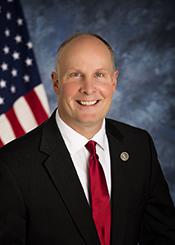
John R. Moolenaar
RRepublicanMI-2 · Representative
46
/ 100
Below Average
Attendance100
Avg: 96
Independence2
Avg: 4
Bipartisan Tone0
Avg: 15
Ethics Record100
Avg: 99
Transparency5
Avg: 53
Accountability Score — composite of attendance, independence, bipartisan tone, ethics record & transparency.
Methodology33
Bills Sponsored
0
Enacted into Law
2
Passed a Chamber
31
In Committee
All Sponsored Bills
HRES1626In Committee
Supporting the designation of the week of October 18 through 24, 2026, as "National Chemistry Week".
HR2306Passed House
Adams Memorial-Great American Heroes Act
The Adams Memorial-Great American Heroes Act This bill extends through 2032 the Adams Memorial Commission, whose purpose is to establish a permanent memorial in Washington, DC, to honor John Adams and his legacy. The bill specifies that the Adams Memorial shall be located within the area specified by the Adams Memorial Commission in a February 25, 2025 map (i.e., south of the White House, adjacent to Ellipse Road and near Pennsylvania Avenue and 15th Street, Northwest). If the Commission determines that this location is not suitable or feasible due to physical or security constraints, the bill requires that the memorial be located in the Reserve , an area which generally extends from the United States Capitol to the Lincoln Memorial, and from the White House to the Jefferson Memorial.
HRES1570In Committee
Marking the eighth anniversary of the unjust imprisonment of Dr. Gulshan Abbas by the Government of the People's Republic of China, condemning the use of transnational repression to retaliate against the exercise of free speech in the United States, and calling for her immediate and unconditional release.
HRES1526In Committee
Expressing support for the designation of the week of September 11 through September 17, 2026, as "Patriot Week".
HR9129In Committee
GUARD Act of 2026
Guarding the U.S. against Adversarial Robotics Dominance Act of 2026 or the GUARD Act of 2026 This bill requires robotics communications equipment and services associated with certain countries of concern to be reviewed for potential risk to U.S. national security. Equipment or services found to pose an unacceptable risk must be added to the Federal Communications Commission’s Covered List. Under current law, equipment and services on this list are subject to various restrictions, including a general prohibition on the import or sale of listed equipment in the United States. Under the bill, covered robotics communications equipment or services means any humanoid or quadruped robot, or related software, that is (1) communications software or equipment, and (2) produced or provided by an entity located in or subject to the influence or control of China, Cuba, Iran, North Korea, Russia, or Syria (or an affiliate of such an entity). Specifically, within one year of enactment, one of several specified national security agencies must review all covered robotics communications equipment or services and determine if they pose an unacceptable risk to U.S. national security or the safety of U.S. persons. Equipment or services determined to pose an unacceptable risk must be added to the Covered List within 30 days. Any determination that equipment or services do not pose an unacceptable risk must be reviewed by other national security agencies. If an agency does not make a required determination within one year, all covered equipment and services must be added to the list.
HR9789In Committee
Stop PRC Economic Espionage Act of 2026
This bill would expand the definition of what counts as a "foreign instrumentality" under federal espionage laws to include any company or organization based in countries considered U.S. adversaries, making it easier to prosecute cases where these entities steal American trade secrets or confidential business information. The change would strengthen protections for American companies and their intellectual property by treating foreign adversary-based entities the same way the law currently treats official government agencies when they commit economic espionage. This would primarily affect businesses, tech companies, and researchers who work with sensitive information that foreign competitors might try to steal.
HR9642In Committee
Medicare Access to Rural Anesthesiology Act
Medicare Access to Rural Anesthesiology Act This bill modifies the Medicare payment methodology for anesthesiologists in rural hospitals. Specifically, the bill provides that payment must be made on a reasonable cost basis for anesthesiologists in rural hospitals and critical access hospitals that have no more than 800 surgical procedures requiring anesthesia services per year (or a higher number set by the Centers for Medicare & Medicaid Services).
HR9711In Committee
Autocycle Safety Act
The proposal would establish federal safety standards for autocycles—three-wheeled vehicles that combine features of motorcycles and cars—and their equipment to ensure they meet consistent safety requirements across the country. This would affect manufacturers who build these vehicles and consumers who purchase them, as companies would need to comply with the new standards before selling autocycles. The legislation aims to clarify how autocycles should be regulated and what safety features they must include.
HR3194In Committee
LOCOMOTIVES Act
The LOCOMOTIVES Act would establish new environmental standards for locomotive engines to reduce air pollution and emissions from trains used in freight and passenger transportation. The rules would likely require railroad companies to upgrade or replace older, dirtier engines with cleaner technology over a set timeline. This would affect railroads, shipping companies that rely on rail transport, and communities near rail lines that currently experience air quality problems from locomotive exhaust.
HR9561In Committee
Shandra Eisenga TB Study Act of 2026
The federal government would study whether it's possible to create a reliable test that can detect tuberculosis in dead bodies during autopsies or medical examinations. This research would help medical examiners and pathologists better identify tuberculosis as a cause of death, which could improve public health tracking and understanding of the disease. The study would be conducted by the Department of Health and Human Services.
HRES1408In Committee
Recognizing the State of Michigan's contributions to the United States on the occasion of the 250th anniversary of the Union.
This resolution honors Michigan's historical and ongoing contributions to the United States as the country marks its 250th anniversary. The measure recognizes the state's role in American development, including its industrial achievements, natural resources, and cultural significance throughout the nation's history.
HR9249In Committee
No PLA Employees Act of 2026
The bill would prevent the government from approving immigrant petitions for foreign workers who previously worked for companies on the Department of Defense's list of entities with security concerns. This restriction would apply to people seeking to immigrate based on job sponsorship from U.S. employers. The measure aims to protect national security by limiting immigration pathways for individuals with prior employment ties to organizations flagged by the Defense Department.
HR9227In Committee
Magnets Value Chain Support Act of 2026
The proposal would create tax incentives to encourage American companies to manufacture permanent magnets domestically rather than importing them from other countries. Permanent magnets are critical components used in electric vehicles, wind turbines, and various defense and industrial applications, so the bill aims to boost domestic production of these materials. The tax breaks would apply to companies that produce or use these magnets in their manufacturing operations.
HR9102In Committee
BINSA Act
The proposal would change how the government defines which foreign investments in sensitive U.S. technologies require government review and approval, potentially expanding or narrowing the types of deals that need to be reported to federal authorities. This affects companies in tech, defense, and other industries that might receive investment from foreign sources, as well as foreign investors looking to fund American businesses. The changes would give the government clearer rules about which technology transfers and foreign ownership stakes pose national security concerns.
HR8901In Committee
Securing Innovation and Research from Adversaries Act
The legislation would restrict U.S. researchers and institutions that receive federal funding from collaborating with certain foreign entities and countries on research projects. This would affect universities, national laboratories, and private research organizations that depend on federal grants, potentially limiting their international partnerships and scientific exchanges. The bill aims to protect sensitive research and national security interests while potentially affecting the pace and scope of global scientific cooperation.
HR8730In Committee
Connected Vehicle Security Act of 2026
Connected Vehicle Security Act of 2026 This bill prohibits the importation, manufacture, sale, resale, or introduction into U.S. interstate commerce of connected vehicles and related software and hardware components associated with China, Russia, Iran, or North Korea. Connected vehicle means a vehicle that (1) integrates onboard networked hardware with automotive software systems to communicate with any other network or device using certain methods (e.g., wireless spectrum connectivity); or (2) is designed, manufactured, or originally equipped to communicate via such methods, regardless of whether such capability is enabled, disabled, or removed at the time the vehicle enters the United States. Current regulations administered by the Department of Commerce's Bureau of Industry and Security (BIS) prohibit transactions involving vehicle connectivity system hardware and covered software designed, developed, manufactured, or supplied by persons owned by, controlled by, or subject to the jurisdiction or direction of China or Russia. The bill expands the BIS regulatory framework, including by (1) expanding the countries covered by the prohibition to include China, Russia, Iran, and North Korea (Current BIS regulations apply only to China and Russia.); and (2) specifying that certain artificial intelligence components are covered by the prohibition. By January 1, 2027, BIS must publish a list of items that are authorized for the importation, manufacture, sale, resale, or introduction into U.S. interstate commerce and would otherwise be subject to the bill's prohibition. The bill also includes enforcement mechanisms, including that BIS must assess civil penalties for violations of the prohibition.
HR8700In Committee
Protecting U.S. Farmland and Sensitive Sites From Foreign Adversaries Act
The government would gain stronger powers to review and block foreign purchases of land in the United States, especially near military bases, power plants, and other sensitive locations that could affect national security. The bill would expand what counts as a "sensitive site" and give the Committee on Foreign Investment in the United States more authority to stop purchases by companies or individuals from countries considered adversaries. This would help protect American food production and critical infrastructure from foreign control.
HR8585In Committee
Community Multi-Share Coverage Program Act of 2026
The federal government would provide grants to local organizations to help small business workers and their employers get health insurance coverage, while also connecting them with services that address broader life challenges like housing, food, and transportation that affect their health and ability to work. These community-based programs would aim to improve workers' health outcomes, help them stay employed, and build long-term financial stability. The bill is currently being reviewed by two House committees to determine which parts fall under their jurisdiction.
HR8417In Committee
Keeping China Off the Rails Act
The legislation would restrict Chinese companies and investors from owning or controlling railroad infrastructure and operations in the United States, citing national security concerns. This would affect freight and passenger rail companies, preventing Chinese entities from acquiring stakes in or managing rail networks, while potentially requiring existing Chinese investments in U.S. railroads to be divested.
HR8306In Committee
SCALE Act
The government would create a yearly process to decide which countries can buy advanced computer chips from American companies, with the Commerce Department and intelligence officials working together to set these restrictions. This would give the U.S. more control over selling sensitive semiconductor technology to other nations, particularly those that might be security concerns. The policy would affect chip manufacturers and technology companies that export these products internationally.
HRES1023In Committee
Expressing support for the designation of the week of January 25 through January 31, 2026, as "National School Choice Week".
This resolution supports the designation of National School Choice Week.
HR1723In Committee
Tribal Labor Sovereignty Act of 2025
Tribal Labor Sovereignty Act of 2025 This bill excludes Indian tribes and tribal enterprises and institutions on tribal land from requirements for employers under the National Labor Relations Act (NLRA). (Currently under the NLRA, employers may not engage in unfair labor practices and must allow employees to form unions, engage in collective bargaining, and take collective action.)
HRES930In Committee
Commemorating the 78th birthday of Jimmy Lai on December 8, 2025, as "Jimmy Lai Day", for his role in advocating for free press, religious freedom, and democracy in Hong Kong, and calling on the People's Republic of China and Hong Kong authorities to release Jimmy Lai and all other Hong Kong prodemocracy advocates from prison.
Congress would officially recognize December 8, 2025, as "Jimmy Lai Day" to honor the Hong Kong media mogul and democracy advocate on his 78th birthday, while calling on Chinese and Hong Kong authorities to release him and other pro-democracy prisoners. The measure expresses support for press freedom and religious liberty in Hong Kong, where Lai has been imprisoned for his activism and journalism. This is a symbolic gesture rather than a law that would directly change policy or have legal force.
HRES832In Committee
Expressing support for the designation of the week of October 19 through 25, 2025, as "National Chemistry Week".
This resolution expresses support for the designation of National Chemistry Week. The resolution also recognizes the need to promote the fields of science, including chemistry, technology, engineering, and mathematics, and to encourage youth, including from underrepresented groups, to pursue careers in these fields.
HRES703In Committee
Expressing support for the designation of the week of September 11 through September 17, 2025, as "Patriot Week".
This resolution asks Congress to officially recognize the week of September 11-17, 2025, as "Patriot Week" to honor the memory of those affected by the September 11 attacks and to celebrate American patriotism. The designation is largely symbolic and does not create any new laws or programs, but encourages Americans to reflect on the significance of that date and the values of the nation. It affects no specific groups directly but serves as a statement of national remembrance and unity.
HR4519In Committee
District of Columbia Sister City Integrity Act
The legislation would require the District of Columbia government to disclose information about its sister city relationships and agreements with foreign cities, ensuring transparency in how these international partnerships are managed and funded. The measure aims to prevent potential conflicts of interest or misuse of public resources by requiring oversight of these diplomatic connections. This would primarily affect DC government officials and residents who want to know how their city conducts international relations.
HR1082Passed House
Shandra Eisenga Human Cell and Tissue Product Safety Act
Shandra Eisenga Human Cell and Tissue Product Safety Act This bill establishes civil penalties for violations of regulations governing the donation and handling of human cell and tissue products. It also requires the Food and Drug Administration (FDA) to report on the regulation of these products and to provide related information to stakeholders. ( Human cell and tissue products are articles containing or consisting of human cells or tissues that are intended for use in a human recipient.) Specifically, the bill establishes civil penalties for violations of the FDA’s regulations on donor eligibility and current good tissue practice for manufacturing and distributing human cell and tissue products. Also, the bill requires the FDA to conduct workshops to educate stakeholders and facilitate discussion on the science and regulation of human cell and tissue products. The FDA must establish a public docket to receive written comments on this topic, and report to Congress with recommendations. The bill also requires the FDA to support the development of educational materials for health care professionals regarding organ, tissue, and eye donations and related topics. Additionally, the bill requires the FDA to publish on its website educational materials about the Tissue Reference Group (a working group within the FDA) and best practices for obtaining a recommendation from them about human cell and tissue products. Also, annually for three years, the FDA must publish on its website information on inquiries submitted to the Tissue Reference Group and FDA registrations and inspections regarding human cell and tissue manufacturers.
HR2874In Committee
Defense of Conscience in Health Care Act
Defense of Conscience in Health Care Act This bill requires the Department of Health and Human Services (HHS) to issue a final rule on protecting statutory conscience rights in health care that is identical or equivalent to the rule titled Protecting Statutory Conscience Rights in Health Care; Delegations of Authority , which was scheduled to take effect on July 22, 2019, but was vacated by courts. Federal law generally prohibits discrimination based on conscience or religious beliefs with respect to federally funded health care programs, including prohibiting recipients of certain federal funding from requiring health care providers to take actions that they find religiously or morally objectionable (e.g., providing referrals for abortions). In 2019, HHS issued a final rule revising the applicable regulations, including imposing certification and cooperation requirements, as well as establishing additional enforcement provisions and penalties. However, this rule was later vacated by federal courts and never took effect. In 2024, HHS issued another final rule that generally applied a pre-2019 enforcement framework while also maintaining certain aspects of the 2019 rule (e.g., specifically designating HHS' Office for Civil Rights as the entity with the authority to handle relevant complaints). The bill requires HHS to reinstate the 2019 rule in its entirety.
HR2067In Committee
PARSA
Without access to the full bill text, PARSA appears to be legislation related to labor and employment matters that has been sent to the House Committee on Education and Workforce for review. Based on the acronym and subject matter, it likely addresses worker protections, employment standards, or workplace rights, though the specific provisions would need to be examined to determine exactly which workers or employers are affected and what changes it would make to current law.
HRES104In Committee
Providing amounts for the expenses of the Select Committee on the Strategic Competition Between the United States and the Chinese Communist Party in the One Hundred Nineteenth Congress.
This resolution authorizes up to $10,740,218 for the expenses of the House Select Committee on the Strategic Competition between the United States and the Chinese Communist Party for the 119th Congress. The resolution makes $5,366,830 available during the first session of the 119th Congress and up to $5,373,388 during the second session of the 119th Congress.
HRES63In Committee
Expressing support for the designation of the week of January 26 through February 1, 2025, as "National School Choice Week".
This resolution supports the designation of National School Choice Week.
HR524In Committee
NO GOTION Act
No Official Giveaways Of Taxpayers’ Income to Oppressive Nations Act or the NO GOTION Act This bill prohibits an entity that is created in, organized in, or controlled (in the aggregate) by China, Russia, Iran, or North Korea, or an entity controlled (in the aggregate) by one or more of such entities, from claiming multiple energy-related federal tax credits and incentives. Specifically, the bill prohibits such entities from claiming the federal tax credits for alternative fuel vehicle refueling property, second-generation biofuel, biodiesel fuel, sustainable aviation fuel, renewable electricity production, carbon sequestration, zero-emission nuclear power production, clean hydrogen production, clean commercial vehicles, advanced manufacturing production, clean electricity production, clean fuel production, investments in energy property, advanced energy projects, clean electricity investment, biodiesel mixtures, alternative fuel, and alternative fuel mixtures. Further, such entities are prohibited from claiming the federal tax deduction for energy efficient improvements to commercial buildings. Finally, such entities are not entitled to a credit or refund of federal excise taxes paid on biodiesel, alternative fuel, or sustainable aviation fuel mixtures produced by the entities.
HR444In Committee
Native American Health Savings Improvement Act
Native American individuals and families would gain new tax-advantaged savings accounts specifically designed to help them pay for healthcare expenses, similar to Health Savings Accounts available to other Americans. These accounts would allow Native Americans to set aside pre-tax money for medical costs while potentially receiving matching contributions from tribal governments or other sources. The proposal aims to improve access to healthcare savings tools for Native American communities.