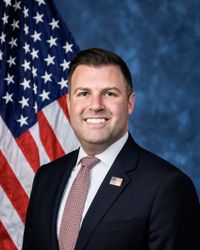
Ryan Mackenzie
RRepublicanPA-7 · Representative
54
/ 100
Average
Attendance98
Avg: 96
Independence5
Avg: 4
Bipartisan Tone18
Avg: 15
Ethics Record100
Avg: 99
Transparency34
Avg: 53
Accountability Score — composite of attendance, independence, bipartisan tone, ethics record & transparency.
Methodology31
Bills Sponsored
0
Enacted into Law
6
Passed a Chamber
23
In Committee
All Sponsored Bills
HR10827In Committee
Protection of Syrian Religious and Ethnic Minorities Act
HR7260Reported
National Cemetery Administration Annual Report Act of 2026
The bill would require the Department of Veterans Affairs to submit yearly reports to Congress detailing how the National Cemetery Administration is operating, including information about cemetery maintenance, burial services, and how well the agency is meeting veterans' needs. These reports would help lawmakers and the public track whether cemeteries are properly maintained and whether veterans and their families are receiving the services they deserve. The requirement aims to increase transparency and accountability for how federal burial grounds are managed.
HR10524In Committee
HELPER Plus Act
HR9723Passed House
Fit Future Act
Fit Future Act This bill provides statutory authority for the President’s Council on Sports, Fitness, and Nutrition, a federal advisory committee that provides recommendations on school-based physical education and promoting good nutrition and fitness. The council was most recently reestablished by Executive Order 14327 on July 31, 2025. Under the bill, the council must recommend fitness goals for youth; strategies for promoting school programs that reward excellence in physical education; and campaigns that elevate U.S. sports, military readiness, and health traditions. The council must also recommend strategies for reestablishing the Presidential Fitness Test, which provides age- and gender-based benchmarks for specified exercises. These requirements are consistent with the executive order. The bill specifies that the Department of Health and Human Services must provide funding and administrative and technical support to the council. The council may also receive funds from the National Fitness Foundation.
HR10381In Committee
PSC Nonpartisan COURTs Act
HR10369In Committee
Net Effective Cost Transparency and Prescription Drug Affordability Act of 2026
HR9989In Committee
CITE Act of 2026
Candidates running for federal office would be required to either sell their publicly traded stocks or put them in a blind trust (where someone else manages them without the candidate knowing what's in the portfolio) before taking office. The goal is to prevent conflicts of interest where elected officials might make decisions that benefit their personal investments rather than the public interest. This would apply to anyone running for Congress, the presidency, or other federal positions.
HRES1467In Committee
Protecting Deliberative Process in the House Resolution
This resolution would establish rules protecting internal House discussions and decision-making processes from being disclosed publicly, allowing lawmakers and staff to have candid conversations without fear that their private deliberations will become public record. It affects members of Congress, congressional staff, and anyone who might request documents or information about how House leadership makes decisions. The measure is designed to preserve the confidentiality of the legislative process while Congress develops and debates bills.
HRES1462In Committee
Recognizing the historic significance of Medicare on the 61st anniversary of its enactment.
This resolution marks the 61st anniversary of Medicare's creation by recognizing its historical importance to American healthcare. The measure celebrates Medicare's role in providing health insurance to seniors and disabled Americans since its establishment in 1965. The resolution has been sent to two congressional committees for review.
HR8823Passed House
Putting Patients First by Strengthening Provider Accountability in FECA Act
Putting Patients First by Strengthening Provider Accountability in FECA Act This bill explicitly authorizes the Department of Labor to suspend payments under the federal workers’ compensation program to certain providers convicted of fraud. (Current regulations establish various grounds for excluding a provider from payment under the program, including a conviction for fraudulent activity in connection with a federal or state medical benefit program.) Under the bill, Labor may suspend payments to a provider convicted of fraud related to the federal workers’ compensation program, a similar state program, or a federal health care benefit program (e.g., Medicare). Specifically, Labor may suspend (1) payments to such a provider for services, appliances, or supplies covered under the program; or (2) payments for certain initial expenses incurred by an employing agency with respect to such a provider. Labor must issue regulations to carry out these provisions.
HR8660In Committee
Valuing Employee Stock Today Act
The legislation would modify federal labor laws to ensure workers can participate in company stock ownership plans and equity compensation programs without facing retaliation or barriers from their employers. It aims to protect employees' right to receive and benefit from stock options, profit-sharing arrangements, and other equity-based compensation that companies may offer. The bill affects both workers seeking ownership stakes in their employers and companies that provide these types of compensation packages.
HR8897Passed House
Improving Travel for American Families Act
Improving Travel for American Families Act This bill directs the Transportation Security Administration (TSA) to establish a pilot program to implement alternative security screenings for passengers traveling with children who are 12 years old and younger. Specifically, TSA must implement alternative security screening lanes and security screening approaches for passengers traveling with children in order to support and facilitate the ease of travel for these passengers. TSA must implement the pilot program at a minimum of five airports, with priority given to airports that have a high volume of passengers traveling with children.
HR9630In Committee
BILL Drivers Act
The federal government would be required to study and publish a detailed report showing how the different parts of electricity bills—such as generation costs, transmission fees, and distribution charges—have changed over time for homeowners and small businesses in each state. This would help consumers and policymakers understand what's driving their electricity costs and how those costs vary across the country. The analysis would be conducted by the Energy Information Administration, a government agency that tracks energy data.
HR9410In Committee
VA Education Oversight Improvement Act
The bill would give the Department of Veterans Affairs and state agencies more power to oversee and regulate third-party contractors that work with schools receiving GI Bill benefits, helping ensure these contractors meet quality standards and properly serve veterans using their education benefits. This affects veterans pursuing education through the GI Bill program and the educational institutions that partner with outside contractors to deliver courses or services.
HR8822In Committee
Federal Workers’ Compensation Integrity and Care Act
The federal government would gain the ability to collect information about workers' earnings and employment history to better verify claims and prevent fraud in the workers' compensation program for federal employees. This would allow the Labor Department to access records needed to accurately determine benefits owed to federal workers who are injured on the job or become ill due to their work. The change aims to improve the efficiency and accuracy of the compensation system that currently serves federal employees across the country.
HR9224In Committee
Child Care Modernization Act of 2026
This legislation would update and renew federal funding and rules for child care assistance programs that help low-income families afford childcare services. The changes would affect working parents, childcare providers, and states that administer these assistance programs by potentially expanding eligibility, increasing funding, or updating how the programs operate. The bill is currently being reviewed by congressional committees to determine what specific changes should be made.
HR8142In Committee
Special Events Program Alignment Act of 2026
The bill would align federal rules and procedures for how different government agencies handle special events, likely including things like permits, security, and coordination between departments. It appears designed to streamline the process for organizing major events and reduce confusion when multiple federal agencies need to work together. The changes would affect event organizers, federal agencies, and potentially local governments that coordinate with federal authorities on large gatherings.
HR7082In Committee
FLEX Act
Fostering Learning and Excellence in Charter Schools Act or the FLEX Act This bill expands and revises the Charter Schools Program (CSP), including by expanding the allowable uses of CSP funds. Current law authorizes competitive grants to state entities (e.g., state educational agencies and state charter school boards) and, through them, subgrants to eligible applicants (i.e., charter school developers) to enable them to open and prepare for the operation of a new charter school or replicate or expand an existing high-quality charter school. The bill allows subgrants to also be used for adding or expanding programs or other offerings at these schools, such as through the adoption of new academic programs or delivery models, personalized learning, or a new curricular approach. New offerings must enable additional students to enroll in and benefit from the school. Eligible applicants may also use CSP funds for activities such as hiring and compensating teachers and other school staff (currently, this may only occur during the planning period); carrying out necessary renovations, upgrades, or facility repairs, or acquiring portable classrooms; and providing transportation to students (currently, only one-time, start-up transportation costs are permitted). Eligible applicants may request and receive advance payments of subgrants. Among other requirements, the Department of Education must (1) use CSP funds for additional activities (e.g., increasing the number of available seats in charter schools that serve rural students and students with disabilities), and (2) consult with charter school operators prior to issuing a notice of proposed rulemaking relevant to charter schools.
HR8579In Committee
To direct the Administrator of the Federal Aviation Administration to issue regulations to include strollers in the contract of carriage of air carriers and set a liability limit for damaged strollers, and for other purposes.
Airlines would be required to allow passengers to bring strollers onto planes and check them for free, similar to how they handle car seats, while also setting a maximum amount airlines must pay if they damage or lose a stroller. This change would help families traveling with young children by protecting their strollers from damage and ensuring they're treated as essential baby equipment rather than regular baggage. The regulation would apply to all airlines operating in the United States.
HR8486In Committee
Data Driven Suicide Prevention and Outreach Act of 2026
The Department of Veterans Affairs would receive funding to award grants to researchers and organizations developing computer models that can predict which veterans are at highest risk of suicide based on various health and life factors. These predictive tools could help VA doctors and mental health professionals identify struggling veterans earlier and provide them with targeted support and treatment. The program aims to reduce suicide rates among the veteran population by improving how the VA identifies and helps those in crisis.
HR8202Reported
To amend the Export Control Reform Act of 2018 to provide for a ten-year statute of limitations for export control violations.
This bill extends from 5 to 10 years the statute of limitations for civil and criminal violations of U.S. export control laws. The bill also specifies that the commencement of an action, suit, or proceeding includes the issuance of a charging letter. (A charging letter is a formal notification by the Department of Commerce's Bureau of Industry and Security that a company or individual is under investigation for an apparent violation of export administration laws or regulations.)
HR8203In Committee
Workforce Recovery and Resilience Act
States and local job training programs would receive information about best practices for helping workers struggling with substance use disorder, and some local areas would get federal grants to offer training in treating and preventing addiction. The goal is to address how substance abuse affects employment and help workers get the support they need to stay in or return to the workforce. This would mainly benefit workers dealing with addiction, employers, and community organizations that run job training programs.
HRES1128Passed House
Expressing the support of the House of Representatives for the Department of Homeland Security.
This resolution recognizes the importance of fully funding the Department of Homeland Security (DHS). The resolution also (1) cautions that Americans are at greater risk each day DHS is subject to a lapse in appropriations, and (2) expresses gratitude to DHS employees for their commitment to protect the United States.
HR7912In Committee
Neonatal Care Transparency Act of 2026
Hospitals and other medical providers would be required to publicly disclose their policies about at what point during pregnancy they will provide life-saving medical care to infants born prematurely. This transparency requirement would let expectant parents know in advance what level of care their hospital is prepared to offer in case of an early delivery. The bill affects healthcare facilities and pregnant women who want to understand their options before giving birth.
HR2641In Committee
To amend the Illegal Immigration Reform and Immigrant Responsibility Act of 1996 to require all Federal contractors to participate in the E-verify program.
The bill would require all companies that receive federal government contracts to use E-Verify, a system that checks whether employees are legally authorized to work in the United States. Currently, only certain federal contractors must use E-Verify, so this would expand the requirement to all of them. The change would affect millions of workers and thousands of companies that do business with the federal government.
HR6038In Committee
Improving Veteran Access to Care Act
The legislation would expand and improve healthcare services available to veterans through the Department of Veterans Affairs, making it easier for former military members to access medical treatment and mental health services. The bill aims to reduce wait times for appointments, increase the number of VA facilities or services in underserved areas, and potentially allow veterans to seek care from private providers when VA services are unavailable. Veterans and their families would be the primary beneficiaries of these changes to the healthcare system.
HR2212Passed House
DHS Intelligence Rotational Assignment Program and Law Enforcement Support Act
DHS Intelligence Rotational Assignment Program and Law Enforcement Support Act This bill requires all components of the Department of Homeland Security (DHS) Intelligence Enterprise to participate in the Office of the Director of National Intelligence (ODNI) Intelligence Community (IC) Civilian Joint Duty Program. The DHS Intelligence Enterprise is the primary mechanism to integrate DHS's intelligence programs. It is composed of the DHS Office of Intelligence and Analysis and the intelligence components of nine other DHS organizations, such as the Transportation Security Administration, the Coast Guard, and U.S. Customs and Border Protection. The IC Civilian Joint Duty Program offers federal civilian intelligence professionals the opportunity to broaden their experience by serving at a different IC element or relevant organization, or in certain positions within the individual's own IC element, for up to three years.
HR1800Passed House
Solidify Iran Sanctions Act of 2025
Solidify Iran Sanctions Act of 2025 This bill eliminates a sunset clause in the Iran Sanctions Act of 1996, thereby making the act permanent. The Iran Sanctions Act requires the President, with some exceptions, to impose sanctions on certain individuals or entities engaged in specified transactions related to Iran's energy sector or Iran's efforts to acquire or develop certain weapons (such as chemical, biological, or nuclear weapons).
HR1427In Committee
To amend the Internal Revenue Code of 1986 to increase the amount of the adoption credit and to establish the in vitro fertilization expenses credit.
This bill increases the adoption tax credit to $25,000 (from $17,280 in 2025) and establishes a nonrefundable tax credit for qualified in vitro fertilization expenses. Under current law, the adoption tax credit is allowed for (1) qualified expenses incurred to adopt an eligible child up to the maximum statutory amount, or (2) the statutory maximum amount (regardless of actual expenses) if adopting an eligible child with special needs. The statutory maximum amount is $17,280 (per eligible child) in 2025, which is adjusted for inflation. Further, under current law, the adoption tax credit begins to phase out for individuals with a modified adjusted gross income exceeding $259,190 (in 2025 and adjusted for inflation), such that the tax credit completely phases out (in 2025) for individuals with a modified adjusted gross income of $299,190 or more. The bill increases the adoption tax credit statutory maximum amount to $25,000. Further, under the bill, such amount continues to be adjusted annually for inflation. Finally, under the bill, an individual is allowed a nonrefundable tax credit for expenses paid (or incurred) for medical care (e.g., treatment, insurance, and transportation) related to in vitro fertilization for the individual (or the individual’s spouse if filing a joint federal income tax return). However, an individual may not claim the in vitro fertilization tax credit and other allowed tax deductions or credits (e.g., medical expense tax deduction) for the same expenses.
HR1424In Committee
To amend the Internal Revenue Code of 1986 to increase the employer tax credit for paid family and medical leave.
This bill increases the business tax credit for paid family and medical leave to up to 50% (from 25%) of the wages paid by an eligible employer to a qualifying employee while the employee is on family and medical leave. Under current law, an eligible employer may claim a tax credit (through 2025) for between 12.5% and 25% of the wages paid to a qualified employee while the employee is on family and medical leave. The percentage of wages allowed as a tax credit increases proportionally, depending on what percentage of an employee’s normal wages is paid to the employee while the employee is on family and medical leave. The bill increases the tax credit to between 25% and 50% of the wages paid to an employee while the employee is on family and medical leave, depending on what percentage of an employee’s normal wages is paid to the employee while the employee is on family and medical leave. Under current law and the bill, an employer must pay at least 50% of the employee's normal wages while the employee is on leave to qualify for the tax credit.
HR1426In Committee
To amend the Internal Revenue Code of 1986 to increase the amount allowed as a credit under the expenses for household and dependent care services credit and the employer-provided child care credit.
This bill doubles the maximum amount that an individual may claim as a federal tax credit for qualified child and dependent care expenses and increases the maximum amount an employer may claim as a federal business tax credit for providing certain child care services to employees. Under the bill, the annual maximum amount allowed for the child and dependent care tax credit is increased to $6,000 (from $3,000) for individuals with one qualifying child or dependent, or to $12,000 (from $6,000) for individuals with two or more qualifying children or dependents. (Under current law, an individual may claim a nonrefundable tax credit for a portion of qualified child and dependent care expenses paid so that the individual or the individual’s spouse can work or look for work.) Further, the bill increases to $400,000 (from $150,000) the annual maximum amount that an employer may claim as a tax credit for providing certain child care services to employees. (Under current law, an employer may claim a nonrefundable business tax credit for a percentage of qualified child care facility expenses and child care referral and resource expenses.)