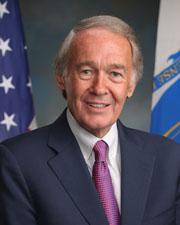
Edward J. Markey
DDemocratMA · Senator
56
/ 100
Average
Attendance99
Avg: 97
Independence15
Avg: 23
Bipartisan Tone27
Avg: 14
Ethics Record100
Avg: 100
Transparency20
Avg: 47
Accountability Score — composite of attendance, independence, bipartisan tone, ethics record & transparency.
Methodology136
Bills Sponsored
0
Enacted into Law
5
Passed a Chamber
126
In Committee
All Sponsored Bills
S5567In Committee
Civilian Climate Corps for Jobs and Justice Act
S5524In Committee
Workforce Opportunities for Communities in Recovery Act
S5541In Committee
Cybersecurity and AI Board of Investigations Act of 2026
S5544In Committee
Facial Recognition and Biometric Technology Moratorium Act of 2026
S5446In Committee
Cash Refunds for Flight Cancellations Act
S5447In Committee
FAIR Fees Act of 2026
SRES865In Committee
A resolution expressing the sense of the Senate that the People's Republic of China has engaged in the arbitrary or wrongful detention of American academics and has otherwise harmed the prospects for scientific collaboration and people-to-people exchanges between the United States and the People's Republic of China.
SJRES216In Committee
A joint resolution providing for congressional disapproval of the proposed foreign military sale to the Government of Saudi Arabia of certain defense articles and services.
S236Reported
A bill to amend the Act of August 9, 1955 (commonly known as the "Long-Term Leasing Act"), to authorize leases of up to 99 years for land in the Mashpee Wampanoag Tribe Reservation and land held in trust for the Wampanoag Tribe of Gay Head (Aquinnah), and for other purposes.
This bill authorizes the Mashpee Wampanoag Tribe and the Wampanoag Tribe of Gay Head (Aquinnah) to lease their land held in trust for a term of up to 99 years. Both tribes are located in Massachusetts.
S5292In Committee
GREEN Hospitals Act
S4199In Committee
Youth AI Privacy Act
This bill would create new privacy protections for children and teenagers when they use artificial intelligence services and products. It would likely require AI companies to be transparent about how they collect and use young people's data, and restrict certain data practices that could be harmful to minors. The rules would apply to tech companies and AI developers that offer services to or collect information from children and teens.
S5257In Committee
Enhancing North Korea Humanitarian Assistance Act of 2026
S5231In Committee
Equity in Pretrial Health Coverage Act
S5205In Committee
Turkey Human Rights Promotion Act of 2026
This bill would direct the U.S. government to take action against Turkey's government for practices like suppressing political opposition, controlling media, targeting dissidents abroad, and violating international law. The measures could include sanctions, reduced aid, or diplomatic pressure aimed at pushing Turkey to improve its record on democracy and human rights. The bill affects U.S.-Turkey relations and could impact Turkish government officials, businesses, and citizens involved in these practices.
S5195In Committee
Green New Deal for Public Schools Act
The proposal would direct federal funding and resources toward making public schools more environmentally sustainable, likely through upgrades to school buildings such as improved insulation, renewable energy systems, and energy-efficient equipment. Students, teachers, and school staff would benefit from healthier school facilities, while the changes could also create jobs in construction and green energy sectors. The bill aims to reduce schools' carbon footprint and operating costs while improving conditions for learning.
S5134In Committee
Green New Deal for Health Act
This bill would direct the health care industry to reduce its environmental impact and prepare for climate-related health emergencies by setting sustainability goals, training health workers on climate issues, and investing in green infrastructure at hospitals and clinics. It aims to help the health sector cut pollution, protect communities from climate-related diseases, and create jobs in environmental health work. The proposal affects hospitals, doctors, nurses, patients, and health care workers across the country.
S5119In Committee
A bill to require the United States Postal Service to sell the Alzheimer's semipostal stamp for 6 additional years.
The U.S. Postal Service would be required to continue selling a special Alzheimer's awareness stamp for six more years beyond its current expiration date. Revenue from these stamps goes toward funding Alzheimer's research and support programs. This allows people who want to support the cause to do so through their regular mail purchases.
S5112In Committee
Health Over Wealth Act
The bill would require the federal government to enforce rules that limit how much profit for-profit healthcare companies can make from operating hospitals and medical systems, ensuring more money goes toward actual patient care rather than corporate profits. This would affect large healthcare corporations that own multiple hospitals and clinics across the country, potentially changing how they operate and distribute their earnings. The measure is currently under review by the Senate Finance Committee.
SJRES202In Committee
A joint resolution providing for congressional disapproval under chapter 8 of title 5, United States Code, of the rule submitted by the Small Business Administration relating to "Citizenship and Residency Requirements and Recission of Procedural Notice 5000-872050" and "Revised Applicant Ownership, Citizenship, and Residency Requirements for 7(a) and 504 Loans".
Congress is trying to block a Small Business Administration rule that would change who can qualify for certain government-backed business loans by adding new citizenship and residency requirements. The rule would affect small business owners seeking 7(a) and 504 loans, which are popular financing programs for entrepreneurs. If approved, this resolution would prevent the new requirements from taking effect.
S4980In Committee
Water Emergency and Technical Assistance Act of 2026
The bill would provide funding and technical support to help communities fix water quality problems and drinking water emergencies, allowing experts to assist local water systems when they face contamination or infrastructure failures. It expands existing programs under federal water laws to give more resources to cities and towns dealing with water crises, whether from pollution, aging pipes, or other water safety issues. Communities and water utilities would benefit from this emergency assistance to protect public health.
S4982In Committee
Good Jobs for Good Airports Act
This bill would require companies that employ workers at busy airports—such as baggage handlers, cleaners, and other service staff—to pay those workers a prevailing wage (a set minimum based on what similar workers typically earn in that area) and provide fringe benefits like health insurance or retirement contributions. The requirement would apply to airports of all sizes, from smaller regional hubs to major international airports. This would affect airport service workers and the companies that employ them, potentially increasing labor costs for airport operations.
SRES796In Committee
A resolution recognizing the upcoming 250th anniversary of the United States of America and reaffirming the commitment of the Senate to the Nation's founding ideals of liberty, equality, and opportunity for all immigrant communities in the United States.
This resolution recognizes the upcoming 250th anniversary of American independence and reaffirms the Senate's commitment to the founding principles of liberty, equality, and opportunity, with a specific focus on immigrant communities. The measure is largely symbolic and doesn't create new laws or programs, but rather expresses the Senate's values regarding immigration and the nation's founding ideals. It has been sent to the Judiciary Committee for consideration.
S4941In Committee
Modernizing Opioid Treatment Access Act 2.0 of 2026
The bill would allow people struggling with opioid addiction to receive methadone treatment through local pharmacies instead of only through specialized clinics, making it easier and more convenient for patients to access this medication. This change would expand treatment options for people with opioid use disorder, particularly those in rural areas or communities with limited clinic access, while still maintaining safety standards for the medication. Pharmacists and pharmacy staff would play a larger role in delivering addiction treatment services alongside doctors and addiction specialists.
S4908In Committee
Gas Money Saved Act
The federal government would review and potentially change the fuel efficiency standards that car manufacturers must meet for their vehicle fleets. This could affect automakers' production decisions and ultimately influence what kinds of cars are available to consumers and how much they cost at the pump. The proposal is currently being considered by the Senate Commerce Committee.
S4864In Committee
PUPIL Act
The federal government would conduct a comprehensive study on paraprofessionals and education support staff—workers like teacher's aides, counselors, and school nurses—to examine their roles, working conditions, and impact on student outcomes. The study would help policymakers understand how these workers contribute to schools and what challenges they face in their jobs. This research could inform future decisions about funding, training, and support for these education workers.
S4833In Committee
No Robot Bosses Act
Employers would be banned from using automated decision systems—like algorithms or AI software—to make certain workplace decisions about hiring, firing, scheduling, or pay without human review and worker notification. Workers would have the right to know when these automated systems are being used to evaluate them and could request a human to reconsider any decision made by the system. The law aims to prevent unfair or discriminatory outcomes that can result when companies rely too heavily on automated tools to manage their workforce.
S4831In Committee
Stop Spying Bosses Act
Employers would be prohibited from secretly monitoring workers' personal communications, location, and biometric data, or would have to clearly disclose when they're collecting such information. The bill aims to protect employee privacy by limiting how much surveillance companies can conduct in the workplace without workers knowing about it. Workers and employers would both be affected, with companies potentially facing restrictions on tracking tools and monitoring practices.
S4814In Committee
A bill to require the Secretary of Homeland Security to designate Haiti for temporary protected status.
The Secretary of Homeland Security would be required to grant temporary protected status to Haiti, allowing Haitian nationals currently in the United States to legally live and work here without fear of deportation for a set period of time. This designation is typically used when a country experiences ongoing armed conflict, natural disaster, or other extraordinary conditions that make it unsafe for citizens to return home. Haitian immigrants and their families would be the primary beneficiaries of this protection.
S4799In Committee
Slash the Pentagon Act
The proposal would limit federal spending on national defense to $750 billion for fiscal year 2027, setting a ceiling on how much money can be allocated to the military, armed forces operations, and related defense programs. This cap would affect military personnel, defense contractors, weapons development programs, and all branches of the armed services that depend on federal funding. The bill is currently under review by the Senate Armed Services Committee.
S4763In Committee
Child Safety and Well-Being Act of 2026
The proposal would create a new independent government agency called the Children's Commission, led by a Commissioner, to focus on issues affecting children and families. This new office would work to coordinate policies and programs related to child welfare, education, health, and development across different government departments. The commission would give children's concerns a dedicated voice in federal decision-making.
S4725In Committee
Natural Climate Solutions Research and Extension Act of 2026
The bill would create grants that help farmers, ranchers, and forest managers research and adopt practices that reduce greenhouse gas emissions and capture carbon from the atmosphere, such as improved soil management and tree planting. These grants would fund both scientific research into these "natural climate solutions" and educational programs to help agricultural communities implement them. The funding would support rural economies while addressing climate change through land-based approaches.
S4717In Committee
Asal Sayas National Strategy on Young Adult Cancers Act
The federal government would be required to create a comprehensive national plan to tackle cancer in young adults, addressing prevention, research, and treatment strategies specific to this age group. The National Institutes of Health director would lead this effort to better understand why certain cancers affect younger people and how to improve their outcomes. This would help coordinate cancer research and care across the country for patients typically in their 20s, 30s, and 40s.
S4727In Committee
Artificial Intelligence Environmental Impacts Act of 2026
The EPA would study how artificial intelligence data centers affect the environment, particularly their energy use and pollution impacts, while NIST would bring together experts to share findings on these issues. The EPA would also create a system for companies to report their AI operations' environmental effects. This would help the government and public understand the environmental costs of the rapidly growing AI industry.
S4706In Committee
Equal Remedies Act of 2026
This bill would expand the types of compensation and legal remedies available to workers who win discrimination lawsuits based on race, color, religion, sex, or national origin, bringing those remedies in line with what's available in other civil rights cases. It would also extend similar expanded remedies to workers who file age discrimination complaints, ensuring older workers have the same legal tools available as workers facing other forms of discrimination. The changes would make it easier for employees to recover damages when they successfully prove they've been discriminated against on the job.
S4676In Committee
Alice Cogswell and Anne Sullivan Macy Act
Alice Cogswell and Anne Sullivan Macy Act This bill expands special education and related services for children and youth who are deaf, hard of hearing, deafdisabled, blind, visually impaired, or deafblind. For example, the bill requires states to more specifically identify and evaluate children who are deaf, hard of hearing, deafdisabled, blind, visually impaired, or deafblind to better allow for the provision of appropriate services. In addition, a state's closure of a specialized school serving children who are blind or deaf shall result in a reduction of its financial support for special education and related services. The bill also authorizes support, including grants for training special education personnel, to prepare individuals to become qualified teachers and early intervention specialists for children who are deaf, hard of hearing, deafdisabled, blind, visually impaired, or deafblind. Finally, the bill establishes within the Department of Education the Anne Sullivan Macy Center on Visual Disability and Educational Excellence to better support students with visual disabilities receiving special education and related services.
S4625In Committee
Elder Pride Act
The bill would create a new Office of LGBTQI Inclusion within the federal government's aging programs to help ensure older LGBTQ adults receive appropriate services and support. It would also establish a grant program to help bring aging services to rural communities where older adults often have limited access to care. These changes aim to address gaps in services for both LGBTQ seniors and elderly people living in remote areas.
S4495In Committee
Reactors at Risk Act of 2026
The government would be required to study and report on the risks that nuclear power plants face if they are located in or near areas where armed conflict could occur. These reports would help lawmakers and the public understand what could happen to nuclear reactors during military conflicts and what safety measures might be needed to protect them. The information would affect nuclear facility operators, military planners, and communities living near nuclear plants in potentially vulnerable locations.
S2232Passed Senate
Expanding the Surety Bond Program Act of 2025
The legislation expands the federal surety bond program, which helps small businesses and contractors get the financial guarantees they need to bid on government contracts and construction projects. By making these bonds more accessible and affordable, the law aims to help smaller companies compete for federal work that they might otherwise be unable to pursue due to bonding costs. The change benefits small business owners and contractors while potentially increasing competition for government contracts.
SRES700In Committee
A resolution expressing support for the designation of April 1, 2026, through April 30, 2026, as "Fair Chance Jobs Month".
This resolution expresses support for the designation of April 1, 2026, through April 30, 2026, as Fair Chance Jobs Month.
S4411In Committee
Investing in the American Dream Act
The legislation would clarify which businesses qualify for federal small business loans by establishing clearer rules about what counts as a "small business." This would help entrepreneurs and business owners better understand whether they're eligible for government lending programs designed to help them start or expand their operations. The bill is currently being reviewed by the Senate's Small Business Committee.
SRES685Introduced
A resolution designating April 22, 2026, as "National Assistive Technology Awareness Day".
The Senate has officially designated April 22, 2026, as National Assistive Technology Awareness Day to recognize and promote awareness of technologies that help people with disabilities live more independently. This observance day aims to highlight tools and devices like wheelchairs, hearing aids, speech-to-text software, and other adaptive equipment that enable people with disabilities to work, learn, and participate fully in daily life. The designation encourages public awareness and appreciation for how assistive technology improves accessibility for millions of Americans.
SRES686Introduced
A resolution recognizing the significance of Community College Month in April as a celebration of more than 1,000 institutions throughout the United States supporting access to higher education, workforce training, and more broadly sustaining and advancing the economic prosperity of the United States.
This resolution recognizes the significance of Community College Month in April as a celebration of over 1,000 community colleges throughout the United States that serve local and regional needs and strengthen the U.S. economy.
S4377In Committee
Climate Change Education Act
The proposal would require schools to teach students about climate science, including how human activities affect Earth's climate and what communities can do to reduce environmental risks. It would affect teachers and students across the country by establishing standards for climate education in public schools. The bill is currently under review by a Senate committee that oversees education and science programs.
S4376In Committee
Youth Climate Leadership Act of 2026
The legislation would establish programs to engage young people in climate action and environmental leadership, likely through education, training, or volunteer opportunities focused on addressing climate change. It would help develop the next generation of environmental professionals and activists by providing resources and pathways for youth to participate in climate solutions. Young people, schools, environmental organizations, and communities would be the primary beneficiaries of these initiatives.
S4356In Committee
Protecting Moms and Babies Against Climate Change Act
The proposal would require the federal government to study and address how climate change affects the health of pregnant women, mothers, and babies, including impacts like heat stress, air pollution, and extreme weather events. It would direct health agencies to develop recommendations and programs to protect these vulnerable groups from climate-related health risks. The bill affects pregnant women, new mothers, infants, and healthcare providers who work with these populations.
S4359In Committee
Home Modifications for the Climate Crisis Act
The legislation would provide funding and support to help homeowners make changes to their houses that protect against climate-related dangers like extreme heat, flooding, and storms. This could include improvements such as better insulation, flood-resistant materials, backup power systems, or reinforced roofing, making homes safer and more resilient for families facing increasingly severe weather events.
S4357In Committee
Hazard Pay for Health Care Heroes Act
The legislation would require hospitals and other healthcare facilities to provide extra pay to frontline medical workers during public health emergencies, such as pandemics or disease outbreaks. Healthcare workers like nurses, doctors, and emergency room staff would receive hazard pay when they face increased risk from infectious diseases or other workplace dangers during these declared emergencies. The bill aims to recognize and compensate healthcare workers for the additional risks they take on while caring for patients during health crises.
S4358In Committee
SAFE through Medicare Act
Survival Aid For Emergencies through Medicare Act or the SAFE through Medicare Act This bill provides for Medicare coverage of medically necessary services for beneficiaries who are determined to be medically at-risk during a climate or manmade disaster (i.e., home resiliency services), such as heat pumps, batteries for medical equipment, and energy efficient storage for medical supplies.
S4321In Committee
YouthBuild for the Future Act
The bill would extend funding and authorization for the YouthBuild program, which helps low-income young people ages 16-24 earn high school diplomas or equivalents while learning job skills through paid work on community development projects. The program serves disadvantaged youth by combining education, job training, and work experience to help them transition into employment or further education. The bill has been referred to the Senate committee that oversees education and labor programs.
S4337In Committee
No Big Fossil Bailouts on Your Power Bill Act
This bill would prevent the federal government from using emergency powers to force coal, natural gas, or oil-burning power plants to stay operating when they would otherwise shut down. The measure aims to stop the government from invoking emergency authorities to keep aging fossil fuel plants online, which could affect utility companies, power plant operators, and energy policy decisions during supply disruptions or crises.
S4322In Committee
Communications, Video, and Technology Accessibility Act of 2026
This bill would update rules that require TV shows, videos, and online content to include captions and audio descriptions for people who are deaf, hard of hearing, or blind. The changes would likely modernize these accessibility requirements to keep up with how people watch content today through streaming services and social media rather than just traditional television. The update affects broadcasters, streaming companies, and content creators who would need to ensure their videos are accessible to all viewers.
S4243In Committee
No Nuclear Weapons for Saudi Arabia Act of 2026
This bill would prevent the United States from providing nuclear weapons or nuclear technology to Saudi Arabia without explicit approval from Congress. It aims to give lawmakers a direct say in whether the U.S. shares sensitive nuclear capabilities with the Saudi government, rather than allowing such decisions to be made through executive agreements alone.
S843Passed Senate
Sea Turtle Rescue Assistance and Rehabilitation Act of 2025
Sea Turtle Rescue Assistance and Rehabilitation Act of 2025 This bill reauthorizes through FY2030 and expands the John H. Prescott Marine Mammal Rescue and Response Grant Program to include separate grants to rescue sea turtles. The grants must be used for the recovery, care, or treatment of sick, injured, or entangled sea turtles; responses to rescue stranded sea turtles; the collection of data and samples from living or dead stranded sea turtles for scientific research or health assessments; facility operating costs that are directly related to activities to assist sea turtles; or development of stranding network capacity where facilities do not exist or are sparse. In addition, the bill establishes the Sea Turtle Rescue, Rehabilitation, and Rapid Response Fund.
S4142In Committee
SHIELD Act
The SHIELD Act would restrict federal funding and resources from being used to enforce immigration laws in certain ways, likely aiming to protect immigrants from deportation or limit immigration enforcement activities. The bill would affect immigration agencies, local law enforcement that cooperates with federal immigration authorities, and immigrant communities. It has been introduced in Congress but has not yet been debated or voted on.
S3232In Committee
Family Caregiving Research and Innovation Act
This bill would fund research and programs to better understand and support family members who care for elderly relatives, people with disabilities, or those with serious illnesses. It aims to improve the quality of life for both caregivers and the people they care for by studying what challenges caregivers face and testing new ways to help them, such as training programs or financial assistance. The legislation would affect millions of Americans who provide unpaid care to loved ones while often juggling work and other responsibilities.
S4122In Committee
Equal Tax Act
The bill aims to address tax policy, though the specific changes are not detailed in the available information. Based on its title, it likely proposes modifications to the tax code to make the tax system more equitable, possibly by adjusting tax rates, closing loopholes, or changing how different groups of taxpayers are treated. The proposal is currently under review by the Senate Finance Committee.
S836Passed Senate
Children and Teens’ Online Privacy Protection Act
This bill would strengthen privacy protections for children and teenagers online by limiting how companies can collect, use, and share their personal data without parental consent. It would require social media platforms and other websites to be more transparent about their data practices and give young users more control over their information. The law would apply to companies that knowingly collect data from minors and could result in penalties for violations.
S4038In Committee
Small Business Liberation 2.0 Act
Based on the title and subjects, this bill likely aims to reduce regulations and trade barriers that affect small businesses engaged in international commerce. The legislation probably seeks to simplify export procedures, lower compliance costs, or expand access to foreign markets for small companies that currently face obstacles competing globally. Small business owners and entrepreneurs would be the primary beneficiaries if the bill reduces bureaucratic requirements for international trade.
S4044In Committee
Support for Astrophysical Observatories and National High-Energy Astrophysics Hubs Act of 2026
This bill would provide federal funding and support for astrophysical observatories and research hubs that study high-energy phenomena in space, such as black holes and cosmic explosions. The funding would help scientists and institutions conduct cutting-edge research into the universe while potentially creating jobs in the science and technology sectors. The bill aims to strengthen America's capabilities in space science research and maintain competitiveness in understanding fundamental questions about how the cosmos works.
S3976In Committee
Connect the Grid Act of 2026
This bill would likely make it easier and faster to build new power lines and upgrade the electrical grid to handle renewable energy sources like wind and solar. It probably streamlines the permitting process and reduces regulatory delays that currently slow down grid modernization projects, affecting energy companies, utilities, and ultimately consumers who depend on reliable electricity. The goal appears to be connecting more clean energy sources to the grid and improving the overall reliability of America's power infrastructure.
S3884In Committee
Small Business ICE Disruption Fund Act
This bill would create a fund to help small businesses that are disrupted or harmed by Immigration and Customs Enforcement (ICE) operations, such as raids or workplace investigations. The fund would provide financial assistance to affected small business owners to help them recover losses, pay legal fees, or continue operations during periods of disruption. This would primarily benefit small business owners whose operations are interrupted by federal immigration enforcement activities.
S3876In Committee
SPARK Act
The SPARK Act aims to support small businesses and entrepreneurs by streamlining regulations and potentially providing resources or incentives to help startups grow and compete. The bill focuses on commerce-related policies that would affect small business owners, their employees, and the broader economy. Since the bill has just been referred to the Small Business Committee, the specific details of what assistance or regulatory changes it would provide are still being reviewed.
SRES604In Committee
A resolution recognizing that it is the duty of the Federal Government to develop and implement a Transgender Bill of Rights to protect and codify the rights of transgender and nonbinary people under the law and ensure their access to medical care, shelter, safety, and economic security.
This resolution calls on the federal government to create and enforce a comprehensive set of legal protections for transgender and nonbinary people, guaranteeing their access to healthcare, housing, safety from discrimination, and economic opportunities. The measure expresses the sense of Congress that these protections should be codified into law rather than left to individual states or agencies to decide. The resolution is currently under review by the Judiciary Committee.
SRES605In Committee
A resolution denouncing statements by President Donald J. Trump that he may "nationalize," commandeer, or otherwise assume direct control over elections.
This resolution expresses Congress's opposition to statements President Trump has made suggesting he might take direct government control over elections. The measure is intended to formally reject the idea that a president could seize or commandeer election operations, which are typically run by states and local officials. The resolution has been sent to the Rules Committee for consideration but has not yet been voted on by the full Congress.
S3779In Committee
ICE Out of Our Faces Act
This bill would restrict Immigration and Customs Enforcement (ICE) agents from conducting certain types of immigration enforcement activities, likely including limits on where and how they can detain or question people suspected of being in the country illegally. The measure would primarily affect immigrants, ICE agents, and communities where enforcement operations currently take place. The bill aims to reduce aggressive immigration enforcement tactics by establishing new rules about when and where ICE can operate.
S3742In Committee
AV Safety Data Act
This bill would require companies that develop autonomous vehicles to collect and share safety data with federal regulators, helping the government track how self-driving cars perform on roads and identify potential problems. The requirement would apply to manufacturers and operators of autonomous vehicles, ensuring that safety information is available to improve regulations and protect the public as this technology becomes more common.
S3680In Committee
Eliminating Bias in Algorithmic Systems Act of 2026
This bill would require companies and government agencies to test their computer algorithms and artificial intelligence systems to make sure they don't unfairly discriminate against people based on race, gender, disability, or other protected characteristics. If an algorithm is found to have bias, organizations would need to fix it or stop using it. The law would affect businesses that use AI for hiring, lending, criminal justice decisions, and other important services that impact people's lives.
S3471In Committee
EFFECTIVE Food Procurement Act
This bill would likely change how the federal government buys food, potentially requiring agencies to purchase more from small farms and local producers instead of large suppliers. The changes could affect both the farmers and food companies that sell to the government, as well as the federal agencies responsible for feeding programs like school lunches and military meals. The bill is currently being reviewed by the Small Business committee to determine whether these new purchasing rules would help small agricultural businesses compete.
S3625In Committee
Qualified Immunity Abolition Act of 2026
This bill would eliminate qualified immunity, a legal protection that currently shields police officers and other government officials from lawsuits even when they violate people's constitutional rights, as long as their actions weren't clearly illegal at the time. The change would make it easier for citizens to sue government employees for civil rights violations and potentially hold them personally accountable for damages. This would primarily affect law enforcement and other public officials, while giving individuals more legal recourse when they believe their rights have been violated.
S3568In Committee
Naturalization and Oath Ceremony Protection Act
S3557In Committee
States' Right to Regulate AI Act
S3536In Committee
Stay in Your Lane Act
S3535In Committee
GRACE Act
S3426In Committee
International Human Rights Defense Act of 2025
This bill would establish new tools and policies for the U.S. government to respond to human rights violations happening in other countries, likely including sanctions against foreign officials, support for victims, and coordination with international allies. It would affect how the State Department and other agencies work with countries that commit abuses like torture, forced labor, or persecution of religious and ethnic groups. The goal appears to be strengthening America's ability to pressure foreign governments to improve their human rights records and support people suffering under repressive regimes.
S3356In Committee
HALT Act of 2025
The legislation would establish new restrictions on U.S. foreign aid and international assistance programs, requiring stricter oversight and conditions before funds are distributed to other countries. It aims to give Congress more control over how American taxpayer money is spent abroad and potentially redirect resources based on national security interests and alignment with U.S. values. The bill affects foreign aid recipients, international organizations that receive U.S. support, and American taxpayers funding these programs.
S3308In Committee
Artificial Intelligence Civil Rights Act of 2025
S3206In Committee
Transgender Health Care Access Act
This bill would likely expand access to transgender health care services, potentially by requiring insurance coverage, protecting patients from discrimination, or ensuring Medicare and Medicaid cover transition-related treatments. It would affect transgender individuals seeking medical care, insurance companies, and healthcare providers. The bill is currently under review by a Senate committee.
SRES504In Committee
A resolution expressing support for the designation of November 20, 2025, through December 20, 2025, as "National Survivors of Homicide Victims Awareness Month".
This resolution expresses support for the designation of November 20-December 20, 2025, as National Survivors of Homicide Victims Awareness Month.
S3225In Committee
Fishing Industry Safety, Health, and Wellness Improvement Act of 2025
S3222In Committee
Stop Shut-Offs During Shutdowns Act
This bill would prevent utility companies from shutting off electricity, natural gas, or water to households and small businesses during federal government shutdowns, ensuring that essential services remain available even when Congress fails to pass a budget. The measure protects families and small business owners from losing access to heat, cooling, and running water during periods when federal agencies stop operating and many workers go unpaid. It aims to prevent the hardship that occurs when utilities cut off service due to unpaid bills during shutdowns, when federal employees and contractors cannot earn income to pay their bills.
S3171In Committee
Veteran Entrepreneurship Empowerment Act
SRES486In Committee
A resolution condemning the suggestion by President Donald J. Trump that criticism of him is "illegal," reaffirming the fundamental importance of free speech, and declaring that criticism of the President is not only lawful but essential to democracy in the United States.
S2997In Committee
Right to Override Act
Right to Override Act This bill requires employers of health care professionals to allow such professionals to override artificial intelligence clinical decision support systems. It also prohibits employers from retaliating against those who override these systems. The bill defines artificial intelligence clinical decision support systems as technology that supports decision-making through the use of algorithms or models that are based on clinical practice guidelines or training data and that produces predictions, recommendations, evaluations, or analysis . Health care facilities, health plans, and other entities (including government entities) that employ health care professionals and use these systems must adopt policies that allow health care professionals to use their independent judgment to override outputs from these systems. Such entities must also provide training and establish a committee to advise the entity on these systems. The Department of Health and Human Services (HHS) must enforce these requirements, including by imposing civil penalties for violations. Also, the bill prohibits these employers from taking adverse employment actions, discriminating, or retaliating against those who override these systems in accordance with employer policies. The Department of Labor must enforce these protections, which may include civil penalties specified in the bill. Individuals alleging violations of these protections may (1) submit an administrative complaint to Labor, or (2) commence a civil action. State programs receiving federal funds do not have immunity regarding such civil actions brought by employees. States may also bring civil actions against employers for violating the bill’s requirements upon notice to HHS or Labor, as appropriate.
S2890In Committee
GREEN Streets Act
The GREEN Streets Act would likely direct federal funding and resources toward improving streets and transportation infrastructure in ways that benefit the environment, such as adding bike lanes, improving public transit, or reducing pollution from vehicles. The bill would affect cities and towns that receive federal transportation money, as well as residents who use streets and public transportation. By making streets greener and more sustainable, the legislation aims to reduce carbon emissions while giving people more transportation options beyond cars.
S2905In Committee
Pipeline Accountability Act of 2025
SRES407In Committee
A resolution expressing the sense of the Senate that the comments made by Federal Communications Commission Chairman Brendan Carr on Wednesday, September 17, 2025, threatening to penalize ABC and Disney for the political commentary of ABC late night host Jimmy Kimmel were dangerous and unconstitutional.
S2795In Committee
FASTER Act
S2728In Committee
No Foreign Fundraising at United States Embassies Act
This bill would prohibit U.S. embassies and diplomatic facilities from being used to raise money for political campaigns or candidates. The measure aims to prevent foreign influence in American elections by ensuring that diplomatic spaces remain neutral and are not leveraged for fundraising activities by U.S. politicians.
SRES373In Committee
A resolution recognizing the 50th anniversary of the independence of the Republic of Cabo Verde and celebrating the contributions of Cabo Verdean-Americans to democracy in Cabo Verde and the United States.
This resolution honors the 50th anniversary of Cabo Verde's independence from Portugal and recognizes the important role that Cabo Verdean-Americans have played in supporting democracy both in their ancestral homeland and in the United States. The measure is largely ceremonial, expressing Congress's appreciation for Cabo Verde's democratic traditions and the contributions of the Cabo Verdean-American community to both nations.
S2656In Committee
Protecting Small Business Competitions Act of 2025
S2675In Committee
Preventing HEAT Illness and Deaths Act of 2025
SRES358In Committee
A resolution honoring the life of Dr. Paul Farmer by recognizing the duty of the Federal Government to adopt a 21st century global health solidarity strategy and take actions to address past and ongoing harms that undermine the health and well-being of people around the world.
This resolution expresses the sense that the federal government should adopt a global health solidarity strategy to end medically unnecessary deaths and respond to the full burden of disease in poor countries; the federal government should use laws and diplomatic influence to stop ongoing economic harms to developing countries; and it is the duty of the federal government to issue reparations, including for slavery and colonialism.
S2520In Committee
All Aboard Act of 2025
S2476In Committee
Disability and Age in Jury Service Nondiscrimination Act
Disability and Age in Jury Service Nondiscrimination Act This bill prohibits the exclusion of individuals from jury service on the basis of their disability or age. Further, the bill prohibits the disqualification of individuals from jury service who fail to meet certain qualifications (e.g., adequate proficiency in English) on the basis of their disability if reasonable accommodations can be made.
S2477In Committee
End Solitary Confinement Act
End Solitary Confinement Act This bill restricts the use of solitary confinement and establishes minimum standards for incarceration at the federal, state, and local levels. At the federal level, the bill generally prohibits the use of solitary confinement in federal facilities with limited exceptions, such as if necessary to de-escalate an emergency situation. The bill also establishes minimum standards for incarceration, including at least 14 hours per day of out-of-cell congregate interaction in a shared space that is conducive to meaningful group interaction. The bill requires state and local governments to implement laws, policies, and programs that substantially comply with the restrictions on solitary confinement and minimum standards for incarceration in order to receive full funding under the Edward Byrne Memorial Justice Assistance Grant program. The bill establishes an independent community monitoring body, as well as an advisory body of stakeholders, to help provide oversight. Finally, the bill allows a prisoner to file a federal civil action for mental or emotional injury suffered if there is a prior showing of placement in solitary confinement or an alternative unit.
S2451In Committee
Pay Paraprofessionals and Support Staff Act
The legislation would increase federal funding to help schools pay higher wages for paraprofessionals and support staff, such as teacher's aides, cafeteria workers, and custodians. These workers, who often earn low wages despite playing important roles in schools, would benefit from improved compensation and job quality. The bill aims to help schools recruit and retain qualified support staff while improving working conditions in education.
S2330In Committee
Preparing And Retaining All (PARA) Educators Act
S2341In Committee
Ensuring Safe and Toxic-Free Foods Act of 2025
Ensuring Safe and Toxic-Free Foods Act of 2025 This bill limits the circumstances in which a food additive may be considered generally recognized as safe (GRAS) and requires the Food and Drug Administration (FDA) to review the safety of all such additives. Under current law, food additives generally require pre-market FDA approval unless they are considered GRAS (generally recognized among qualified experts as safe for their intended use). When a manufacturer determines that an additive is GRAS, it may, but is not required to, notify the FDA of that determination. Under the bill, before an additive may be used in food, it must be (1) approved by the FDA, or (2) the subject of a GRAS notification submitted up to two years after the bill’s enactment to which the FDA has not objected. GRAS notifications submitted after enactment must include specified supporting information. The FDA must publish and seek public comment on such notifications. The FDA must ultimately publish a written determination stating whether it objects to the GRAS determination along with its reasoning. The FDA may also reassess GRAS notifications submitted before the bill’s enactment and require a manufacturer to submit the same supporting information required of post-enactment notifications. The FDA must annually review or reassess at least 50 GRAS notifications until all notifications have been reviewed or reassessed. Separately, the FDA must regularly reassess the safety of approved food additives and those considered GRAS. Finally, the bill makes toxic and carcinogenic substances ineligible to be considered GRAS.
SRES323In Committee
A resolution urging the United States to lead a global effort to halt and reverse the nuclear arms race.
The resolution calls on the United States to take the lead in working with other countries to stop the growth of nuclear weapons stockpiles and reduce the number of nuclear weapons worldwide. It expresses support for international agreements and diplomacy aimed at preventing nuclear war and encouraging countries to decrease their arsenals. The measure affects U.S. foreign policy and relationships with other nations, particularly those with nuclear capabilities.
S2246In Committee
SOS Act of 2025
S2201In Committee
LGBTQ+ Panic Defense Prohibition Act of 2025
LGBTQ+ Panic Defense Prohibition Act of 2025 This bill generally prohibits a federal criminal defendant from asserting, as a defense, that the nonviolent sexual advance of an individual or a perception or belief of the gender, gender identity or expression, or sexual orientation of an individual excuses or justifies conduct or mitigates the severity of an offense.
S2161In Committee
NRC Office of Public Engagement and Participation Act of 2025
S2165In Committee
3D Printed Gun Safety Act of 2025
3D Printed Gun Safety Act of 2025 This bill makes it unlawful to intentionally publish digital instructions that can automatically program a three-dimensional printer or similar device to produce or complete a firearm from an unfinished frame or receiver.
S2155In Committee
Keeping Gun Dealers Honest Act of 2025
Keeping Gun Dealers Honest Act of 2025 This bill broadens the authority of the Bureau of Alcohol, Tobacco, Firearms and Explosives (ATF) to administer federal laws governing the licensing, inspection, and enforcement of federally licensed dealers, importers, and manufacturers of firearms (federal firearms licensees, or FFLs). The bill also increases criminal penalties for FFLs and licensed collectors who commit certain recordkeeping violations. With respect to licensing, the bill allows the ATF to deny an application for a federal firearms license if it would endanger public safety or if the applicant is unlikely to comply with the law. Additionally, the bill enhances the ATF's inspection authority, including by increasing the maximum number of annual compliance inspections to three (currently, one) and by authorizing an additional 80 personnel to conduct inspections. The bill also expands the ATF's enforcement authority, including by allowing it to suspend the license of or impose a civil penalty on an FFL who violates federal firearms laws or regulations and by allowing it to require an FFL to conduct physical inventories if the FFL unlawfully transfers a firearm or if 10 or more firearms used in a crime are traced back to the FFL. Finally, the bill increases the maximum prison term to five years (currently, one year) for an FFL or licensed collector who knowingly makes a false statement or representation in required firearms records.
S2154In Committee
Protecting Kids from Gun Marketing Act
S2156In Committee
MASS Act
Making America Safe and Secure Act of 2025 or the MASS Act This bill authorizes grants for states to implement or maintain firearms and firearms dealer licensing requirements. A state's requirements must incorporate certain elements, including the following: an individual must have a firearms license at the time of acquiring, and during the entire period of possessing, a firearm or ammunition; and an individual who sells, rents, or leases a minimum number of firearms, or sells ammunition, must obtain a firearms dealer license.
S1995In Committee
FinCEN–SBA Coordination on Beneficial Ownership Registration Act
S1994In Committee
Protecting Community Television Act
S1953In Committee
Complete Streets Act of 2025
Complete Streets Act of 2025 This bill supports the development of safe and accessible roads through complete streets design and construction grants, policies, and design standards. Under the bill, a complete street means a public road that provides safe and accessible travel options for multiple travel modes (e.g., walking, cycling, transit, mobility devices, automobiles, and freight) for people of all ages, abilities, and disabilities. In general, each state must establish a competitive grant program that provides a portion of its federal highway funds to eligible entities for complete streets grants and technical assistance. Eligible entities include local and tribal governments, local agencies, metropolitan planning organizations (MPOs), and nonprofit organizations. An eligible entity must develop a complete streets policy and a prioritization plan. The state or an MPO must approve the policy and plan. The Department of Transportation (DOT) must develop complete streets benchmarks and guidance for states and eligible entities. In addition, DOT and the Department of Justice must update and adopt certain accessibility standards (e.g., by including provisions for cognitive ability and language access). Further, DOT must require each state and MPO to adopt and implement design standards for the safe and adequate accommodation of all surface transportation network users. DOT must also establish complete streets design standards for federal projects and phase in their adoption, with exemptions for certain roadways, facilities, and projects. The standards must include (1) dedicated, protected bike lanes; (2) requirements for sidewalks and crosswalks; and (3) guidelines for lighting and signalization to promote safety.
S1881In Committee
Public Service Worker Protection Act
This bill would protect public sector workers—such as teachers, firefighters, and government employees—by establishing or strengthening their labor rights and workplace protections. The specific protections likely include safeguards against unfair treatment, support for collective bargaining, or improved working conditions and safety standards for government workers. The bill is currently under review by the Senate committee responsible for labor and employment issues.
S1913In Committee
Ending Qualified Immunity Act
S1593In Committee
Small Business Liberation Act
S1573In Committee
SBIR/STTR Reauthorization Act of 2025
SRES192Introduced
A resolution designating April 30, 2025, as "National Assistive Technology Awareness Day".
The Senate has officially designated April 30, 2025, as "National Assistive Technology Awareness Day" to recognize and promote technologies that help people with disabilities live more independently. This includes devices and software like wheelchairs, hearing aids, screen readers, and speech-to-text programs that enable people with physical, sensory, or cognitive disabilities to work, learn, and participate in daily life. The designation aims to raise public awareness about these important tools and the people who rely on them.
SRES189In Committee
A resolution expressing support for the designation of April 1, 2025, through April 30, 2025, as "Fair Chance Jobs Month".
This resolution designates April 2025 as "Fair Chance Jobs Month" to raise awareness about employment opportunities for people with criminal records or other barriers to employment. The designation encourages employers, government agencies, and organizations to promote hiring practices that give people a second chance at employment regardless of their past. The resolution does not create any new laws or programs, but rather serves as a statement of support for fair hiring practices.
S1519In Committee
Arctic Refuge Protection Act of 2025
SRES183In Committee
A resolution designating the month of April 2025 as "Earth Month" and expressing support for environmental stewardship and climate action.
S1499In Committee
New Start Act of 2025
S1466In Committee
Resources for Victims of Gun Violence Act of 2025
Resources for Victims of Gun Violence Act of 2025 This bill establishes the Advisory Council to Support Victims of Gun Violence. Among other things, the advisory council must assess the needs of victims of gun violence and disseminate information about helpful resources.
S1484In Committee
FORECAST Act of 2025
SRES158In Committee
A resolution expressing the sense of the Senate that paraprofessionals and education support staff should have fair compensation, benefits, and working conditions.
The Senate is expressing its view that school paraprofessionals and support staff—such as teaching assistants, cafeteria workers, and custodians—deserve fair pay, health benefits, and safe working conditions. While this is a non-binding resolution that doesn't create new laws, it signals that lawmakers believe these workers, who are often underpaid despite their important role in schools, should be treated better. The resolution has been sent to the Senate committee that handles education and labor issues for consideration.
S315Reported
AM Radio for Every Vehicle Act of 2025
AM Radio for Every Vehicle Act of 2025 This bill requires the Department of Transportation (DOT) to issue a rule requiring AM radio capabilities to be standard in all new passenger vehicles. (AM radio is often used to deliver emergency alerts and news and entertainment programming; some newer vehicles do not include AM equipment.) Specifically, this bill applies to passenger vehicles (1) manufactured in the United States for sale in the United States, imported into the United States, or shipped in interstate commerce; and (2) manufactured after the rule's effective date. The rule must require all such vehicles to have devices that can receive signals and play content transmitted by AM stations or digital audio AM stations installed as standard equipment and made easily accessible to drivers. Prior to the rule's effective date, manufacturers that do not include devices that can access AM radio as standard equipment (1) must inform purchasers of this fact through clear and conspicuous labeling, and (2) may not charge an additional or separate fee for AM radio access. DOT may assess civil penalties for any violation of the rule. The Department of Justice may also bring a civil action to enjoin a violation. DOT’s authority to issue the rule expires 10 years after the bill’s enactment. Further, the Government Accountability Office must study and report on the dissemination of emergency alerts to the public, including by conducting an assessment of AM broadcast stations relative to other Integrated Public Alert and Warning System communication technologies.
SRES154In Committee
A resolution expressing the sense of the Senate that Donald Trump is ineligible in any future elections to be elected Vice-President or President, or to serve as President beyond the conclusion of his current term.
S1268In Committee
Safety Starts at the Top Act of 2025
S1227In Committee
ABC Act
Alleviating Barriers for Caregivers Act or the ABC Act This bill requires federal agencies to review and modify the administrative processes related to Medicare, Medicaid, the Children's Health Insurance Program (CHIP), and Social Security programs in order to streamline these processes for family caregivers. Specifically, the Centers for Medicare & Medicaid Services (CMS) and the Social Security Administration (SSA) must review processes related to eligibility determinations, applications, forms, and communications for these programs and identify ways to simplify and streamline these processes for family caregivers (e.g., reducing the need for family caregivers to submit the same information for multiple programs). The CMS and SSA must solicit input from family caregivers and state and regional organizations, implement any identified improvements, and report on these efforts to Congress. In addition, the CMS must issue a letter to state Medicaid and CHIP programs that encourages states to conduct a similar review and that provides potential improvements.
S1187In Committee
Deerfield River Wild and Scenic River Study Act of 2025
This bill would direct the federal government to study whether the Deerfield River in Massachusetts should be officially designated as a Wild and Scenic River, a protected status that would preserve its natural character and restrict certain development along its banks. The study would examine the river's ecological, recreational, and cultural value to determine if it meets federal criteria for protection. If designated, the river would receive long-term protection from dam construction and other major alterations, though the exact rules would depend on which sections qualify for protection.
S1161In Committee
Salem Maritime National Historical Park Redesignation and Boundary Study Act
Salem Maritime National Historical Park Redesignation and Boundary Study Act This bill redesignates the Salem Maritime National Historic Site in Massachusetts as the Salem Maritime National Historical Park. In addition, the bill directs the Department of the Interior to conduct and report on a boundary study. The study must evaluate the suitability and feasibility of including in the National Park System, as part of the Salem Maritime National Historical Park, sites and resources in the study area associated with its maritime history, coastal defenses, and military history.
S1118In Committee
Water Intelligence, Security, and Cyber Threat Protection Act of 2025
S1030In Committee
Stop Giving Big Oil Free Money Act
This bill would eliminate or reduce federal tax breaks and subsidies that currently benefit large oil and gas companies, redirecting that money elsewhere in the federal budget. The change would affect major energy corporations by removing special tax deductions and financial advantages they've received, potentially lowering their profits while increasing government revenue. The bill aims to level the playing field between fossil fuel companies and other industries that don't receive similar government support.
S810In Committee
No Cuts to Public Schools Act
This bill would prevent the federal government from reducing funding to public schools below current levels. It aims to protect education budgets for K-12 students and school districts from federal budget cuts that could force schools to eliminate programs, lay off teachers, or reduce services.
SRES61In Committee
A resolution expressing support for the continued value of arms control agreements and negotiated constraints on Russian and Chinese strategic nuclear forces.
This resolution condemns Russia's nuclear escalatory rhetoric and implied threats on the potential use of nuclear weapons in the context of its invasion of Ukraine. The resolution also (1) condemns Russia's purported suspension of participation in the New START Treaty, (2) emphasizes the value of arms control agreements between the United States and Russia, and (3) calls on the administration to continue pursuing nuclear arms control and risk reduction with Russia and China.
S325In Committee
Coordinated Federal Response to Extreme Heat Act of 2025
This bill would establish a coordinated federal plan to help communities prepare for and respond to dangerous heat waves, likely including improved warning systems, funding for cooling centers, and resources to protect vulnerable populations like elderly people and outdoor workers. The legislation aims to reduce heat-related deaths and illnesses by ensuring different government agencies work together on heat preparedness rather than acting separately. It would affect public health agencies, state and local governments, and communities most vulnerable to extreme temperatures.
S192In Committee
Restricting First Use of Nuclear Weapons Act of 2025
Restricting First Use of Nuclear Weapons Act of 2025 This bill prohibits using federal funds to conduct a first-use nuclear strike unless Congress expressly authorizes such a strike pursuant to a declaration of war. A first-use nuclear strike is an attack using nuclear weapons against an enemy without confirming that there has been a nuclear strike against the United States, its territories, or its allies.
S103In Committee
Extend the TikTok Deadline Act
HR5026Passed House
GRID Act
Amends the Federal Power Act to direct the Federal Energy Regulatory Commission (FERC) to issue rules or orders to protect critical electric infrastructure from cyber security vulnerabilities. Authorizes FERC to issue such rules or orders without prior notice or hearing if it determines that a rule or order must be issued immediately to protect critical electric infrastructure from a cyber security vulnerability. Directs FERC, before issuing a rule or order, to consult with specified entities and federal agencies regarding implementation of actions that will effectively address the identified cyber security vulnerabilities. Requires the rule or order issued to address a cyber security vulnerability to expire on the effective date of a certain standard developed to address the cyber security vulnerability. Empowers the Secretary of Energy to require, by order, with or without notice, persons subject to FERC jurisdiction to take such actions as the Secretary determines will best avert or mitigate an immediate cyber security threat. Encourages the Secretary to consult and coordinate with officials in Canada and Mexico responsible for the protection of cyber security of the interconnected North American electricity grid. Directs FERC to establish a mechanism that permits public utilities to recover prudently incurred costs required to implement immediate actions ordered by the Secretary under this Act. States that any such expedited or emergency rules or orders issued without prior notice or hearing shall remain effective for not more than 90 days unless, during such 90-day period, FERC: (1) gives interested persons an opportunity to submit written data, views, or arguments (with or without opportunity for oral presentation); and (2) affirms, amends, or repeals the rule or order. Applies this Act to any entity that owns, controls, or operates critical electric infrastructure. Excludes Alaska and Hawaii from the scope of this Act. Directs the Secretary of Defense to prepare a comprehensive plan that identifies the emergency measures or actions to be taken to protect the reliability of the electric power supply of national defense facilities located in Alaska, Hawaii, and the Territory of Guam in the event of an imminent cybersecurity threat. Directs the Secretary and FERC to: (1) prescribe regulations prohibiting disclosure of information obtained or developed in ensuring cyber security if such disclosure would be detrimental to the security of critical electric infrastructure; and (2) establish procedures governing the release of critical infrastructure information to enable to entities subject to this Act to implement rules or orders of FERC or the Secretary.
HR3276Passed House
American Medical Isotopes Production Act of 2010
American Medical Isotopes Production Act of 2010 - (Sec. 2) Directs the Secretary of Energy to establish a technology-neutral program to evaluate and support projects for the production in the United States (domestic production), without the use of highly enriched uranium, of significant quantities of molybdenum-99 for medical uses, implemented in cooperation with non-federal entities, the costs of which shall be shared in accordance with certain cost sharing requirements of the Energy Policy Act of 2005. States that an existing reactor fueled with highly enriched uranium shall not be disqualified from the program if the Secretary makes specified determinations. Instructs the Secretary to: (1) develop a program plan and update it annually through public workshops; and (2) use the Nuclear Science Advisory Committee to conduct annual reviews of the progress made in achieving program goals. Authorizes appropriations for FY2010-FY2014 to implement the program. Requires the Secretary to establish a program to make low enriched uranium available, through lease contracts, for irradiation for molybdenum-99 production for medical uses. Requires lease contracts to retain in the Secretary responsibility for the final disposition of radioactive waste created by irradiation, processing, or purification of leased uranium. (Sec. 3) Amends the Atomic Energy Act of 1954 to prohibit the Nuclear Regulatory Commission (NRC), beginning seven years after enactment of this Act, from issuing a license for the export of highly enriched uranium from the United States for medical isotope production purposes. Authorizes an extension of the seven-year period for up to another six years if the Secretary certifies to certain congressional committees that: (1) there is insufficient global supply of molybdenum-99 produced without the use of highly enriched uranium available to satisfy the domestic US market; and (2) the export of United States-origin highly enriched uranium for the purposes of medical isotope production is the most effective temporary means to increase the supply of molybdenum-99 to such market. Requires development of such certification to be carried out through announcement in the Federal Register in order to ensure public review and comment. Permits suspension of the export license restriction for a 12-month period if: (1) there is a critical shortage of molybdenum-99 to satisfy domestic medical isotope needs; (2) the Secretary certifies to Congress that the export of domestic-origin highly enriched uranium for medical isotope production is the only effective temporary means to increase the supply of molybdenum-99 necessary to meet domestic medical isotope needs during that period; and (3) Congress enacts a joint resolution approving the temporary suspension of such export license restriction. (Sec. 4) Requires the NRC Chairman to report to Congress on the current disposition of previous U.S. exports of highly enriched uranium. (Sec. 5) Amends the Atomic Energy Act of 1954 to authorize the NRC to issue a license, or grant an amendment to an existing license, for the use in the United States of highly enriched uranium as a target for medical isotope production in a nuclear reactor, only if specified conditions are met, including certification by the Secretary that the federal government is actively supporting development of an alternative medical isotope production target that can be used in that reactor. (Sec. 6) Directs the Secretary to report to Congress annually for five years on Department of Energy (DOE) actions to support domestic production of molybdenum-99 for medical uses without the use of highly enriched uranium. (Sec. 7) Directs the Secretary to arrange with the National Academy of Sciences (NAS) to study and report to Congress on the state of molybdenum-99 production and utilization. Requires such study to assess: (1) progress made in the previous five years toward establishing domestic production of molybdenum-99 for medical uses, including the extent to which other medical isotopes that have been produced with molybdenum-99, such as iodine-131 and xenon-133, are being used for such purposes; and (2) the progress made by DOE and others to eliminate all worldwide use of highly enriched uranium in reactor fuel, reactor targets, and medical isotope production facilities.